
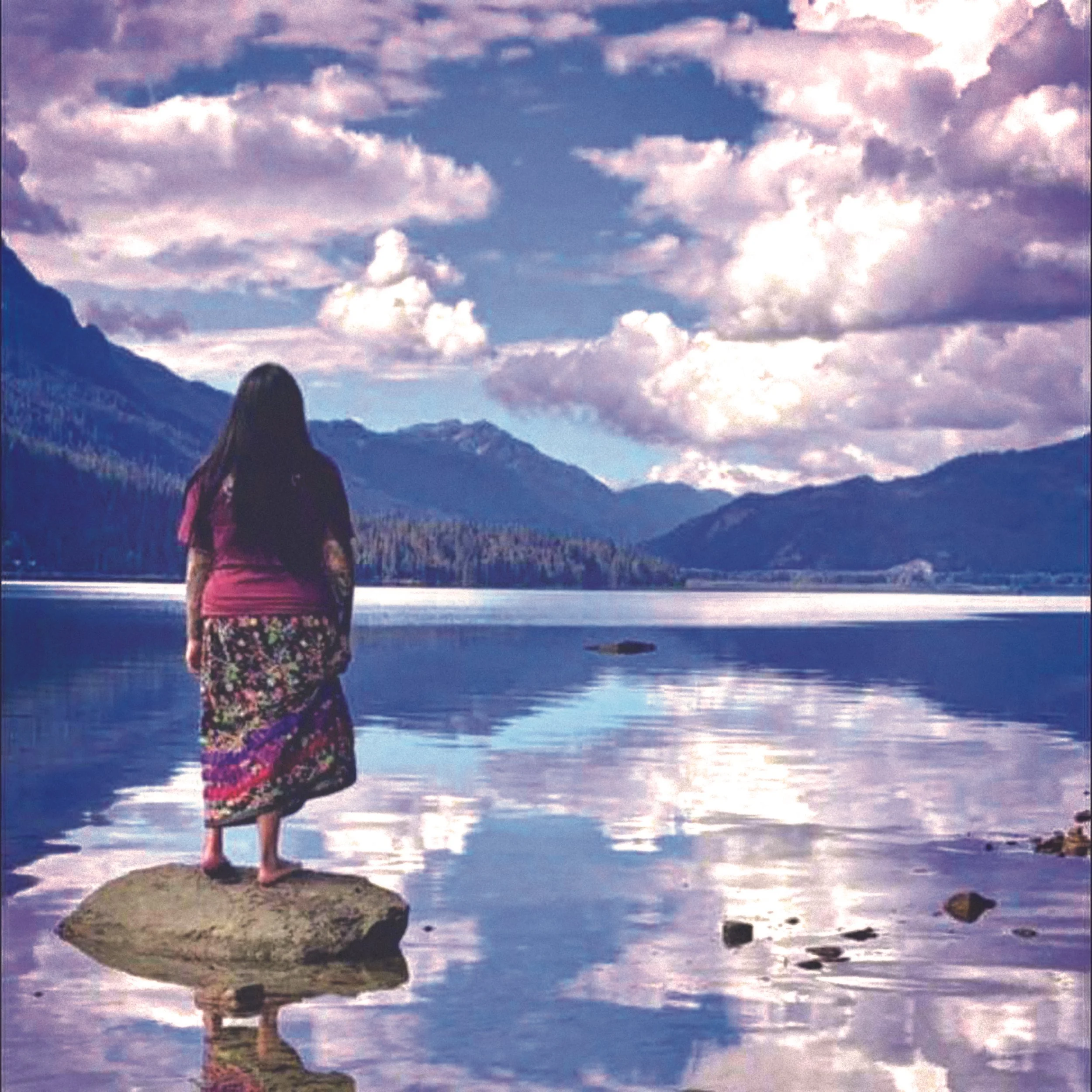
BY RON EVANS
When did you first start dabbling in poetry?
I think my first memories of writing were probably middle school, angsty preteen years sound about right. I remember it being a major outlet for me in high school. I used to keep those Mead composition notebooks on me a lot of the time; I’d fill them up pretty fast with poetry and artwork. I struggled a lot with my mental health in school and still do. Writing helped get me through some rough times. I wish I still had those books—sadly, a lot of them fell apart or were thrown away.
Did you have a teacher/poetry pal or favorite writers that helped get you on your way?
Not really growing up. I didn’t really share anything that I wrote. It wasn’t until the last couple of years that I started sharing my work. I’d say it’s been maybe four years since I started putting pieces in The Comet and about two years ago that I got the guts to go with my best friend to do LitMic at Bushel & Bee one evening—total out of body experience. I’ve done it a few times since. I still get nervous about it, which is weird because I’ve been doing cultural education with kiddos through WRI and hosting beading workshops with adults for a few years, so public speaking isn’t anything new…but opening up like that is for sure different. I feel lucky now, though, to have supportive friends that I can randomly drop new pieces to and ask for input on. As for favorite writers, I see some of the work from women like Abigail Echo-Hawk and Joy Harjo that really get to me in ways I’ve not experienced before.
When you’re writing, are you trying to capture a moment you’ve already lived, or are you discovering meaning in real time on the page?
Hmmm, I want to say yes to both. It’s hard to explain, and sometimes these words roll around in my head and in my body for a long time before they come to be understood and put together. A lot of it, though, is moments I’ve already lived, but there are some that are for sure discovering maybe some meanings and maybe some feelings and breaking down some thought process in real time. Poetry for me is almost like a form of therapy, a way to sort my thoughts. It’s always been hard for me to fully express what’s in my head in real time and to make it make sense to others. Being able to write it out and express it like this in a beautiful way—be it about a morning hike I’m on or my experience of feeling daily grief from losing my brothers—words can be impactful. Putting words out into the world, be it on paper or on phone or whatever, can be helpful.
There’s a sense of restraint in your work—nothing feels over-explained. How do you decide what not to say in a poem, and do you ever struggle with leaving things unresolved?
I feel like there’s a good balance to it all. I do feel like some pieces will sit in my phone for a while and will have things added to them and then some things taken away. Sometimes I’ll take poems and break them up and make them into other pieces because they might start to not flow very well, but the idea is there and sounds good. Some pieces feel like they’ve taken more of an emotional toll than they’ve helped, and there’s a few I can’t read anymore. I’m not sure if there’s much I wouldn’t write about. There’s a few I’ve shared that I’ve used a pen name for when I first started submitting them to The Comet. Honestly, at this point, though, it doesn’t bother me who knows what I wrote. There’s always going to be someone out there that either likes your art or doesn’t, and that’s ok.
Place and memory show up in subtle, almost tactile ways in your poems. Do you start with images, emotions, or language—or does it change from piece to piece?
My mind is weird with how it works. I use a lot of my emotions from those memories and the images that were left from events to weave into pieces. A good example: the second-to-last piece I submitted to you was about how I had received my Cree name. My partner and I had taken my dad back to Montana over the summer to visit our reservation and see family, likely for his last time. It happened to be during Sun Dance Ceremony time. The whole back story to it is bittersweet. It’s a journey that will live in me for the rest of my life for so many reasons. It’s heartbreaking and loving all at the same time, and it’s all in that one poem. And like so many of my others, it’s a window into a moment in time of my life.
Your poems often trust the reader to meet you halfway. How much do you think about the audience when you’re writing, and do you write differently knowing the poem will live on a printed page like The Comet versus a performance or private notebook?
I’ll be honest—most of what I write is for myself. I choose to share because maybe others could resonate somehow. Maybe they will see a bit of themselves or feel a bit of that moment as well. I don’t write differently on my phone than what I’d send to you; it’s all the same. But there are a few poems I haven’t shared—some I’m still working on and have been for quite a while, and some that came from dreams that feel like they are meant solely for me, and I think that’s ok. There are a few I’ve written with the intent to share who are specifically about certain people. There’s one I wrote about my partner last year that is very special to me. I feel like in some of the pieces that I may have written with the intent to actually knowingly share with others, those ones somehow hold a bit more power in them. I’ve been on my own personal journey of learning my language for the last four years, and being able to work what I’ve learned into my poems, to me, feels like a subtle way of taking back a bit of what was stolen from those who came before me. Being able to share that with readers, when in hindsight the governmental and societal goal was for Indigenous people to lose our language and culture, it’s been a good way to stick it to the man, I guess you could say. It’s been my middle finger to colonization to show that although you tried, I’m still here learning and sharing these words with your great-grandchildren, and there’s a lot of beauty in sharing that.
Some of your poems feel like fragments that still stand on their own. Do you see your work as part of a larger ongoing conversation, or is each poem meant to be a complete world?
I would say it’s an ongoing conversation, like I had mentioned earlier—more of a story, or maybe it’s fragments of a forming one. I can sit you down and pinpoint every event that was happening in life from each of these pieces—good, bad, all of it—what I was feeling, who was there, what happened, conversations that were had, places I happened to be at, the things I saw and experienced. It’s double-edged in a way. It can be exhausting what my mind chooses to ruminate about, but I feel like there is some beauty in it.
How brutal are you with your drafts? Are you a meticulous tinkerer, or do you know quickly when a poem is finished?
Sometimes I can feel poems starting to form, but maybe they aren’t fully ready to be written down just yet. I have pieces in my phone I’ve been working on for a bit—some I’ve added to and taken from, and some, like I’ve said, I’ve broken up and made into other poems because they just didn’t feel like they flowed very well together anymore. Sometimes they just start to feel like other chapters. But occasionally there will be pieces that I’ll make that, once they’re written, I know they’re good to go. It’s not often, lol, but sometimes it happens. I like to have some time with my work. When I’m out hiking early in the morning with my dog to clear my head is usually when a lot of my work comes to me. I try to get things written down ASAP so I don’t forget, and then work on the flow of it when I have the time.
When a poem works for you—when it really lands—what usually surprises you about it? The language, the feeling, or what it reveals after the fact?
I would say the feeling—the flow of the words, how they land. There’s been a few I’ve written that, after going through and editing and working on them a bit and finally reading them out loud or sharing them with a friend, it’s been a kind of “wtf did I just write” moment for me. Looking back on some of my work is wild to me—seeing how it’s evolved, knowing some of the worst of times and how impactful some of these words were. Some of these pieces still hit pretty hard. There’s a few pieces I can’t read anymore.
Do you share your work online anywhere—if so, where?
I haven’t found any other place to share my work yet, but at some point I’d love to be able to publish a piece. Being able to maybe one day create a small collection of pieces in book form would be amazing, but for now I’m most definitely content with sharing them with you guys.