This Might Matter: podcast of laughs and interesting local guests

by ron evans

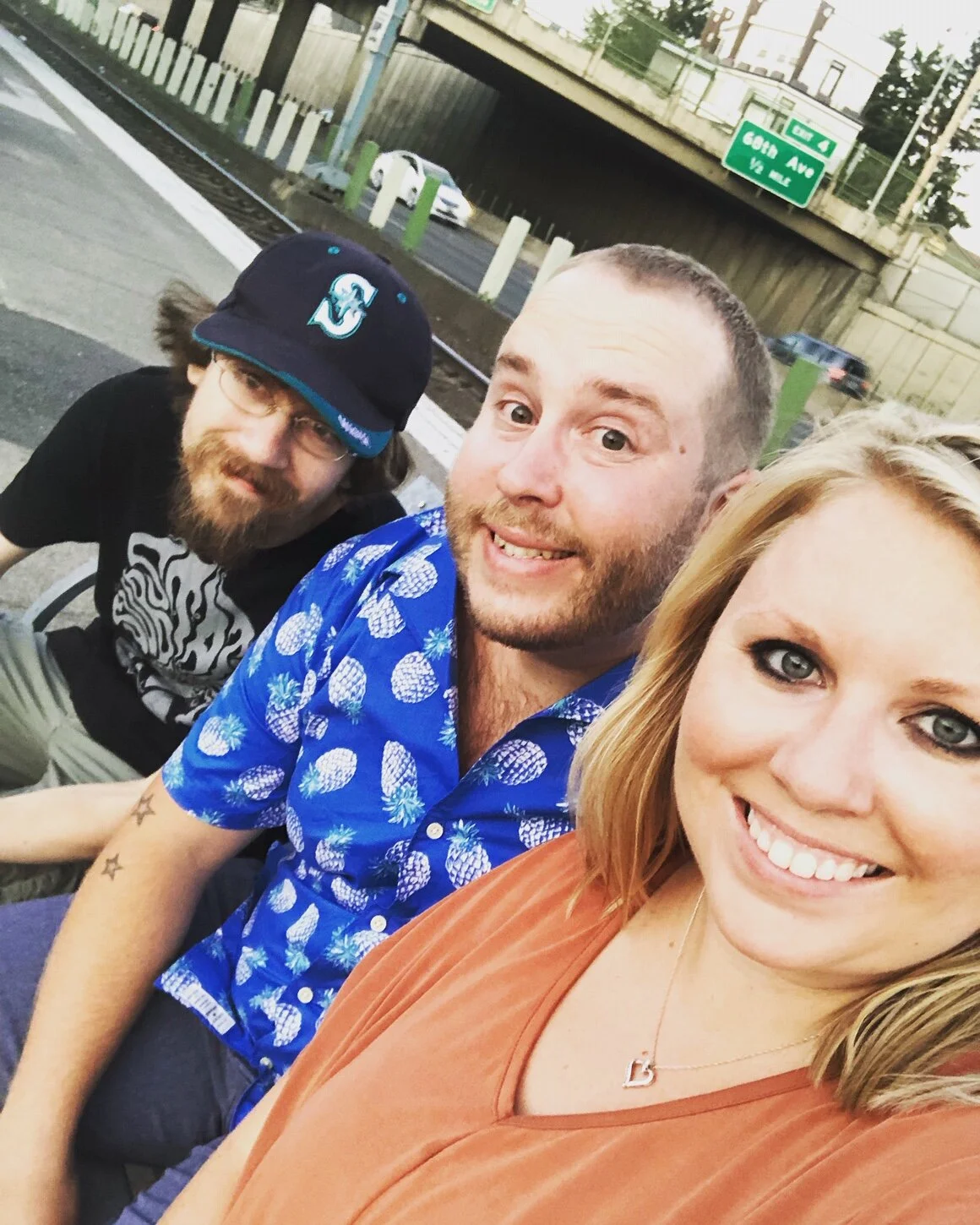
TPDM HOSTS: BRIAN DESHAZO, LUKE ATKINSON, KATIE ATKINSON

TPDM HOSTS: BRIAN DESHAZO, LUKE ATKINSON, KATIE ATKINSON

During the great Hunkering Down of 2020, podcasts will likely be helping everyone stay sane-ish, and you have plenty to choose from (over 800,000 according to a recent article by Forbes). At least one of them is created right here in sleepy ol’ Wenatchee - This Probably Doesn’t Matter, co-hosted by local comedian and promoter Luke Atkinson.

“The initial groundwork for This Probably Doesn’t Matter was laid in a low-ceiling, dimly-lit, dank shed in the winter of 2017. Brian DeShazo and myself really fell in love with podcasts as a form of broadcasting, and it quickly became evident that we needed to throw our hat in the ring. Many a beer were drank and cigarettes smoked in that same shed while we hammered out the vision for what TPDM would eventually become. It took us a year to actually get the podcast live. Something else we learned early on was that Katie, my wife and co-host, needed to be behind a microphone, and she now joins me on (almost) every episode. Brian has been a recurring guest and host. He’s also spending an absurd amount of time editing most episodes. He is the closest thing we have to an audio engineer, which he would tell you does not mean much, but we are very grateful for his efforts.” 

How often are you putting out your shows?

Right now, we are putting out one episode per month. I would love to see this ramp-up in the future, but for now we are taking it one month at a time.   

What was your aim with the podcast concerning subject matter and demographic?

Square logo.jpg

As far as the demographic goes, I would like to think that our guests are interesting people and everyone should listen to them. I understand that we are not everyone’s cup of tea, as adult language and themes frequently arise (and depending on how many beers I’ve had can take on a life of their own.) I really feel like there are thousands of unique and compelling stories in all of us, and I want this to be a platform on which people can express those stories. So to boil it down, if you can put up with listening to me, you will hear some pretty cool stories from interesting characters, aspiring artists, and folks a lot smarter than myself.    

Give us an example of a few of your favorite episodes or guests.

I can’t imagine a more difficult question, as the three of us have truly enjoyed getting to know all of our guests. Each of us might have a different personal favorite episode, but collectively two of our favorites were Bandits of the Animal Kingdom (Ep. #12) and Matthew Pippin (Ep. #13). Danny and Amanda from Bandits of the Animal Kingdom have become a formidable presence in the local music scene, and they’re also fantastic people who’ve become good friends of ours. Anyone who knows Matthew needs no explanation on why this episode is a must-listen. If you don’t know him, you’ll quickly learn that his charm and wit fill a room and we had an awesome time talking with him.  

I would be remiss if I did not point you toward my favorite episode: Geoff Is Butthurt. Brian, Geoff Knapp and I survive a dangerous motor-vehicle accident thanks to my million-dollar maneuvers, while Geoff’s wife shows calm under extreme pressure, helping us make it to Joe Rogan and Dave Chappelle's sold-out comedy show at the Tacoma Dome. We recorded it in the wee hours of August 3rd, 2019 at the exquisitely trashy Travelodge in Tacoma. Post-wreck analysis, post-show antics, and much more!

What are your hopes for the future concerning the show’s progression? 

Right off the bat we have a long list of guests that we still want to invite. We have hosted some live events in the past and look forward to exploring possibilities for doing so in the future. Frequency and consistency regarding episode releases continues to be a goal we strive toward, and we hope to provide even more types of content in the near future. 

Are there any plans to do anything special during the virus shut down?

Yes, absolutely! We are planning a dive into the livestream world, and while I can make no promises as to production value, plan on seeing a livestream from This Probably Doesn’t Matter very soon. 

The podcast is available on all major platforms (i.e. iTunes, Spotify, Youtube, ect.). If you find your podcasts elsewhere, just search This Probably Doesn’t Matter. Make sure to also check us out on Facebook and Instagram (@thisprobablydoesntmatter), and please join the mailing list on our website: www.thisprobablydoesntmatter.com (possibly the world’s most-neglected website).

Doc Is In: Times Of Crisis

Q:  How can I stay well in a crisis?

Dr. Allegra says…

Danger.jpg

A:  Recent events revealed just how tenuous our balance with health can be. Epidemics such as these often leave people feeling panicked and confused. In the midst of all this fear and confusion, you have a choice to make. How are you going to respond? It really depends on your goals. Do you want to cultivate love and health in the world, or chaos? 

Let's be clear, yes, life is out of our control, and the only thing you have control over is how you choose to respond. How you choose to treat yourself and others during a crisis says a lot about you and your habits. Ask yourself: “Am I nourishing my life? Am I cultivating love or fear?”. Reroute and reassess your choices if you don’t like your answer. 

So what can you do to help yourself and everyone else during these difficult times? Practice honest, mindful self-care. These tools can help boost your immune system and speed healing, as well as enhance your ability to cope with stress. We can all use a little help right about now.

Get back to the basics.

Keep it simple and easy. Yes, it can be easy. 

Eat right.

Just eat real food. Highly processed foods are never a good idea, but these days we must be even more vigilant about our food choices. Put simply, real whole food gives your body more of the building blocks required for healing and repair, while highly processed foods can deplete your nutrients over time, thereby stripping you of the resources needed to heal more efficiently.  

Plenty of clean water.

The rule of thumb is to drink half your body weight in ounces of hydrating liquid every day.  Adequate hydration helps your lymphatic system work properly. Your lymphatic system is one of your garbage collectors, it removes waste from your tissues so you want to ensure that you have enough water every day to help it work effectively.

Sleep right.

Getting enough sleep is essential to give your body time to do regular maintenance. Aim for at least 7-9 hours of restful sleep every night.

Slow down.

We are all being forced to slow down, and I think this is a good skill to cultivate. Keep in mind that rest- mental, emotional, and physical- is productive and pivotal to wellness on all levels.

Take media breaks.

Let’s face it, the news can be stressful. We are not meant to know what is going on in every part of the world at all times. It is ok to take media breaks. I often will prescribe news fasts to my patients.

By using this opportunity to become a more positive force in the world, we become the healer for ourselves and those around us.

It all starts with you, right here, right now. 

ABOUT DR. ALLEGRA HART

Dr. Allegra Hart is a licensed naturopathic physician, speaker, author of Nourishing Space Within: Essentials of Self-Care, founder of Naturae Naturopathic Clinic and Dr. Allegra’s Apothecary, and works with patients worldwide.  

Dr. Allegra specializes in helping women rebuild their health from the inside out by cultivating natural self-care. If we as individuals create healing foundations on our own- the ripple effect will inevitably inspire others to do the same, and together we can be the change we wish to see in the world. Check out Dr. Allegra’s healthy living online course for your next level of support at naturaeclinic.com/wellness-programs

If you have a question for Dr. Allegra, email us at info@naturaeclinic.com with the subject “The Doctor Is In Question”. 

CSTV 003 Constructing a Crossword Puzzle with Cory "Damn You" Calhoun

If you’ve ever enjoyed (or strongly dis-enjoyed) one of Cory “Damn You” Calhoun’s addictive crossword puzzles in The Comet, you will likely get a kick out of watching the world-famous anagrammist demonstrating his method for creating one from scratch. SPOILER ALERT: You may wish to solve the featured puzzle first before watching the demonstration. Available HERE

ARTBEATS: Art Is Us

by lonnie broadvalley

Rockwell.jpg

You know those big, sweeping questions a teacher might ask like, ‘What makes us human?’ or ‘What is art for?’. Most likely it was at the start of a humanities class (art, history, cultural studies, philosophy, etc.). You kiddos might recognize these essential fields of study today as “electives” or “nap time.” Questions like these are designed to: (a) generate ANY response (b) demonstrate that there are MANY right answers, and (c) serve a heaping slice of humble pie to the honor students in the front row. By the time I had been in the art department for a few years, I looked forward to these questions. The most eloquent response to ‘What is art for?’ that I can remember is that art ‘… creates empathy.’ Nice one. This phrase stuck with me because it fits from any angle. When experiencing a song/play/poem/painting, we try to understand more about the artist, and from the artist’s perspective, the response can reveal a lot about their audience. When Life magazine did a big feature on Jackson Pollock in 1948, anointing him “The greatest living painter in the U.S.,” its citizens got their panties in such a twist, I don’t think art has been viewed in the same way since. Not only did you hear a lot of indignant responses like the popular,’ My kid could do that,’ but I think it actually pushed his art further from the culture that produced it. Sadly, this is the old story about rejection of the unfamiliar and it repeats again and again in art history. Fortunately, many people recognized the reaction for what it was and decided to view this new style with an open mind, considering the social and cultural clusterf*#k from whence it came. A popular example of this sort of exchange is Norman Rockwell’s 1961 painting titled, The Connoisseur, depicting a man with his back to us wearing a business suit and standing in front of a huge, abstract painting meant to look like a Jackson Pollock - all energy, drips, and splatters. I do wonder what the man thinks of the work but I really appreciate that Rockwell didn’t show this guy’s expression. When this was painted, a man in a suit like this represented a pretty conservative, white, middle class American male. To make this in 1961 is the artist’s way of saying, ‘See? We want to understand each other!’. I’m assuming a lot here but I believe that’s the gist of it. My point is that it doesn’t matter whether or not the guy in the painting likes the art, what matters is that he’s giving it some thought. Scott Bailey, head of the Art Department at Wenatchee Valley College asks his students to spend an entire class period in front of one piece in the MAC gallery. He explains that this is an incredible gift to an artist to spend time considering their work, giving it a chance to affect you beyond first impressions. When we think about our response to something/someone, hopefully some truth about ourselves is revealed.