• Archives
  • News
  • Subscription
  • RS MAGAZINE
  • SUBMISSIONS
Menu

RadarStation  - The Comet

  • Archives
  • News
  • Subscription
  • RS MAGAZINE
  • SUBMISSIONS

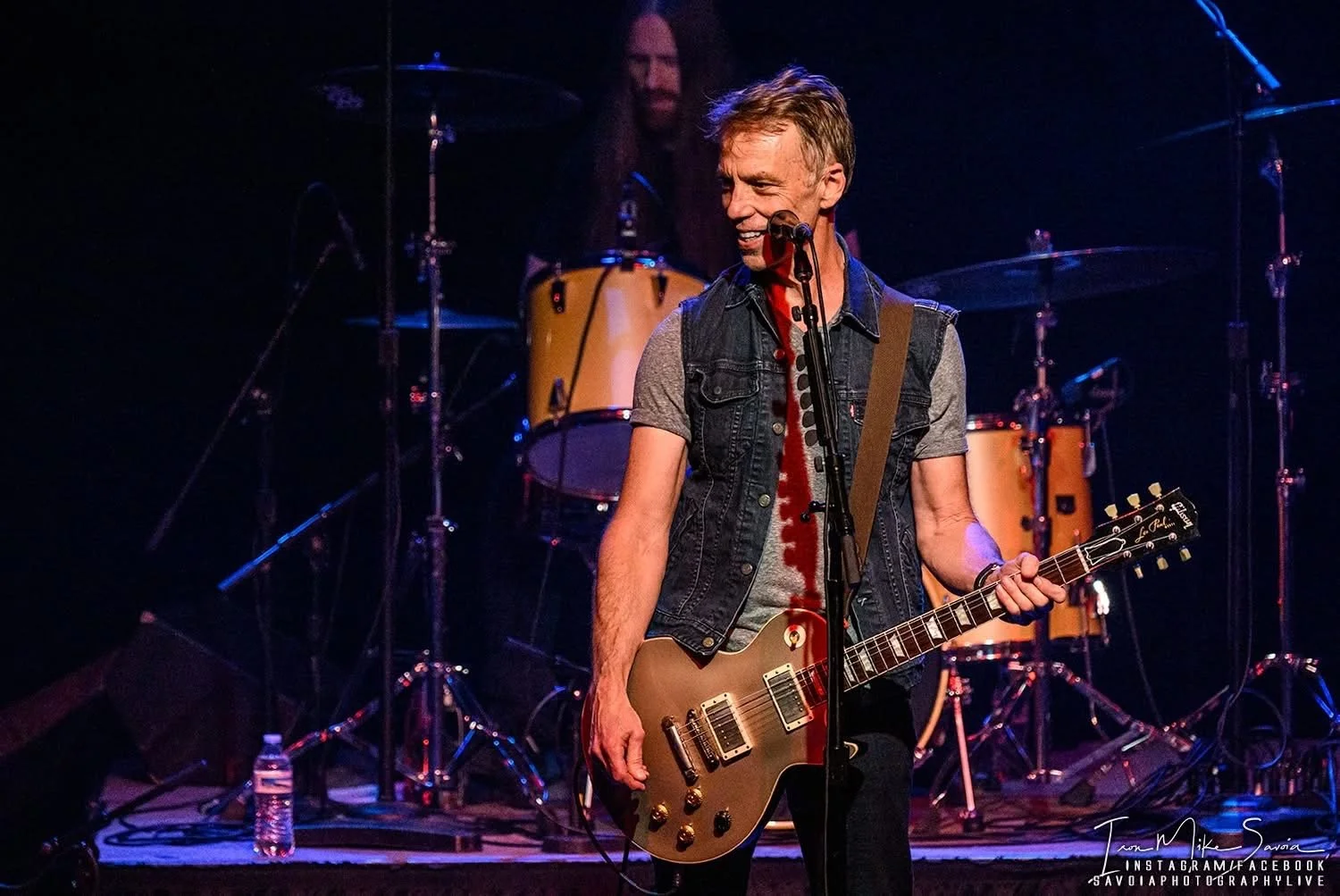
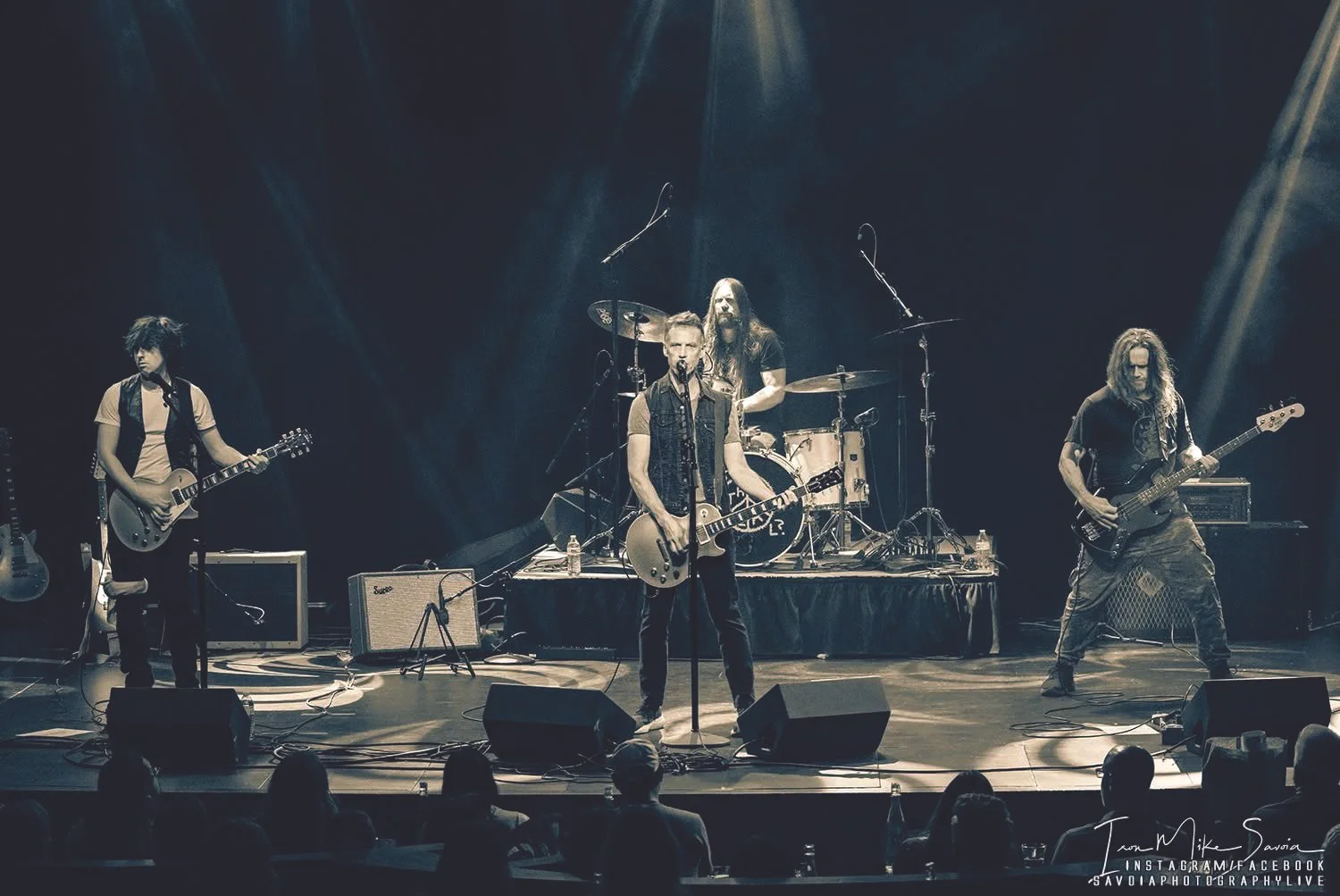
Is This Real? gettin’ real onstage. Photo by Mike Savoia

Is This Real? Matt Cameron Comes to Numerica PAC

April 1, 2026

BY RON EVANS

Somewhere around the summer of 1989 I was handed a duped cassette by my buddy Cho. Cho was one of my most reliable sources for the new shit. The GOOD shit. So this was always exciting. “It’s called Soundgarden. They’re from Seattle.”

It would be another few years before the world was truly aware of the Seattle music explosion, so hearing it was “local” was a new kind of experience for a teenage Central Washington punk.

We skated a while, raided his fridge for Vietnamese sodi-pops, and I headed home. After getting yelled at for bringing my skateboard into the house (as if it was gonna pee on the rug), I retreated to my room, grabbed a Thrasher magazine and popped the tape in. There was no album title on the poorly scribbled label, but I later learned it was called Louder Than Love.

The first sound I ever heard from Soundgarden was the drums-only intro to track 1, “Ugly Truth.” That drummer was Matt Cameron. The song kicked into a sludgy (we were not using that word like we do now—I credit Soundgarden for popularizing the term) sort of Sabbathy riff, followed by the voice of the almost supernaturally gifted Chris Cornell. I’d never heard anything like it. There wasn’t really anything like it. Yeah, you could pick up on the influences, styles and tropes they were pulling from, but it sounded…new.

I’m obsessive about music, so this cassette was all I heard for months. About the time I was wearing it so thin it was becoming see-through in spots, Alice in Chains’ Facelift had come out. Suddenly Seattle was on everyone’s radar. Then 1991 happened. Nirvana’s Nevermind came out and blew up bigger than the galldurn sun. Pearl Jam’s debut LP Ten was also released in 1991, along with Soundgarden’s Badmotorfinger.

I was into all of these records, but Badmotorfinger cemented my love for Soundgarden. The album is brilliant, start to finish. The raw power of Louder Than Love (which was their second LP after Ultramega OK) was still there, but the hooks and production were hitting me on a slightly higher level. It’s still my favorite Soundgarden album. Largely because of the solid, satisfying and deceptively complex drumming of Matt Cameron. It’s impossible to imagine the Soundgarden sound without him, and listening to their earliest recordings with earlier drummer Scott Sundquist, you can see how much the sound evolved with Cameron on board.

For a few years it seemed that everything Soundgarden touched turned to gold records. They were beginning to dominate MTV with videos for hits like “Outshined,” “Jesus Christ Pose,” “Pretty Noose,” and of course “Black Hole Sun.”

At what seemed like the top of their game, Soundgarden broke up in 1997. If drummer Matt Cameron was worried about staying busy, he wouldn’t have to worry long. In early 1998, Pearl Jam’s Eddie Vedder called him up and asked him to join the band as the current drummer Jack Irons was on hiatus. Cameron agreed and would continue to be the band’s backbone until 2025, when he announced he’d be leaving, on good terms.

Along that path, Soundgarden would reunite in 2010 and continued to record and tour up until Cornell’s death (which still somehow doesn’t quite feel real) in 2017. Cameron somehow managed to keep both gigs going at the same time during this period.

Lately, Soundgarden is once again trending in media and streams thanks to its recent Rock & Roll Hall of Fame induction (Cameron is in the HoF with Pearl Jam as well). Also, in 2025 the surviving members of the band announced they were working on a final Soundgarden album featuring some of the last recordings Cornell made.

Cameron is bringing his new band, Is This Real?—a tribute to NW punk legends the Wipers—to Numerica Performing Arts Center on Saturday, April 11. He has traded the drummer’s throne for the guitar and mic for this project. There’s so much to talk to Matt about. Enough of my yammering, already!

So, are you all adjusted to life post-Pearl Jam?

Oh yeah, you know I’ve always had a pretty secure home life. So no issues whatsoever.

It must be a strange thing to come home after long tours, both of the bands you were in did some incredibly long tours.

Absolutely. You know, back in the early days, in the 80s, when I started touring with Soundgarden—we’d be gone for 6 to 12 weeks at a time. They were essentially camping excursions. We’d bring our own sleeping bags and sleep on people’s floors and stuff. I’m glad I did all those types of tours when I was younger, but after a while, you learn to adjust to the pace of life at home. And I’ve always been a little bit of a homebody, so I always enjoyed coming home and just getting back to my normal routine. But I think any touring musician eventually figures out how to balance the two aspects of your life.

I knew you were in Pearl Jam a long time, but I didn’t realize you joined in the 90s, which fucks with my head honestly.

Yeah, Soundgarden broke up in ’97 and at that time, Jack Irons was in the group, and he quit right before a tour was going to start, so I essentially was filling in for Jack. Then it just turned into a permanent role for me after a couple tours. They wanted me to continue. But yeah, it was a long run for sure.

Stepping into a band that was already so well established and they had already written and recorded songs with multiple drummers… was that as hard as it sounds to me?

It was incumbent on me, or anyone coming into that kind of situation, to make sure the music doesn’t stray too far from the way fans are used to hearing it. And it definitely took me a few years to sort of adjust to all the different parameters of how the band worked and what works live. But it’s always a little challenging to come into an established thing like that, but it was an amazing opportunity as well. So you just have to approach it with a positive mindset and just do your best.

Yeah, well, I suppose it helped that you were already established as being a touring musician on similar levels.

Oh, for sure, and I had known those guys for years, going way back. I knew Jeff (Ament) and Stone (Gossard) from back in the early Sub Pop days. I met Eddie in 1990 or something like that. So we had a long history and that always helps when you’re coming into a situation like that.

How long did they give you to learn the set list before you were out on the road?

[LAUGHS] God, looking back, I think I had… two to three weeks or something.

Oh, my God.

Yeah. It was a bit of a panic situation. And I was only really familiar with the first couple albums, I guess. So, yeah, it was a big learning curve for me.

Well, I first heard Soundgarden right after Louder Than Love came out, and I have to apologize, Matt… it was on a duplicated cassette copy, so I think I owe you 10 bucks.

Oh hey, we were all doing it back then.

Before the internet, that’s what you had to have. There had to be a tape.

Yeah, and your buddies would make you mix tapes, and you’d hear some song on the mix tape that you dug and then, you know, hopefully go buy that album.

It could change your life. Like, it sounds like hyperbole to say it that way. But I don’t think there’s anything more important in terms of a pop culture or artistic part of life than turning somebody on to something that they get super jazzed about, it can change their life.

Oh, absolutely, and back in the day—when I was dating my girl, my now wife, I would give her a mixtape and hope that she would like my music tastes. There were many aspects to the mixtape back then.

When the Seattle stuff started blowing up, we of course felt some sort of a home team pride, but in many ways Wenatchee may as well have been in a different country, especially going back to pre-internet. So those tapes were important. And I remember when we were first getting into Soundgarden everyone just kept saying, this just sounds new. Were the label or the promoters, in the early days, trying to figure out where to put Soundgarden?

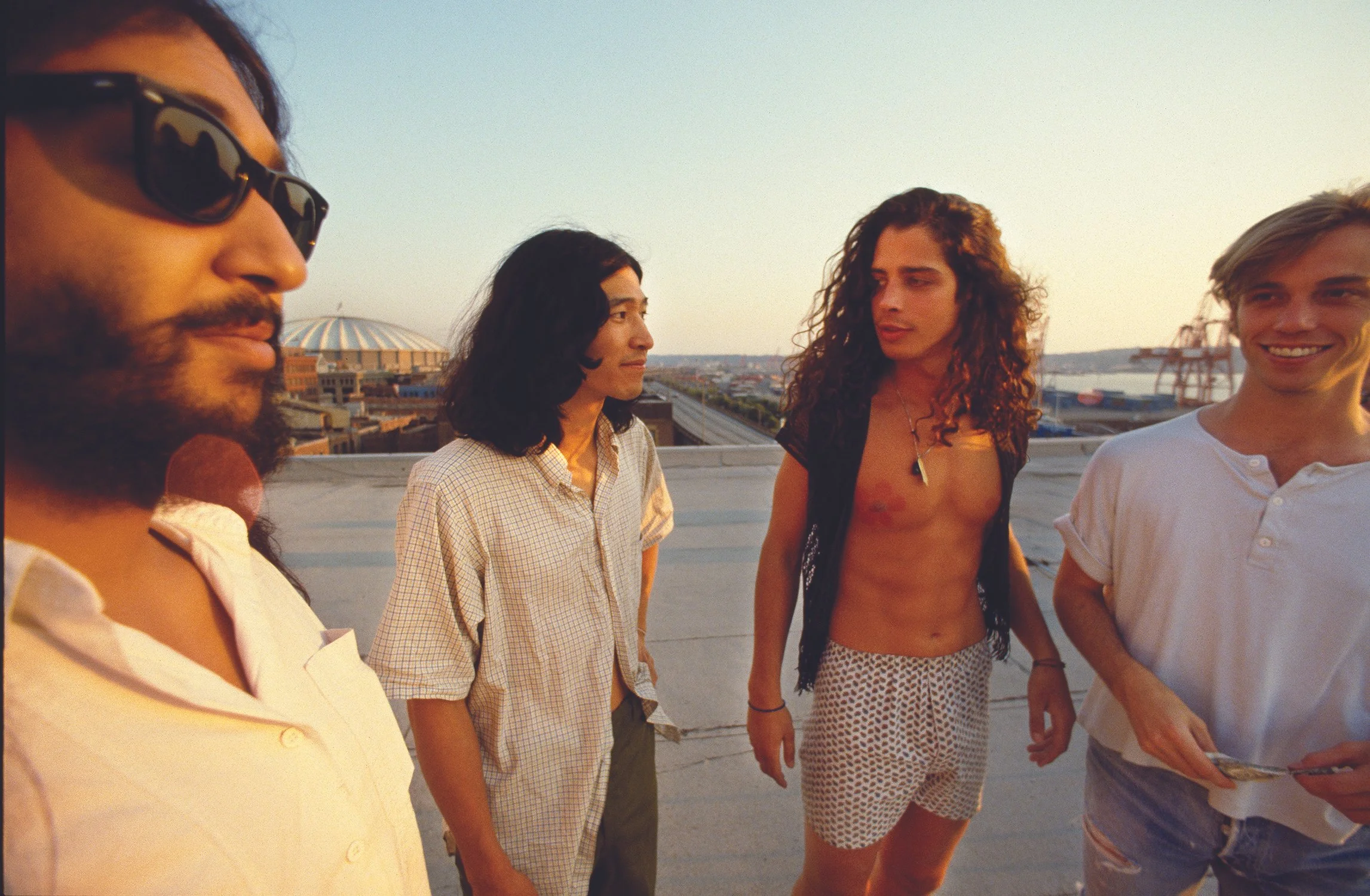
Soundgarden captured by Charles Peterson for Sub Pop in the late 80s. Kim Thayil, Hiro Yamamoto, Chris Cornell, Matt Cameron

I think we fit into the sort of rock underground that was happening in the US in the 80s. That was the scene that we felt most attached to. We were really into bands like the Meat Puppets—bands like that that were on the SST label. When we had released our Sub Pop EP we were playing around the country. And our first New York City show was at CBGB, we opened for this band, Das Damen who were also on SST. Back in those days, there were independent promoters. It’s not like it is today, where there’s Live Nation that promotes essentially 98% of all concerts. So promoters were able to find national touring acts that fit with some of the local groups. I think the band sort of had quasi-metal leanings back in there. I guess it was sort of punk at first as well.

We would get offers for tours with all sorts of bands and say yes or no. We rarely put our own shows together, other than when we first started in the 80s in Seattle. If we were playing at the Central Tavern, or the Ditto or the Vogue, we would play with our local friends like the Melvins or Green River or the U-Men. The U-Men were kind of the biggest band in town. One of our most important gigs early on was one we played in Ellensburg with Faith No More and the Screaming Trees. Screaming Trees had just signed with SST and they recorded that concert that we played together. They gave the recording to Greg (Ginn) and Chuck (Dukowski), and that’s how we got our SST deal.

So, yeah, it was really fun to be a part of that sort of underground movement. And, you know, in some of those early shows we’d be on the road for 8 to 10 months out of the year, and it was just fun to see the audience grow from the club days to bigger venues and eventually theaters and stuff like that.

On the topic of Ellensburg, did Soundgarden ever record anything at Velvetone (legendary Ellensburg studio that recorded the Screaming Trees, Moral Crux, Beat Happening, among others)?

No, but we worked with Steve (Fisk) here in Seattle. He recorded an EP that we did for Sub Pop, and he also did some remixes of some of our earlier stuff, like the song “Fopp”—the Ohio Players song. But we never did record at his Ellensburg place.

When did the Deep Six compilation (a C/Z Records showcase of Seattle bands Soundgarden, U-Men, Green River, Skin Yard, The Melvins and Malfunkshun) come out?

Oh, what year was that— must be ‘85.

You were in two bands on that compilation, because you were in Skin Yard at that time.

Well that was right before I joined Soundgarden. I was in Skin Yard when that came out, but Scott was still the drummer for Soundgarden. But, you know, that was a really important record for all of our local bands at the time. It’s a pretty cool intro to our local music scene at the time.

Yeah, it’s often considered the key LP release—it was before so many other things.

Oh yeah. The first time I ever heard myself on the radio was on KCMU, which is now KEXP. They were playing that Deep Six album front to back. I pulled my car over and I cranked it. It was a good moment for me.

College radio was a pretty huge way that we were promoting shows—it was all part of the underground movement at the time.

I saw a list in some horror magazine years ago of the top 10 most scary songs. Now, my vote was not on the list, and that vote is “Jesus Christ Pose.” I have probably heard that song 1000 times. It never fails to just give me chills. It almost makes me sick to my stomach. It’s a scary song. I don’t know if it’s guitar harmonics that make those opening little squealing notes, but then your doomy drums come in. I feel like something bad is about to happen every time. And I love it.

Kim (Thayil) has always been an absolute master at making distortion and feedback sound musical. So I think his influence on that song was always real apparent. That song sort of separated the fans of our band—if someone heard that song for the first time and hated it, they would probably not like our band. So yeah. I guess that does have a good, scary element to it.

I want to jump ahead in a minute. But before we do, I want to go back—how long after Andy Wood’s (Mother Love Bone, Malfunkshun) passing did Temple of the Dog all come together?

It was pretty much right after he passed away. We were on tour. I think we were in New Jersey when we heard the news, and gosh, if recollection serves me, Chris started writing songs and sent me a demo of “Say Hello 2 Heaven,” and we just started working on it. It happened pretty quickly because Jeff and Stone (who were also in Mother Love Bone) were starting the Pearl Jam thing, and I kind of helped them with some of the early demos on that as well. You know, Chris and Andy were roommates and super close, and I was a huge Malfunkshun fan. That was just one of my absolute favorites. And Andy was a born rock star. He’s just one of those guys, much like Chris. He was just born that way. There’s no school you go to to learn how to be like that. Either you got it or you don’t—Andy completely had it.

It’s such a unique album for so many reasons. Born out of tragedy and put together by bands that were suffering the loss, but also on their own trajectories moving forward. It had every reason to not be as good of a record as it is. Even just looking back, as a historical record it’s important. But it’s the songs that make that album hold up. It’s so fucking good.

And of course, that’s the first time we hear Eddie’s singing as well. So yeah, it’s just one of those moments where all the planets aligned. It really made an impact.

Well…I’m a huge Rush fan. And in the early 2000s I was at a local music shop and discovered Geddy Lee had released a solo record, which I bought post-haste. I was digging it at home, flipping through the liner notes, when I saw that it was you doing the drumming. How did this project come to be? Were you a Rush fan?

Oh man, you kiddin’? I was a huge Rush fan. My first Rush record I got was when I was in high school. I think it was All the World’s a Stage. And I remember these two stoner kids were in my English class always talking about Rush. “...dude, you got to hear Rush. You got to hear Rush.” And so they loaned me the record. And from there, I went back to 2112 and heard all that stuff. But yeah, that Geddy LP was a really fun project that I was just called up for out of the blue. The producer, Adam Kasper, had worked with Soundgarden on a couple albums, and he recommended to Geddy to try this Seattle guy out. And I think Geddy was familiar with Soundgarden. Geddy was so fun. And Ben Mink, his collaborator, was super fun.

It’s a good record. I don’t hear people talking about it nearly enough. Obviously it’s not Rush, but did you ever have a moment of “holy shit”? The dude that this guy is used to drumming for him was Neil fucking Peart?

[LAUGHS] You know, they were going through a little bit of a transition, and I was just focused on working with Geddy and making sure that he was happy with how everything was coming out. But I kind of heard through the grapevine that Neil liked my playing.

Wow.

Yeah, so I felt like it was a really nice thing to be a part of. And I did get to meet Neil on tour. I think it was like 2003 or ’04, something like that. They were playing at White River Amphitheatre. He was just a total sweetheart, and he signed a book for me, and we had a really, really nice chat. We also talked about motorcycles, because I’m a fellow rider. All those guys are really down-to-earth dudes. And I’m really happy to see them getting out there and continuing.

I am too. And yeah, seein’ them move on without Neil can be a little painful from the standpoint of being a fan—but it’s for no one else to decide what they do moving forward. And they’re having fun. They deserve it.

You must realize on some level, Matt…your career is insane.

I feel really lucky. I’ve always tried to follow my heart and my own instincts. But a lot of success requires a bit of luck for sure.

Well, as a lifelong drummer, grabbing the guitar and stepping into the frontman role for Is This Real?—is it kind of business as usual on some level or is it a whole different thing?

Well, it takes a lot more work to remember how to play the guitar parts. Remember lyrics. I’ve never been a big lyrics person, but yeah, this band is something I’ve wanted to do for a while. The Wipers were one of my first huge influences when I first moved to Seattle (in 1983).

And this is something I always had in the back of my mind. And now that I have more time on my hands, it’s been really fun to pursue it. It takes a little bit of a different skill set for me, but I’ve always played guitar, and I’ve always written music on guitar, and I’ve contributed to my bands on everything. So that part of it is not too much of a stretch. But, you know, being a front person and remembering lyrics is a new experience.

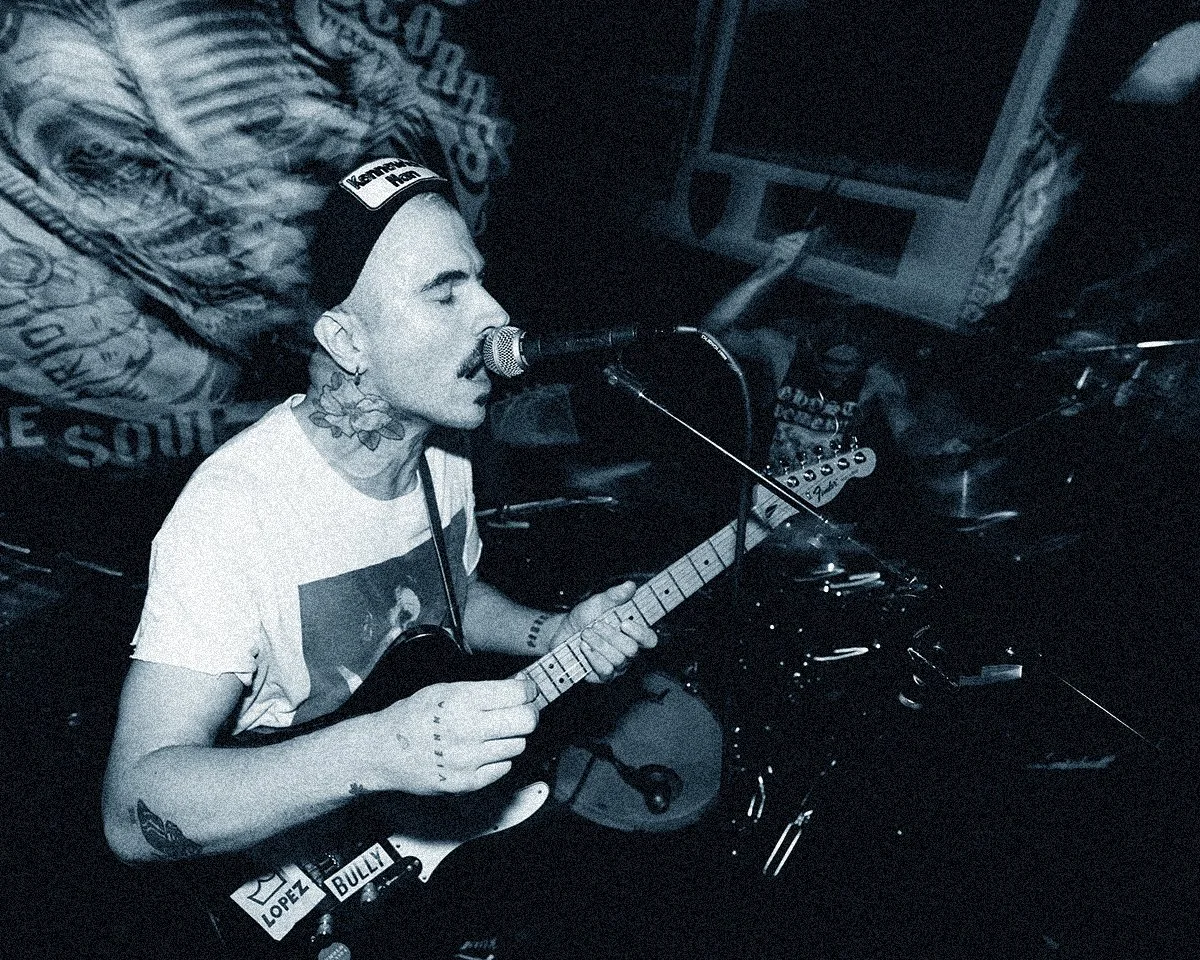
Is This Real? Photo by Mike Savoia

I, like many people, was late getting into the Wipers but when I finally discovered them…I was like, holy shit. This is why everyone I love talks about this band. They were kind of unbelievably good. Incredible songwriting.

Oh, amazing. Amazing band. Yeah, we are playing a lot of the first LP, Is This Real? But when you get into some of the later albums you really start to understand how prolific Greg (Sage) actually was. One of many Northwest bands that weren’t as well known as they should be. I feel really happy if I can turn people on to the amazing band.

You’ve recorded an EP with the band and obviously you are playing some shows. Will there be a bigger tour planned?

No, nothing too big.

Do you think the big tour days are behind you?

I don’t actually. There are some—here Matt seems hesitant to announce any details—you know, we are working on the final Soundgarden album. There may be something that comes from that. Right now we are trying to finish the music and we don’t want to force anything. But I’m also making myself available for other projects. I have slowed down just slightly, but still plan on staying busy.

So what can we expect for the show coming up in Wenatchee?

Loud, fast, hard rock music. Mostly Wipers songs but we have a few originals as well. And a few covers of some other bands too.

I have a few pals that swear, way back in the early days, Soundgarden played a show in Wenatchee. Any recollection of that?

Hmmmm. I don’t think so, no. Unless it was when Scott was in the band, but I’m pretty sure at that time they were just playing around Seattle and Tacoma.

Well it’s good to put that to bed.

Seattle has changed in just about every possible way since the 90s. If you could bring back one venue that’s no longer here, which would it be?

Oh, man, well, there was a club called the Metropolis that was one of our first all-ages venues in Seattle. It was in Pioneer Square, and that’s where I got to play one of my shows with Bam Bam (Matt’s first Seattle band). That was one of my first Seattle rock shows that I played there. And then I saw Hiro Yamamoto (original Soundgarden bassist) playing there. That’s also where I met Susan Silver (future Soundgarden manager). So that club was a really important gathering space for all of us young Seattle weirdos back in the day. At the time, there weren’t many all-ages shows happening around Seattle, other than house parties and things like that. So that was really our first established official clubhouse for all of us.

All-ages shows are so key for nurturing a scene. Joel Myrene, who helped to bring you to Wenatchee at the PAC, has been doing some all-ages shows here at the Odd Fellows building, and it has been incredible to see the kids coming out of the woodwork. Because we would always sit around saying, “Where are all the kids?” Back in 1992 you couldn’t throw a rock without hitting some garage band. Joel believed in it, and he started these shows, and immediately hundreds of people are showing up to this. And it’s causing bands to form in junior high and high school. And it’s super cool to see.

I love it. Yeah, absolutely, it’s important. I applaud anyone who brings young people together and inspires them to express themselves with music or art, and provides a place to do that. That’s what the Metropolis was for us.

Will there be any kind of meet and greet after the show in Wenatchee?

Yeah, I’ll be around. So come say hello.


After hanging up, I sat in silence for a bit. It’s a weird thing—trying to strike that balance between genuine curiosity and not sounding like a complete fanboy when you’re talking to someone who helped shape your life. He couldn’t have been easier to talk to. Just a nice guy who also happens to be a huge part of why I love music in the first place.

I poured an earlier-than-usual whiskey and thought… I never got to see Zeppelin. Or Sabbath. Or The Who. But I got to see Soundgarden in their prime.

Cheers to that.

Is This Real? - Featuring local opener Icarus

Live at Numerica PAC - Saturday April 11th

7:30 PM - Showtime 7:00 PM - Doors Open

Tickets available at numericapac.org

Comment

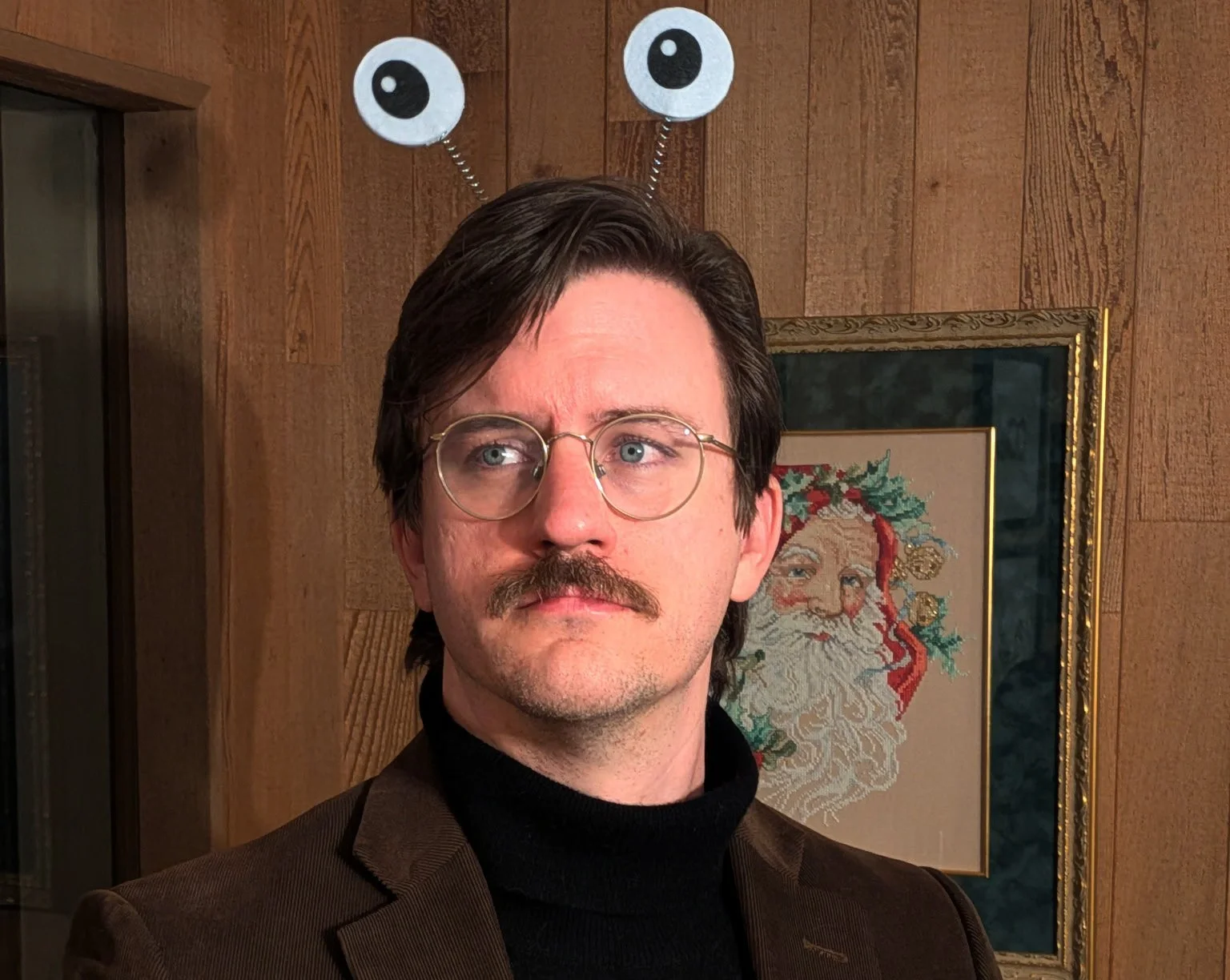
Local character and goat herder Skyler Cuthill

Humans: A Brief Primer

March 19, 2026

The Comet recently caught wind of a new locally created play coming to the Riverside Playhouse this weekend called Humans: A Brief Primer. We wanted to know a little more about what the hell this thing is, so we asked the folks behind it. Here’s what they sent us:

Humans: A Brief Primer is a show local character and goat herder Skyler Cuthill wrote to entertain his friends in a bar, and which has somehow kept growing under its own momentum ever since. Originating as an extremely lightweight, half-improvised, hour-long piece, it’s now a full-length show with props, set pieces, and a cast of six actors and two unlucky volunteers.

Telling the timely, relevant, ripped-from-the-headlines, all-too-true tale of an alien race dying from brain rot brought on by how repetitive and inane their culture has become, Humans: A Brief Primer follows the aliens’ effort to discover the secret sauce of humanity that keeps it thriving while consuming endless garbage. How do they keep watching comic book movies? What is their secret for consuming thousands of hours of podcasts? All these questions and more are answered as the aliens delve into the mystery of humanity: who they are and what they are doing.

The show features Skyler Cuthill himself as Professor Yorgoonblaper — it’s one of those written-by, produced-by, and starring kind of joints — as well as the indomitable JJ Hernandez as Heckler 1, the incomparable John O’Guin as Heckler 2, the ingenious Kevin McKee (who is also lending his enormous talents as director) as Professor Big Bad Brad, and the beautiful duo of TJ Farrell and Shellee Heron as Beautiful Nurses 1 and 2.

Produced by Third Job Theater at the Riverside Playhouse in Wenatchee, there are shows at 7:30 p.m. on Friday the 20th and Saturday the 21st, with tickets available at the door. All of you yahoos are strongly encouraged to attend and, at $17 a ticket, how can you beat it? I’ve had drinks that cost more than that. That’s a lot of show for $17.

Tickets can be purchased at the door or online HERE.

Comment

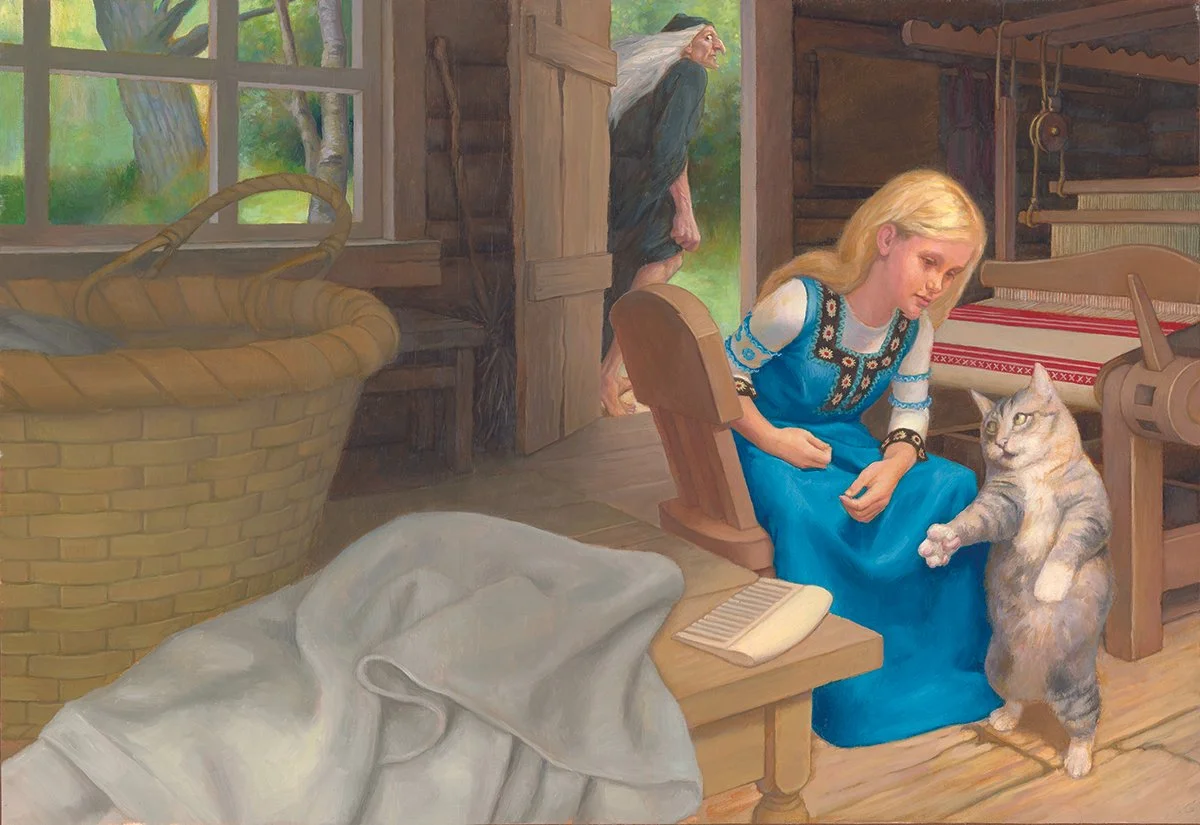
Vasalisa by Eric Freeberg

Making a Living Painting Bunnies & Mermaids

March 4, 2026

By Ron Evans

Eric Freeberg grew up in Wenatchee, studied everywhere from Western Washington to New York, built a thriving career illustrating classics and children’s books, and somehow found his way back into our orbit with a show at the MAC. These days he splits his time between painting, teaching at Ringling College of Art and Design, and refining the kind of richly narrative images that first hooked him as a kid. I sent him some questions to learn more about his story and he sent back a thoughtful and fascinating look into life as a professional illustrator. Here’s our conversation.

Give us a little background about yourself.

I grew up in Wenatchee on Woodward Drive, just uphill from the college. Had a great childhood running around the orchards with cocker spaniels and a butterfly net, etc.

I studied art at Western Washington University, then at the Pennsylvania Academy of the Fine Arts, and finally received an MFA in painting from the New York Academy of Art. While I was going to night school in New York I worked at the Metropolitan Museum of Art. I have a lot of great memories of the Met and of my time in New York. I’ll always love that city.

After New York, I lived in Ireland for a year on arts grant money. My then girlfriend and I traveled all over Europe that year, seeing the sights and, of course, the art.

The next move I made was to California to join the background painting trainee program at Dreamworks Animation. Immediately after I settled into Santa Monica to start the training, the background painting training program was abruptly cancelled. So I spent a few years in Santa Monica and then Seattle working odd jobs while I developed my children’s book illustration portfolio. I had already started developing a children’s book portfolio of samples, which is the first step if you want to illustrate kids books.

My big break was when an illustration agent agreed to represent me. That was the start of my illustrating. I taught at WVC a bit while illustrating early on, but the job offers kept coming and I was soon spending all my time creating illustrations. Barnes & Noble offered me a 4 book contract one year that was followed by another 4 book contract the following year, that I balanced with other illustration work. And over 16 years I was never without job offers, thankfully.

Eventually I added some adjunct teaching (at the Ringling College of Art and Design’s illustration program) to my full-time freelancing workload. That was my life until 3 years ago when I decided to accept a full-time professor position at Ringling. The illustration program there is consistently ranked top 5 nationally which is what drew my initial interest. I now put in half the hours on my art that I did when I was a full-time illustrator, but 100% of that time is spent doing exactly what I want to be working on.

I currently live on Perico Island at the north end of the Sarasota Keys. Any time a hurricane in Florida was on the news in the last few years, the eye was passing either straight through here or nearby. I’m inevitably evacuated off the island during hurricanes so I stay inland at my department head’s house where I eat all her food and threaten to throw her cell phone in the toilet because she has a work addiction problem.

Do you remember when you first became interested in illustrations? Were there specific influences in those earlier years? Was this a career you were always actively seeking out?

I was fortunate to have parents who had me drawing at age 2. I think my Mom went down to the Wenatchee World, took unused newsprint rolls, and spread them on our living room floor and gave me and my sisters crayons, pencils, and scissors, and we just drew. Early on my parents planted in me the idea that I might be able to be an artist someday. Unbelievably, my Mom labeled one of my drawings with “Age 2 years 11 months.” It doesn’t look like anything — it was supposed to be a witch — but the point is that’s the kind of parents I had. It’s lucky to have parents who would’ve been disappointed if I hadn’t become an artist. It’s usually the opposite. So, thanks Mom and Dad.

And by the way, I ended up painting witches professionally!

When I think about what I loved as a kid and what I’ve become, I think I loved art forms involving stories – maybe that was a common denominator. Stories that moved you in the heart, that were magic. To me, magic is my goal with art, that feeling, recreating that magic we felt as kids when we watched movies, or read Batman comics, or watched those Rankin Bass stop-motion animation Christmas specials. It was all magic-making. I loved that stuff. Halloween? Same. I realize now that I loved forms of art, whether it was film or animation or drawn pictures with a story attached.

As for early influences, comic books and animation were my early exposure to art, like for most American kids. I remember loving the sinuous line work of how Dick Giordano drew Batman comics in the 70s.

A big a-ha moment for me was Marc Davis’ concept sketches for the Pirates of the Caribbean ride at Disneyland. I remember seeing those sketches and thinking, people do this. I could do this. Marc was one of the “9 Old Men” animators and artists who were responsible for the early Disney animated classics of Snow White, Pinocchio, and so forth.

I got away from art for a few years and played a lot of sports. Then in high school, my art teacher introduced me to the Brothers Hildebrandt’s Lord of the Rings art which had a big influence on me. Greg and Tim Hildebrandt (they were twin brothers, I interviewed Greg a few years ago) were, like Marc Davis, a living example of someone walking a path I might take. The Hildebrandts were the guys who I looked at and said, “that’s what I want to do.” I then learned who their heroes and influences were — N.C. Wyeth, Howard Pyle, and Maxfield Parrish. Then I branched out and discovered the rest of art history, the Old Masters, the Renaissance, and by then I was hooked and off to the races.

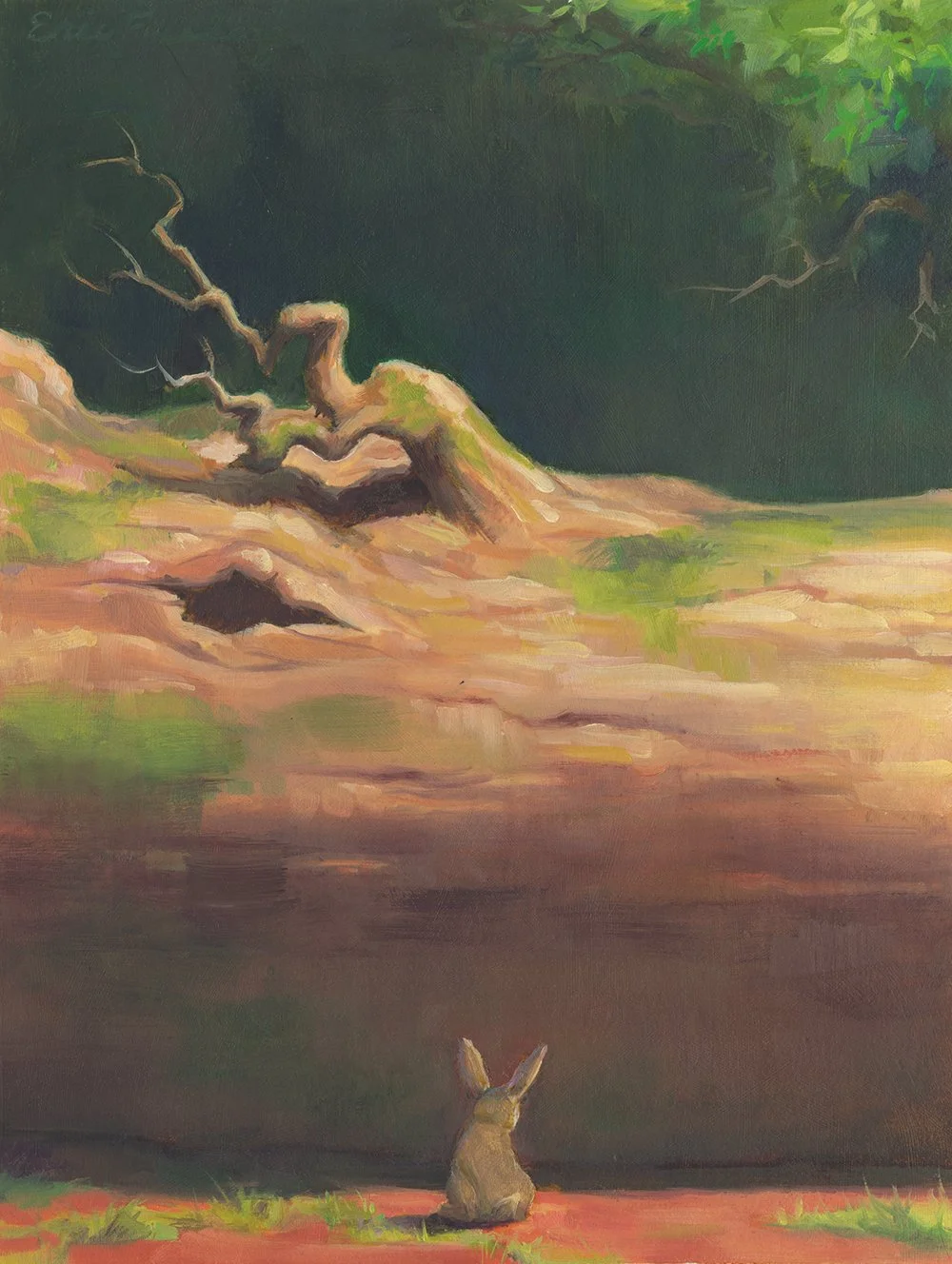
Bunny’s Obstacle

Talk about your instructional process? How has being a teacher informed your own creative path?

I’m not sure how to describe my instructional process. I think I try to meet students where they are and give whatever instruction is appropriate.

Teaching has definitely informed my own art. There’s the Aristotle quote “True understanding comes from teaching…” Teaching deepens my understanding of topics because I have to communicate the ideas to students clearly. Also, the way Ringling has me teach first year subjects includes information I wasn’t exposed to as a student, and that information has improved my own art. Some of the ideas we cover are ideas I wish I’d known about before I started illustrating.

Additionally, one of my duties at the art school is heading the Visiting Artist program for the first year students. When I host artist events, I and the students get to ask whatever questions we want about the guest’s experiences, attitudes, techniques, business and marketing tips, etc. The guests I invite tend to be among the best in their fields, so I, admittedly selfishly, get to learn from them, and because I host the events, they get to know me and it’s an opportunity to develop relationships. I’ve become friends with several of the guests and I think those relationships are making me better. I know that wasn’t the question, but the total experience at Ringling feeds my teaching and my art in a positive way — that’s what I’m trying to point out.

If you could instill just one single aspect of your instruction/philosophy in your students, what would that be?

I tell students the most important characteristic for success as an illustrator is to be self-motivated, because once you leave school it’s all on you. I guess work ethic is baked into that too, so I also talk to students about the 10,000 Hours Rule. It’s from a sometimes misunderstood or misinterpreted study that came out in the recent years, popularized by the writer Malcolm Gladwell. In the study, experts in various fields were asked how many total hours of practice, or concentrated practice, they’d put in over the years honing their craft? And the number 10,000 kept coming up. I think they asked the Beatles, Bill Gates, etc.

The lesson is there’s a lot of work that goes into mastering a discipline, and that putting in the work is more important than talent. You need some talent to develop, but work is more of a determining factor for success.

I think that’s true. But what I’d add to that is, first, if you’re working on something for 10,000 hours, you need to love it, or enjoy it at some level. Otherwise, you’ll quit, and if you don’t love it, you probably should. Second, 10,000 hours of practice means it’s a long term commitment. It’s going to take maybe 7 or 10 years. It means being patient. If you don’t have success straight out of school, which takes 4 years, that’s to be expected. You keep practicing, improving your portfolio on your own time around whatever you’re doing to make a living.

And lastly, you have to have enough self-belief to keep going, putting in your hours, when things are going your way, when you inevitably fail along the way. Growth mindset is what that’s called nowadays.

Related to 10,000 hours, I also suggest working by hours. Many freelancers I know, including myself, other artists, and writers, work by hours per week rather than waiting for inspiration or whatever. I keep track of and have targets for how many hours I work on art per week. John Grisham, Stephen King, Roald Dahl, all did something similar.

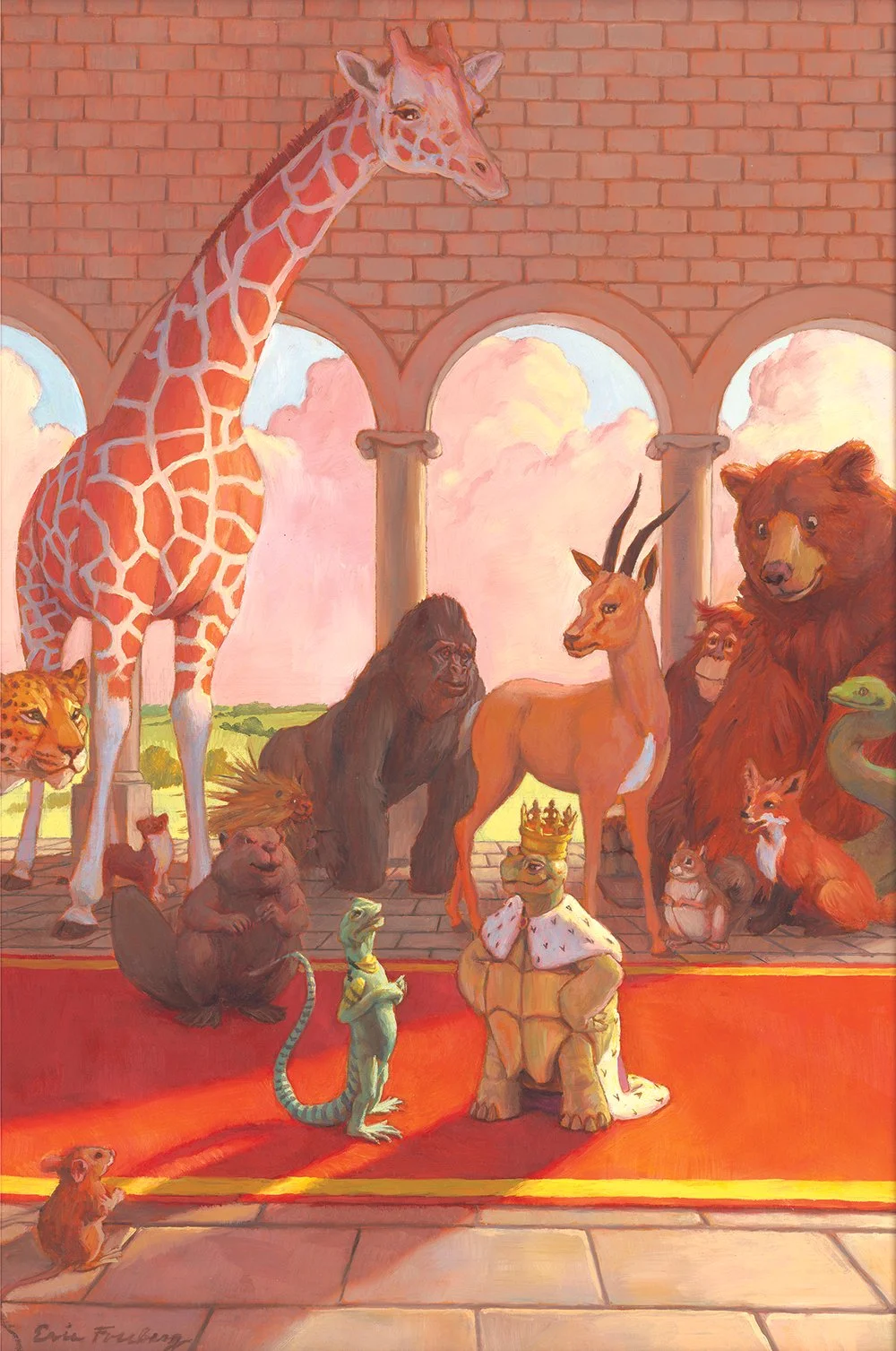
King Kudu talks to the Winner

What were some of your first professional projects? How did you find work when you were just beginning to build a name for yourself?

My first book illustration job offer was “White Fang” by Jack London for Compass Publishing. I ended up illustrating several classics for them, including “Tom Sawyer,” and “The Oblong Box” by Edgar Allen Poe, and the Russian folk tale “Baba Yaga.” I did a lot of work for that publisher early on.

I did a couple of jobs for Humpty Dumpty magazine. One was a story about George Washington’s adopted daughter, Nelly Custis, and another was titled “Fit for a King” about a king lion dissatisfied with the food he’s being served. I received the Honorable Mention Magazine Merit Award from the Society of Children’s Book Writers and Illustrators for those pictures.

Getting an agent was the start for me. As soon as I got representation, the offers started coming in. If an agent is willing to represent you, they believe you’re marketable, are making professional level work, and you’ve basically been vetted by someone who has working relationships with publishers. Once I was agented, I developed relationships with several publishers, and also started receiving offers independently outside of the agency.

What mediums are you mostly working with?

Oil paint when painting, and graphite pencil for drawings.

While your career seems to be largely involved with commercial work, I don’t think anyone would disagree that your paintings are fine art. Talk about some of the differences between illustration and maybe a piece that was created solely for you, or for a gallery wall.

I appreciate you saying my work is fine art. I think that’s probably a reference to quality. The labels of “fine art” and “commercial art” are tricky, in that they can mean different things to different people. Fine Art can refer to the freedom to do what you want, rather than for someone else’s purposes or for making money. I would argue a professional artist makes a living, and that means making money. Renaissance artists painted for clients almost exactly in the same manner as how I’ve created pictures for publishing houses. Maybe it’s just semantics.

I decided, 2 years ago, that I was at a point where I had grown tired of constantly meeting deadlines and I wanted to devote time and attention to my own children’s book ideas, which was always on the back burner when I had paying jobs to complete. The majority of my income was from illustrating. Accepting a full-time teaching position has allowed me to do that.

And it has also allowed me more time to exhibit in galleries and sell work. Relatedly, with illustrating I often felt I could improve the pictures if I had more time. With gallery shows, now I can devote time, when I wish, to taking paintings from books I illustrated and raising the level of quality to what I would call show, or museum, quality. It’s been a joy doing that. There’s a painting in the WVC show of the Wicked Witch giving orders to the leader of the Winged Monkeys to go get Dorothy that I had a lot of fun improving. I simply didn’t have the time, with my original deadline, to paint that picture as fully as I can now. That picture is one of the pictures I’m most proud of in the exhibition. So in a way, it’s combining doing it for the publisher followed by doing it for myself. I thoroughly enjoyed illustrating The Wizard of Oz so I think, with me, commercial work is just as joyful as something solely for myself. At this point in my career I lean toward doing what I want to do when I want to do it, and am more selective with job offers, but illustration jobs can be satisfying too.

I didn’t have time to scan it and share online before mailing, so it’ll be fun to see people’s reaction.

Talk about your process from start to finish. How much sketching, refining or plotting are you typically doing before you start committing to the final work? And how much of this stage of the process (if any) involves input from your clients?

With established publishing houses like Barnes & Noble, you’ll be given the manuscript of the book with very specific art direction of what they want. It might not, at first, seem very creative when art direction is so specific, but it actually is. You still have complete freedom with the style and look of the characters, the point of view, the lighting, the composition, the facial expressions and body language – everything.

With book illustration, contractually you’ll be given a sketch deadline and a final art deadline. You get paid after completing each. My favorite type of contract is when you get a payment for just agreeing to do the job, ha! But more often than not it’s the former.

I’m in the habit of providing 2, 3, or even sometimes 5 or 6 sketches for each illustration that the art director can choose from. One of my favorite things about illustrating is this stage, where you can riff on ideas of how the illustration could be composed. That’s one of the reasons I tend to offer multiple options, is I like doing them, but the art director also appreciates it. That said, almost invariably they’ll choose the sketch you like the least! So you might want to just give them the option you want to do.

When developing sketches, I start with “thumbnails” which are very small, almost abstract compositional sketch ideas. I then overlay a piece of tracing paper on top of the thumbnail, and with reference material (like character sketches, etc.) make another sketch on top of the thumbnail with more information and detail. If the art needs some realism I might photograph a model in costume as part of my reference material. That can be fun – I’ve recruited kids from local theater companies to pose for me with their parents nearby.

I’d keep doing tracing paper overlays until I’ve reached a level of quality that I’m happy with.

There’s a separate technique I use a lot – sculpting small maquettes of characters for reference. When I think it’d be helpful, I’ll make a little sculpture of a character, then paint it in acrylic. I can hold it up in the lighting and position needed in the various pictures which helps me to achieve character continuity and also a realism that you can only get when observing actual light falling on an object, as opposed to working from your imagination. Even if you have a great imagination, I find there’s no way to imagine the detail and lighting you get when working with a physical object. There will be several paintings of a leopard family in the show. I made little sculpted heads of all the leopard family members to aid me in making the 30-something paintings for that book. I learned the technique from James Gurney who illustrated “Dinotopia.”

I was thinking it’d be fun to have the sculptures in the show as well, but I’m afraid there isn’t enough time.

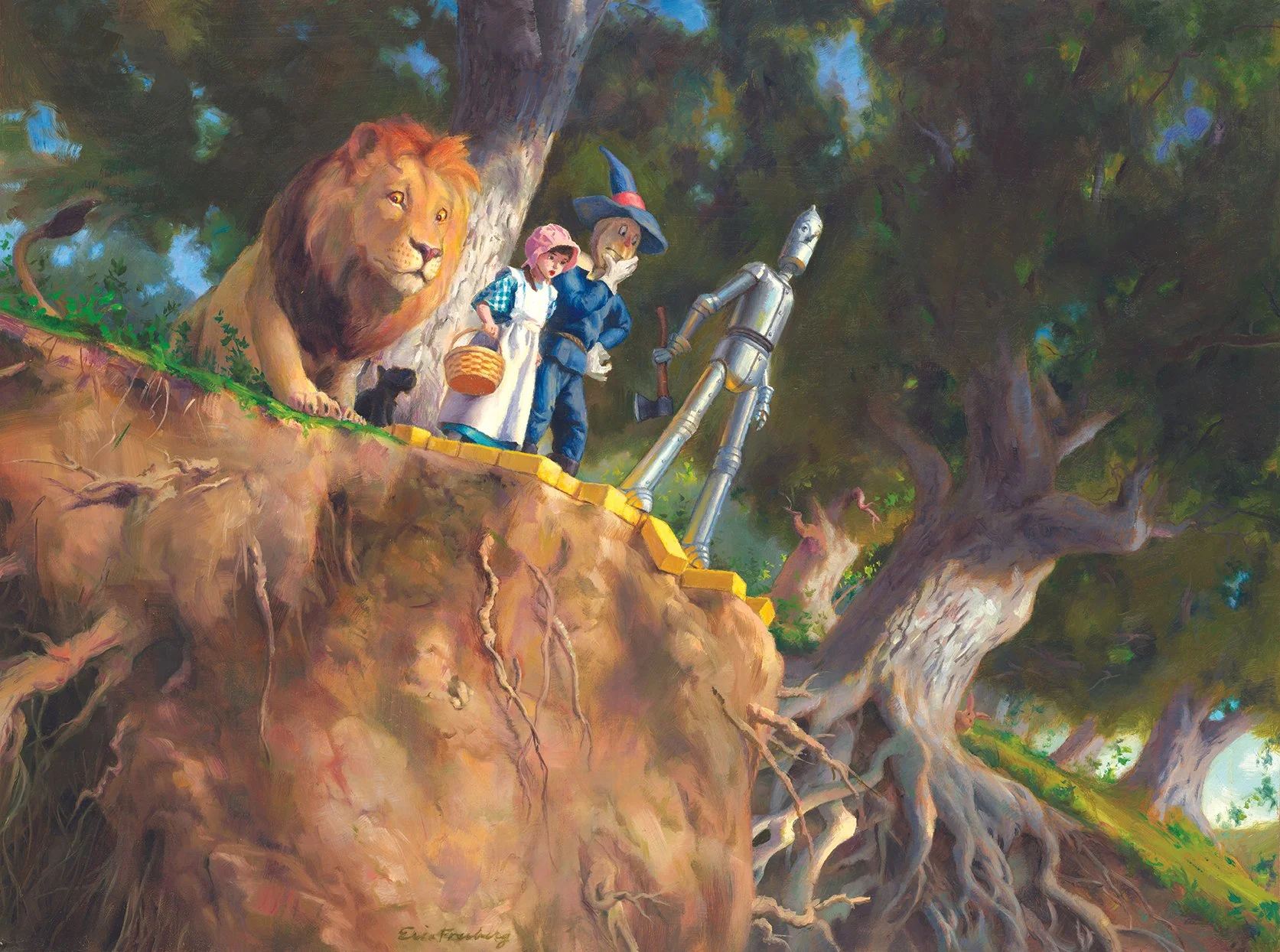
The Yellow Brick Road Disappears

On the topic of working with clients…this can be a two-edged sword and at times stressful. I think many artists would struggle with this unique element of commercial illustration. Talk about that process a bit. Favorite kinds of clients? Any kinds of projects (or clients) you try to steer clear from?

The client, at least for me, has mostly been publishers who know what they’re doing and are professional, so there’s rarely any difficulty working with them. If an author reaches out to me directly, I’m supposed to defer to my agent. When you illustrate a classic story, the author isn’t an issue, so it’s been easy. A book I illustrated won the Colorado Book Award for children’s literature last year, but the only time I interacted with the author was to congratulate her. That’s typical — the relationship between writer and illustrator tends to be very separate.

If an individual commissions a painting, that’s different. I explain the contract and how it works so there’s no confusion.

Did you ever have to submit a work you weren’t 100% happy with but maybe the client said “perfect!”?

Almost every time! No, actually you will often get notes about changes to make, which I’m happy to do because the goal for both the illustrator and the publisher is to make as good a book as possible. Early advice I got from an illustrator I admired was to have higher standards than the client. And the artist tends to be more aware of imperfections because you’re butting your head against them while making the picture. My name is going to be on the book, so that fact tends to push me to provide as high a level of quality as time allows. And your reputation and future job offers, especially from that publisher, will depend or be influenced by how good your work is.

Your illustration work often has a very storybook feel with an almost familiar (in a warm and welcoming way) resonance while still being unique to your own aesthetics. Talk about developing your own style while working in an industry that likely has certain confinements or expectations.

You framed it perfectly, in that you want to do work that’s in the style you like — your style — but there’s also the prevailing general trend of what’s being currently published. It’s a balance between being true to yourself but aware of trends. If I do work like what’s being published, I’ll get published versus remaining true to yourself.

Publishers will advise you to just be you, but when you look at what they’re publishing, some of them seem to be following the herd.

It’s a tricky line to tread. So far I’ve been fine. I paint like me and some people do seem to want it. I think it’s important to be open to growing, while remaining yourself. That attitude might be the sweet spot when it comes to style. I’ve evolved a lot. Hopefully I’m getting better. You’re allowed to change too.

How do you maintain a style while also being flexible enough for a variety of projects – that sounds hard to me!

Haha. My attitude is, I enjoy doing a stylistic range from what I’d call almost visual comedy on one end, to a classical style on the other end. I like doing both at different times. I have a sense of humor, too much of a sense of humor, maybe. And that can be fun to let loose on the stuff for younger kids.

Do you typically keep your originals for a book illustration? Is this all part of the contracts?

Yes. And it is, as you say, per contract. All the contracts I’ve had have allowed me to keep the originals. I don’t know if that’s the case in other genres, but in kids books I think that’s the norm.

It used to be illustrators didn’t get to keep their originals, which would suck. That’s why so many N.C. Wyeths and other Golden Age illustrators’ work is still floating around New York city in collections.

I tell students one of the cool things about working traditionally with paint rather than digitally is you have original art you can sell. You can also sell prints, limited edition prints, etc. It’s an additional income stream beyond what you receive from the publisher.

Do you have a dream illustration project?

I’m developing a book dummy for a lesser known Grimms fairy tale that I’ve been hoping to do for a long time. I illustrated “Grimms Fairy Tales” for Barnes & Noble, but this particular story, as far as I can find, hasn’t been done more than a couple of times, and never that well, in my opinion. And it’s a strong story. So that’s a project I’m nibbling on, in addition to raising the quality of illustrations and developing new pictures for gallery shows. One of the paintings I’ve done for this book dummy will be in the show. I’ll be sharing it online this week.

Has AI started to have a noticeable impact on the business of commercial illustration? Share your thoughts on navigating this strange new era of instant “art.”

It undoubtedly has, though I have to say, it’s not having a huge effect yet, not in kids books. Not in terms of taking away work. I think it can be a great tool as part of your process. I like to point that out because most people, or most students, take a completely negative stance toward AI.

I think I’m more relaxed about it because I’m well along in my career whereas college kids may take the brunt of whatever’s coming. People in the publishing industry freak out every few years about a perceived threat that is then completely forgotten a few years later. That won’t happen with AI – it’s major. But we should all be reminded, change is always happening and that’s all AI is, another change.

As I wrote earlier, one of my favorite duties at Ringling is I’m in charge of the visiting artist program for the first year students. I hosted an artist who does concept art of the spaceships for The Mandalorian tv show and many of the Star Wars movies. When I asked about AI’s impact on his work, his response was it didn’t affect him at all. He said when he was just starting out HE was the threat to the model makers of the X-Wing fighters. You can always find a threat if you look for it, was his point. And he was similar in age to me, which is to say, when you’ve lived long enough you’ve seen problems arise and then get absorbed and resolved — it doesn’t always turn out as badly as your emotions fear. Change is the nature of things, so calm down, it’ll be fine. But I realize it’s easy for us to say because things worked out for us.

AI aside, any other major changes or impacts you have seen in this field over the years?

I don’t know about any other major impacts. I’d say the work being done is slowly starting to become more digital. If you ask publishers, they don’t care how you created the illustration — they actually prefer it to look like traditional media and don’t care whether it’s been created with a paint brush or a laptop. That might be a surprise to the average person.

When I looked at “The Original Art,” a curated show of children’s book art at the Society of Illustrators last summer, I counted about 25 percent of the pictures were painted traditionally, and the rest was split between being a hybrid of traditional and digital media, and entirely digital. So basically it confirms what the publishers were saying, that you can create illustrations in a way you prefer, as long as it’s good. Procreate was the most common digital platform used for painting. It’s becoming a really common tool for digital painting because the young guns coming up are using it from an early age. I suspect Procreate might take over because these younger artists aren’t as facile at traditional drawing as they are drawing on an Ipad. Not a big sweeping change, but I’m interested.

Tell us about this upcoming MAC show here in Wenatchee. Will you be here for the opening? If so, any plans for a lecture/Q&A or any other kind of presentation?

“Making a Living Painting Bunnies and Mermaids: The Art of Eric Freeberg” will open in the MAC gallery at Wenatchee Valley College on March 6th, 5-7pm.

The show is a sampling of work I’ve done over my career as an illustrator for various publishing houses, along with recently created work. Work in the exhibit for classics such as “The Iliad,” “The Odyssey,” “Great Expectations,” several large paintings for “The Wizard of Oz,” “Grimms Fairy Tales,” “Journey to the Center of the Earth,” “Tom Sawyer,” “Greek Myths,” and “Roman Myths,” and Edgar Allen Poe’s “The Oblong Box” will be included.

I did a kids book for the National Parks Service raising awareness for the plight of the Red Wolves population. The cover painting for that book is in the show.

Additionally, I illustrated 6 easy reader books (Berenstain Bears are easy readers, for example) for the Kudu Adventures series. Several paintings I created for those readers will be in the show, as well as many other jobs.

The title of the show was what I got in the habit of telling people when asked what I do for a living, because at one point I literally was painting bunnies and mermaids for 2 different book jobs, and I thought it sounded funny.

Yes, I’ll be in Wenatchee for the opening on March 6th, and I’ll be in town through the 15th.

I’ll be doing a Powerpoint presentation of my work at the opening that I usually give to 5th graders, with some slight alterations. There’ll be a Q & A.

I need to touch base with the high school, but I agreed to do a talk and demonstration for students there some time in the following week as well.

Where can people follow your endeavors online?

You can find me at ericfreebergillustration.com. To be put on my mailing list if you have an interest in buying a painting or prints, message me through my website, or email at ericfreebergillustration@gmail.com.

Making a Living Painting Bunnies

& Mermaids

WVC MAC Gallery

March 6—April 24

First Friday Opening Reception:

March 6, 5:00—7:00 pm

Presentation by the Artist in the MAC Grove: Friday, March 6, 6:00 pm


Comment

An Interview With Wenatchee Poet Amanda Keewatinawin

January 11, 2026

BY RON EVANS

When did you first start dabbling in poetry?

I think my first memories of writing were probably middle school, angsty preteen years sound about right. I remember it being a major outlet for me in high school. I used to keep those Mead composition notebooks on me a lot of the time; I’d fill them up pretty fast with poetry and artwork. I struggled a lot with my mental health in school and still do. Writing helped get me through some rough times. I wish I still had those books—sadly, a lot of them fell apart or were thrown away.

Did you have a teacher/poetry pal or favorite writers that helped get you on your way?

Not really growing up. I didn’t really share anything that I wrote. It wasn’t until the last couple of years that I started sharing my work. I’d say it’s been maybe four years since I started putting pieces in The Comet and about two years ago that I got the guts to go with my best friend to do LitMic at Bushel & Bee one evening—total out of body experience. I’ve done it a few times since. I still get nervous about it, which is weird because I’ve been doing cultural education with kiddos through WRI and hosting beading workshops with adults for a few years, so public speaking isn’t anything new…but opening up like that is for sure different. I feel lucky now, though, to have supportive friends that I can randomly drop new pieces to and ask for input on. As for favorite writers, I see some of the work from women like Abigail Echo-Hawk and Joy Harjo that really get to me in ways I’ve not experienced before.

When you’re writing, are you trying to capture a moment you’ve already lived, or are you discovering meaning in real time on the page?

Hmmm, I want to say yes to both. It’s hard to explain, and sometimes these words roll around in my head and in my body for a long time before they come to be understood and put together. A lot of it, though, is moments I’ve already lived, but there are some that are for sure discovering maybe some meanings and maybe some feelings and breaking down some thought process in real time. Poetry for me is almost like a form of therapy, a way to sort my thoughts. It’s always been hard for me to fully express what’s in my head in real time and to make it make sense to others. Being able to write it out and express it like this in a beautiful way—be it about a morning hike I’m on or my experience of feeling daily grief from losing my brothers—words can be impactful. Putting words out into the world, be it on paper or on phone or whatever, can be helpful.

There’s a sense of restraint in your work—nothing feels over-explained. How do you decide what not to say in a poem, and do you ever struggle with leaving things unresolved?

I feel like there’s a good balance to it all. I do feel like some pieces will sit in my phone for a while and will have things added to them and then some things taken away. Sometimes I’ll take poems and break them up and make them into other pieces because they might start to not flow very well, but the idea is there and sounds good. Some pieces feel like they’ve taken more of an emotional toll than they’ve helped, and there’s a few I can’t read anymore. I’m not sure if there’s much I wouldn’t write about. There’s a few I’ve shared that I’ve used a pen name for when I first started submitting them to The Comet. Honestly, at this point, though, it doesn’t bother me who knows what I wrote. There’s always going to be someone out there that either likes your art or doesn’t, and that’s ok.

Place and memory show up in subtle, almost tactile ways in your poems. Do you start with images, emotions, or language—or does it change from piece to piece?

My mind is weird with how it works. I use a lot of my emotions from those memories and the images that were left from events to weave into pieces. A good example: the second-to-last piece I submitted to you was about how I had received my Cree name. My partner and I had taken my dad back to Montana over the summer to visit our reservation and see family, likely for his last time. It happened to be during Sun Dance Ceremony time. The whole back story to it is bittersweet. It’s a journey that will live in me for the rest of my life for so many reasons. It’s heartbreaking and loving all at the same time, and it’s all in that one poem. And like so many of my others, it’s a window into a moment in time of my life.

Your poems often trust the reader to meet you halfway. How much do you think about the audience when you’re writing, and do you write differently knowing the poem will live on a printed page like The Comet versus a performance or private notebook?

I’ll be honest—most of what I write is for myself. I choose to share because maybe others could resonate somehow. Maybe they will see a bit of themselves or feel a bit of that moment as well. I don’t write differently on my phone than what I’d send to you; it’s all the same. But there are a few poems I haven’t shared—some I’m still working on and have been for quite a while, and some that came from dreams that feel like they are meant solely for me, and I think that’s ok. There are a few I’ve written with the intent to share who are specifically about certain people. There’s one I wrote about my partner last year that is very special to me. I feel like in some of the pieces that I may have written with the intent to actually knowingly share with others, those ones somehow hold a bit more power in them. I’ve been on my own personal journey of learning my language for the last four years, and being able to work what I’ve learned into my poems, to me, feels like a subtle way of taking back a bit of what was stolen from those who came before me. Being able to share that with readers, when in hindsight the governmental and societal goal was for Indigenous people to lose our language and culture, it’s been a good way to stick it to the man, I guess you could say. It’s been my middle finger to colonization to show that although you tried, I’m still here learning and sharing these words with your great-grandchildren, and there’s a lot of beauty in sharing that.

Some of your poems feel like fragments that still stand on their own. Do you see your work as part of a larger ongoing conversation, or is each poem meant to be a complete world?

I would say it’s an ongoing conversation, like I had mentioned earlier—more of a story, or maybe it’s fragments of a forming one. I can sit you down and pinpoint every event that was happening in life from each of these pieces—good, bad, all of it—what I was feeling, who was there, what happened, conversations that were had, places I happened to be at, the things I saw and experienced. It’s double-edged in a way. It can be exhausting what my mind chooses to ruminate about, but I feel like there is some beauty in it.

How brutal are you with your drafts? Are you a meticulous tinkerer, or do you know quickly when a poem is finished?

Sometimes I can feel poems starting to form, but maybe they aren’t fully ready to be written down just yet. I have pieces in my phone I’ve been working on for a bit—some I’ve added to and taken from, and some, like I’ve said, I’ve broken up and made into other poems because they just didn’t feel like they flowed very well together anymore. Sometimes they just start to feel like other chapters. But occasionally there will be pieces that I’ll make that, once they’re written, I know they’re good to go. It’s not often, lol, but sometimes it happens. I like to have some time with my work. When I’m out hiking early in the morning with my dog to clear my head is usually when a lot of my work comes to me. I try to get things written down ASAP so I don’t forget, and then work on the flow of it when I have the time.

When a poem works for you—when it really lands—what usually surprises you about it? The language, the feeling, or what it reveals after the fact?

I would say the feeling—the flow of the words, how they land. There’s been a few I’ve written that, after going through and editing and working on them a bit and finally reading them out loud or sharing them with a friend, it’s been a kind of “wtf did I just write” moment for me. Looking back on some of my work is wild to me—seeing how it’s evolved, knowing some of the worst of times and how impactful some of these words were. Some of these pieces still hit pretty hard. There’s a few pieces I can’t read anymore.

Do you share your work online anywhere—if so, where?

I haven’t found any other place to share my work yet, but at some point I’d love to be able to publish a piece. Being able to maybe one day create a small collection of pieces in book form would be amazing, but for now I’m most definitely content with sharing them with you guys.

Comment

Surry’s Orchestra posed on stage at the Auditorium. Wells Smith, Surry’s replacement, sitting up front. Credit: Wenatchee Valley Museum & Cultural Center, 010-63-2

Surry's Band

January 11, 2026

By Dustin Hays

There was a period years back, while digging through old newspapers and microfilm for local music lore, that I kept seeing mention of groups led by someone named Surry.

Documents throughout the 1920s refer to “Surry’s Eaglonian Band,” “Surry’s Band,” “Surry’s Orchestra,” and “Surry and his Orchestra.” This was a decade of big band dances, late-night frolics, dance marathons, and the occasional “battle of bands” (how two band shows were advertised locally, a century back).

After enough searching, I was able to piece together the lost lore of one of the scene’s earliest upperclassmen, one of the main players around town during those days, a violinist named Loris Surry.

Surry was born in Saint Leonards, England in 1898, and his family moved to Wenatchee in 1901. For more than a decade, his father Vincent operated Surry’s Studio, an early photography business. Surry first started performing with local orchestras at the age of 12, and graduated from Wenatchee High School in 1916.

By the end of the next decade he’d been married and divorced once (marriage lasted 3 years… jealousy cited in the newspaper... young musician married to a clerk… I can imagine it was a whole thing), became a homeowner (oh, the joys of being in your 20s and owning a home), and was working as a jeweler.

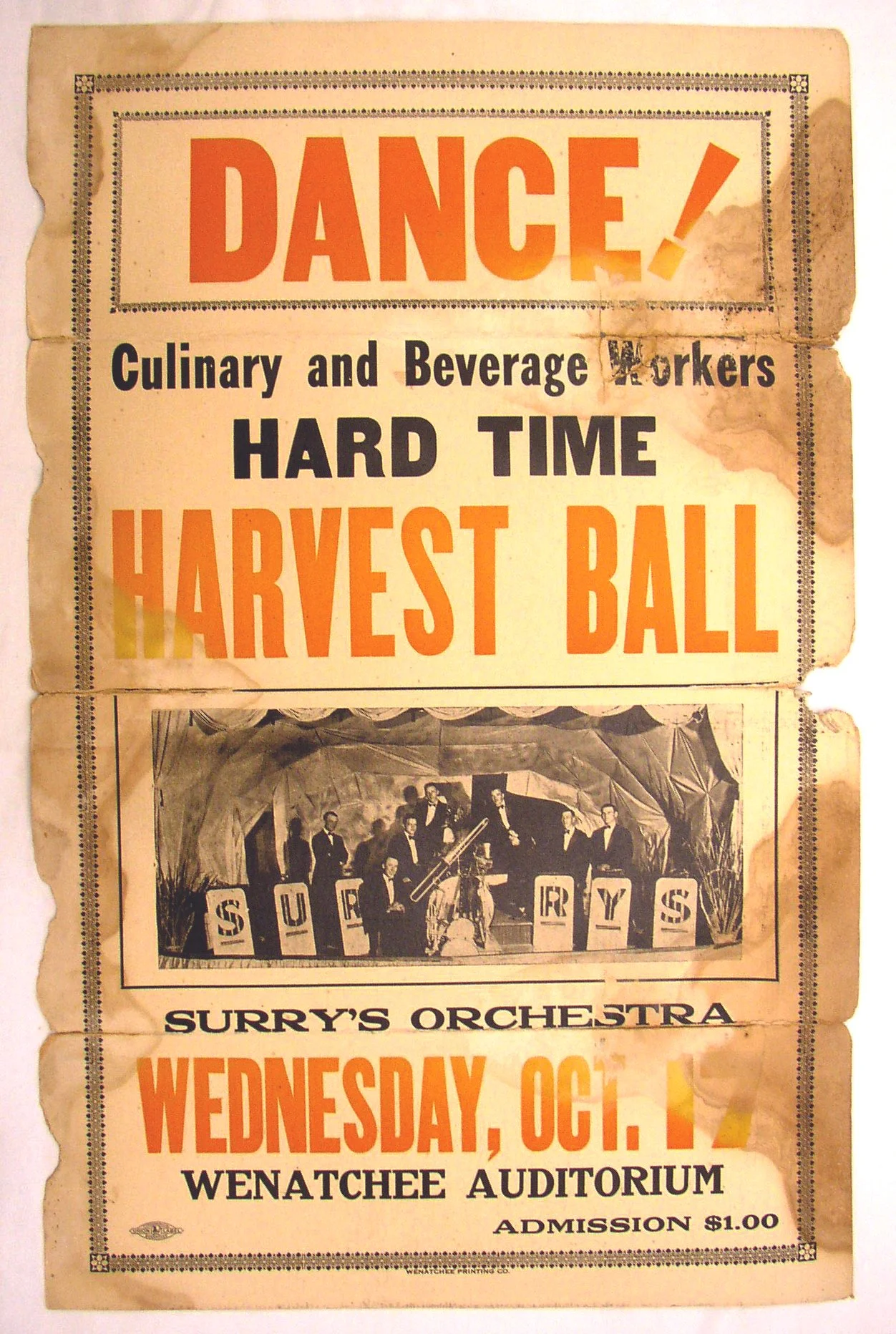
Undated poster, advertising an Oct 17th performance at the Auditorium. Credit: Wenatchee Valley Museum Cultural Center, 010-63-2

He had also been leading a local orchestra for years. I found mentions of Surry’s Orchestra performing all across Chelan County. At the Cashmere American Legion in ‘22. At Wenatchee’s Commercial Club in May of ‘24. In the summer of ‘27 at the Cashmere Grange Hall, and all through 1929 at the Auditorium on North Wenatchee Avenue.
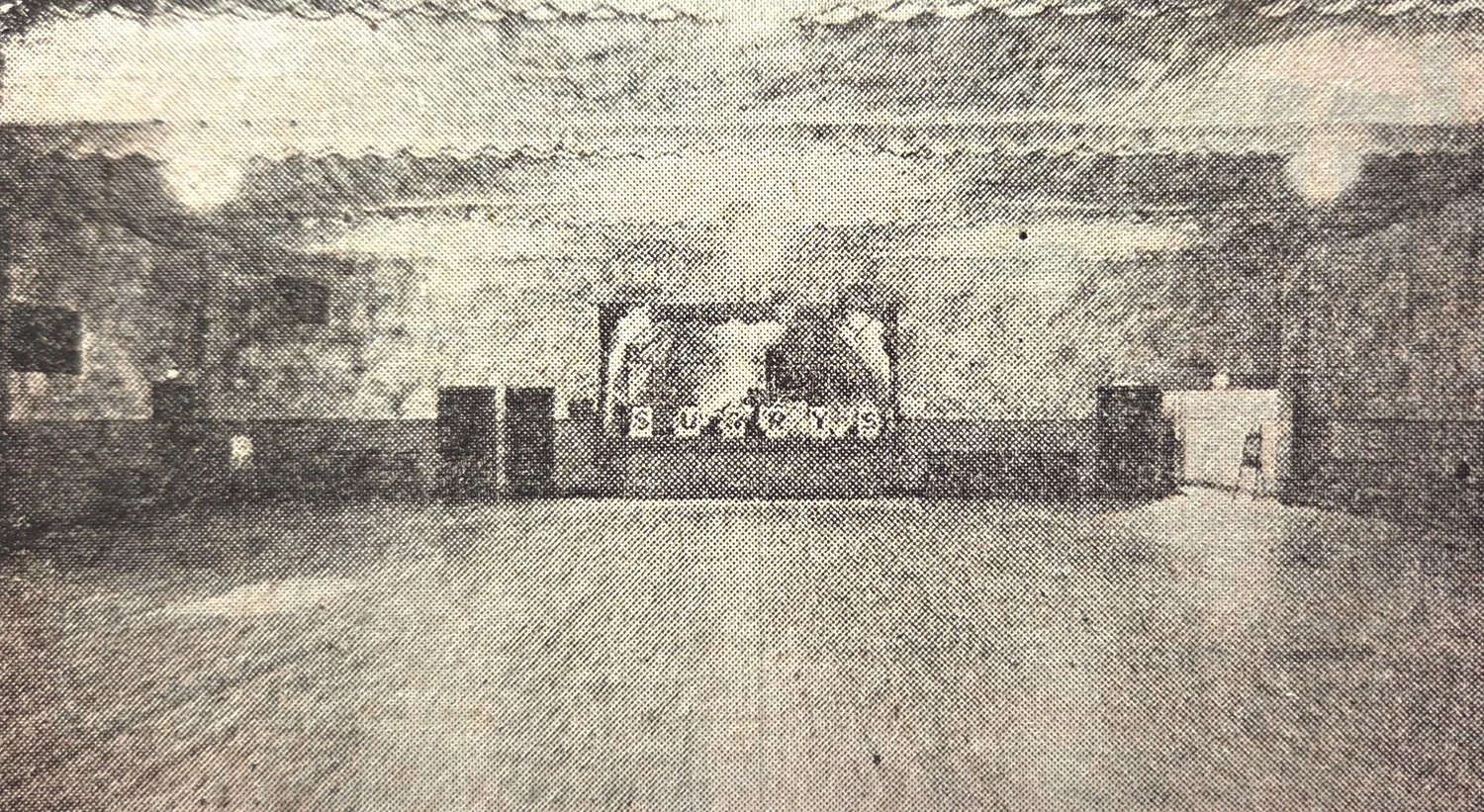
The latter was one of the main rooms in town to see live music back then. It seems their main “competitors” were Edgewater Grove in Monitor, and the Lake Chelan Pavillion. The Auditorium sat on the east side of North Wenatchee Avenue, across from current day Lemolo Cafe. Wenatchee music scene veteran Bob Godfrey booked shows there in the 1940s and remembered the room as “about 100 feet or so on each end. It had a stage with curtains on the eastern end of the room. They’d have dances and rent it out for dinners.”

The fall of ‘29 looked like a busy season for Surry. The band was playing at the Auditorium every Thursday and Saturday, with occasional weeknight shows, whenever boxing and pro wrestling weren’t being booked in that room. Their month was slated to end with a four hour performance at the Auditorium’s 2nd Annual Masquerade Ball on Halloween night.

On October 19th, Surry and his Band performed at the Auditorium, reportedly until midnight. It was the 7th performance the group had given that month, and… *cue the dramatic “dun dun dun” sound effect* the final for their 31-year-old bandleader.

After the show, Surry drove Kay Gush (a presumed, though never confirmed, “romantic interest”) back to her home in Sultan, WA.

In the early hours of October 20th, Surry’s car was struck by a taxi cab about 100 feet from the Peshastin bridge. The two occupants of Surry’s vehicle, and taxi driver Ray Weisenstein, were rushed to Leavenworth for medical care at the Cascade Sanitarium.

Gush and Weisenstein both sustained serious injuries from the collision. Surry never regained consciousness after the crash, and was pronounced dead at 8:55 a.m.

While being held on manslaughter charges, Weisenstein stated that Surry’s car approached him at a fast speed and without headlights on, the latter a detail that Gush denied, who insisted that Weisenstein was driving in the middle of the road.

Tragedy almost struck twice for the Surry family, when his mother and sister-in-law were in an accident while driving from Seattle to Wenatchee for the funeral service. Their car reportedly fell over an embankment, flipping three times. Surry’s mother sustained a few cuts and bruises and his sister-in-law was surprisingly uninjured.

Surry’s funeral was held on October 23, 1929 at St. Luke’s Episcopal Church (still located at 428 King Street in Wenatchee). The seven members of the Surry Orchestra and Auditorium manager Dan Taylor acted as pallbearers.

On the 26th the Wenatchee World reported that trombonist Wells Smith, the senior-most member of the orchestra, would take over direction of the group. Rather than changing the group’s name, it was decided to make the small change from “Surry And His Band” to “Surry’s Band.” Smith was quoted, saying “I know I’ll never be able to take the place of Loris, to instigate the life and pep into the dances that he did, which made his band known throughout the valley for when he took the stand to sing at a dance, pep and vigor seemed to appear from nowhere. However, I am proud to have the opportunity to carry on the work of Loris and am here to do my level best.”

The Auditorium, from the 1929 Wenatchee City Directory. The Surry’s Band music stands sit on an empty stage.

Credit: Dustin Hays

Weisenstein went to trial on the manslaughter charges on January 17th, and was ultimately found not responsible for Surry’s death.

Back in 2017, when I worked with Kasey Koski to put together the Apple Capital Records exhibit at the Wenatchee Museum, she found the Harvest Ball poster in their archives.

If it weren’t for my propensity to burn hours of my life wanting to reminisce about eras of the local scene that I wasn’t even alive for… and a friend gifting me a few boxes of 80-100+ year old editions of the Wenatchee World (Thanks Bruce. Love you, buddy) - Surry’s name would’ve continued to carry no significance to us modern day rock n’ rollers… maybe the earliest regional example of a musician at the top of their game, dying way too young, while driving a gal back over the pass after making her watch your three-hour set.

If we could learn anything from Surry’s time playing around town, it’s probably to play as many gigs as you can, and make sure your headlights are on if you’re planning to drive over Stevens at three in the morning…

Know anything about The Auditorium, Edgewater Grove, or any other local groups or venues from the 1920s? Reach out at Dstnhays@gmail.com!

Comment

Danbert Nobacon on his Methow Valley property - photo by Stella GH

SOUNDTRACK TO A REVOLUTION: DANBERT NOBACON

December 18, 2025

By Ron Evans

Anarcho-punk-folk-troubadour Danbert Nobacon has returned to his beloved Methow Valley after a whirlwind tour in the US and England. The former Chumbawamba-ian is never too far away from the stage, but after some forced downtime - heart surgery a couple years back, he’s good now - being out and about brings a whole new level of gratitude.

And the timing couldn’t be more fitting because the geo-political landscape being a goddamn dumpster fire always helps when it comes to finding folks to show up to a punk thing.

In 2007, Nobacon moved to the Twisp area with his family while Chumbawamba (hailing from Leeds, England) was still technically together. The band later called it a day in 2012. And while many people (in the US anyway) may still see Chumbawamba as an overnight sensation that had a monster hit in the 90’s (just sing “I get knocked down… in virtually any setting and someone will start singing along), the band had been cranking out their highly political punk-anti-folk-dance tunes for over a decade by the time “Tubthumping” entered the pop arena.

Danbert’s solo recordings are dripping with ferocious commentary on capitalism, racism, classism, the royals, the government and the environment. And somehow…they are also fun. The eclectic styles, country to folk to rock to sea shanty-esque ballads make raging against the machine catchy as hell, and at times - hilarious. I discovered his first full solo LP, The Library Book of the World around 10 years ago — it’s become one of my all-time favorite albums. Since then he’s teamed up with a mostly revolving menagerie of singers and musicians to fill out several studio albums and many live performances. These days, Danbert tends to play mostly solo acoustic shows.

“It’s just so much easier. When you’re plotting a tour you have so many things that need lining up even just as a solo performer. Getting that many schedules to line up only works out every so often.” he says.

Somewhere in the midst of the music, Nobacon also put out a book called 3 Dead Princes: An Anarchist Fairy Tale, illustrated by filmmaker Alex Cox (Sid & Nancy, Repo Man). Before his heart surgery forced a vacation, he was teaching at Liberty Bell High school for the past decade.

I chatted with Nobacon about this latest tour, about living in the shadow of “the big song” and about some fun things he has coming up here in Wenatchee.

Are you mostly touring new music?

Well, yeah but mostly because I re-write some of the lyrics. You know, as the times change.

I imagine there’s a lot to write about right now.

Yeah. LAUGHS. I do have a few new songs as well. Mostly I was touring the East Coast and a little in England. There’s a big punk rock festival they have in August. They asked me and a few other Chumbawamba members to be part of it. There was Bob, Alice, Lou, Harry, Maeve, the old bass player, me and Dunstan, seven of us. Is that seven?

Wow, and that’s not the whole band?

Well we had quite a few over the years. But there were only a couple missing. You know a lot of bands used to trade musicians here and there.

So did you perform there as Chumbawamba?

No it was just a QnA type thing.

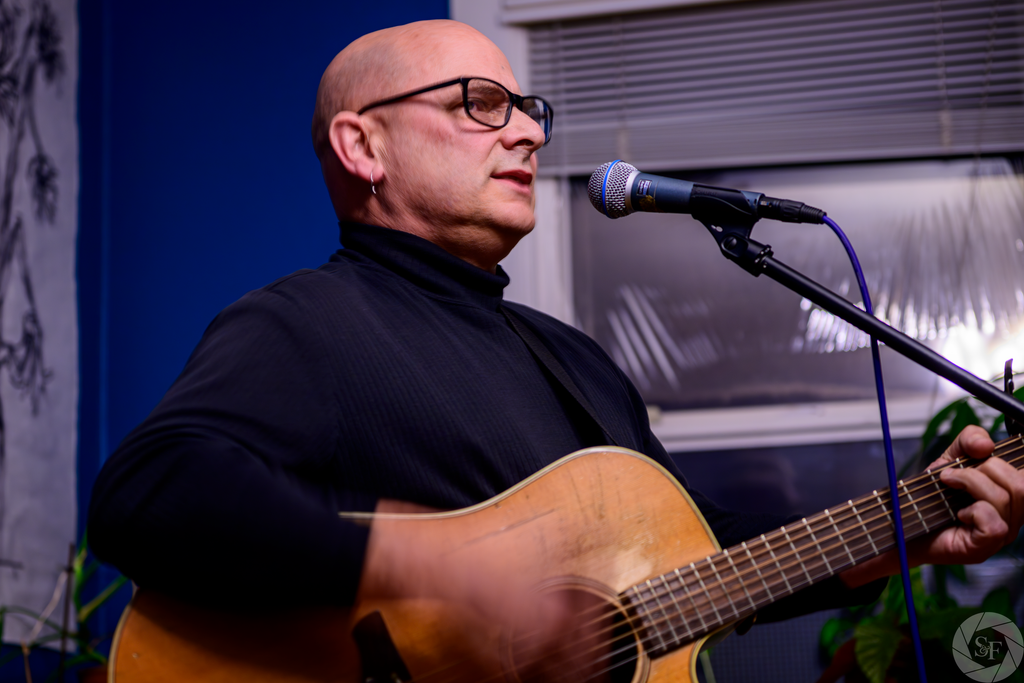
Danbert Nobacon live at Rumble Collective Portland OR - photo: Static and Frame Photography

Was the first question when you were all getting back together?

The interviewer said he wasn’t gonna do that beforehand. LAUGHS. I mean…we get asked that all the time.

Of course. Is the answer always just a definitive no? You like how I’m not ashamed to just be another one asking?

Pretty much. We got this offer to do a thing this year actually. The guy that put out Creation Records (Alan McGee ) — to be part of this sort of tour of ‘bands from the 90s…’ but we got to a point where we thought…we didn’t wanna tarnish any of it. But I get the appeal of it — I get why people wanna see it. After touring recently, especially along the West Coast I saw a real appetite for that. I’ve been seeing a lot of old Chumbawamba fans coming out and really wanting to be part of something like this. Especially in the current times.

It’s so rare for anything to reach the level of “Tubthumping,” let alone something that’s so politically driven - even “the big song” is a political anthem.

Oh yeah, well I’ve even heard people suggest that it was some sort of deliberate plan — like a sleeper cell agent or something. Like 13 year olds were even buying the record and the parents would find out the history of the band or listen to the rest of the album. I had a woman in San Francisco tell me that her Catholic parents didn’t let her listen to music that…you know…

Could corrupt their daughter with evil things like politics?

Right. But she said that one snuck through.

I love the idea that you all planned this sort of gateway drug of danceable pop music to get the kids using their heads about the world at large, and that that would be seen as a fiendish plot.

Right? Of course we didn’t do that but…

Well I saw a Chumbawamba documentary (I Get Knocked Down) came out recently — I know one was in the works for a while. Are you happy with how it turned out?

Yeah, it’s pretty good. You know, it was Dunstan’s project and his take on things. There could have been 8 different perspectives of those years, but yeah — he captured some of the earlier stuff and covered a lot of the prankster type stuff we were up to, that sort of thing.

Is there footage of you dumping that bucket of ice on the Deputy Prime Minister of England?

There’s no video of it — this was before everyone had cameras on them. But some of it and the aftermath was caught on a still camera.

Hilarious. And you didn’t get into any serious trouble for that right?

No, they put me in handcuffs for about 45 minutes then… “well we gotta let you go.”

When you are out playing and meeting fans, do they tend to wanna talk politics with you?

Not always. It’s funny though, I have signed more of the old Chumbawamba records lately than just about ever. I do still play a few songs from back then. You hate that some of them are still so relevant concerning politics. I know some of it is nostalgia for people. So it’s a bit of both of those things. I do get to hear people tell me that my songs or Chumbawamba’s songs made an impact on them in a lasting way. That’s great because…it’s kind of like being a teacher where you never know if the students are really taking in what you’re saying. I sometimes tell this story onstage…I can’t really remember if it was the record company or the music press in England but, someone once said “Chumbawamba reads too many books.” And that was said as an insult.

Sick burn!

Right. So the music press just couldn’t grasp this sort of thing, they accused us of “spoiling” this fun, silly pop music world.

Again, as a bad thing.

As a bad thing! We were tarnishing the pop music. You know, “Tubthumping” was pretty big all over but not in Britain.

Really?

Yeah. It may have just been curious timing. Pop songs are all about timing. And you know, it was right around that time that Princess Diana died, so they were really shying away from anything that could be considered even slightly controversial. So “pissing the night away” was not going to work.

Wow. That’s wild. Her death was huge over here, I can’t even imagine what it was like in England. How many solo albums have you released at this point?

Five. And two of them are double albums.

For as simple and bare as a lot of your music is, the production of your albums have an impressive scale — some really good layers and textures without getting lost in it. Do you ever envision a larger group tour at some point?

Well, planning a tour as mentioned is hard. And I’m not great at it. But I had wanted to find a touring agent, and I tried to get one for a while and finally got this guy out of Portland. But it’s always something I can see happening.

Are the kids still buying CDs at the merch booth?

They are actually, I even sold out a few times. Of course everyone wants vinyl but it’s just so expensive. But recently, an old friend of mine who runs the website PunkNews.org — he reached out and said he wanted to put out a limited edition of a couple of my songs on vinyl. We only put out about 50 of those.

Is there a preference you have for room size? You’ve played massive shows, intimate ones in the woods on a snowy night. Is it all the same to you?

There’s no ideal room really. What was interesting was when Chumbawamba would be invited to these sort of massive shows at like…basketball stadiums. These radio showcases. We played one where we went on right before Aerosmith.

Aerosmith and Chumbawamba!

Oh and then Michael Bolton. One artist that I really enjoyed meeting at one of those was Bob Dylan’s son, Jacob Dylan (The Wallflowers). His performance was great and he was a great guy to talk with.

What about in the indie or punk scene — anybody you met over the years that ended being folks you got along with well?

Ian McKaye from Fugazi. The Mekons, you know.

Was it sort of a scene as it were, in the early days in Leeds?

Not really, we would play around Leeds with other bands but…it wasn’t until we started to branch out more, that’s where I met Ian McKaye. We never toured with Fugazi but we played a few shows with them. And even though we were different stylistically, we were coming from similar places you know? And later on, when “the big song” came out…. Ian was kind of fascinated about it. Why we chose to do it. What was our experience with a major label, with the big video and all of that. He wasn’t critical really, he was just like “we couldn’t do that but I respect that you explored that in the way that you did.” And I appreciated that.

That’s interesting. Again it goes back to the fact that you didn’t plan on that being the monster hit that it was, but you never sold out what the band represented. Those are tricky waters to navigate coming from the punk world.

Oh yeah. It’s funny, they have the punk rock museum in Las Vegas. I was a tour guide for a bit.

No shit? So I could have bought a ticket to have Chumbawamba’s Danbert Nobacon take me through the history of punk?

Yeah, if the timing was right.

Well we gotta talk about something fun you got in the works here in Wenatchee. You’re gonna join the Radar Dames for our annual HaHas and TaTas New Year’s Eve show!

Yeah, I’m looking forward to that. I have done some burlesque in the past, so…we will see what I come up with.

And there may be another surprise that we won’t promise. But it should be a pretty fun (and fitting) way to see out this year.

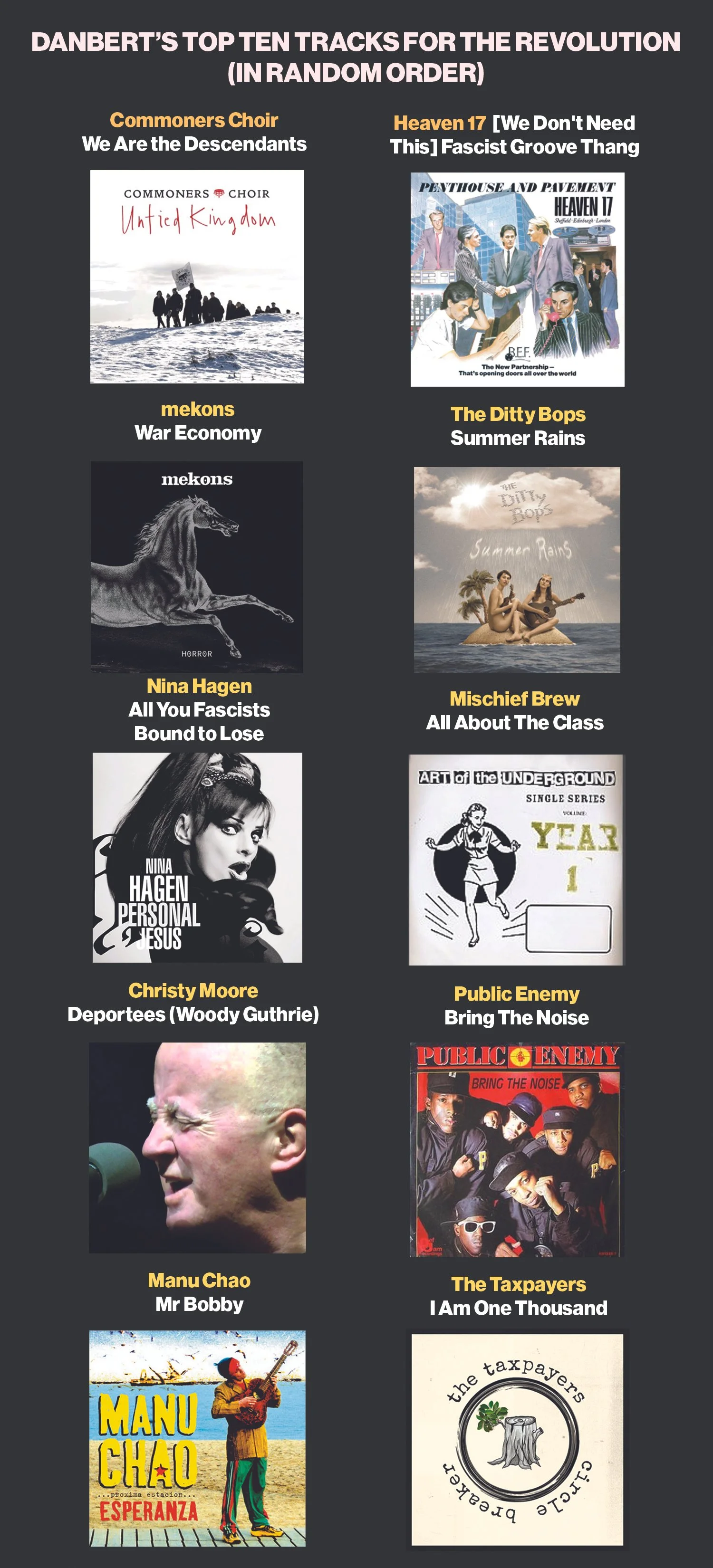
I also asked Danbert to give me his top ten songs necessary for a proper soundtrack for a revolution. His picks (below) are as eclectic as the man himself.

Tix for HaHas & TaTas on sale now at

numericapac.org

Visit danbertnobacon.com for stories, links and music and tune into his fabulous radio show at mixcloud.com/danbertnobacon.

Comment

Doña Marina: photos by Artichoke

Eat Out Wenatchee: Nacho Average Seafood Boil

October 19, 2025

Hey, Comet Readers. Did you know we have a Mexican restaurant here in the Valley that specializes in seafood boil? You didn’t? Well, let Artichoke and Truffle Butter introduce you to Doña Marina, on scenic Valley Mall Parkway in East Wenatchee.

As you no doubt recall from your “Cuisines of North America” masterclass (if only), seafood boils originated as part of Louisiana’s Cajun gastronomic tradition, combining Native American, French-Canadian, and African culinary influences. Cajuns would serve seafood boils at big celebrations, using local farmed or gathered ingredients like shrimp, crab, potatoes, corn, and local spices to create a kick-ass, filling, and flavorful meal for large groups. Like a sexy gator, seafood boils crawled their way north up the East Coast, incorporating local ingredients like lobster. Oh no, cultural diversity spread like a virus! Here at Doña Marina, Dungeness crab is a main component. Get in my belly, crustacean.

When your heroes Artichoke and Truffle Butter (A+TB) first found out about Doña Marina from A’s cool-as-fuck coworkers, we were not only stoked to hear of a local seafood boil restaurant, but also intrigued (and, admittedly, somewhat confused) by the idea of a Mexican version. Being that we’re D.T.E. (down to eat), we had to check it out. Because seafood boils were designed to be a celebration with community, A+TB scrounged up every last friend we could find (which turned out to be just a few unfortunate assholes) to join us at Doña Marina.

Pro Tip 1: Bring your friends.

Sharing a parking lot with a nail salon, Doña Marina is nestled in the nearly picked-clean bones of the old Mai Lee Thai location, featuring some hella stark black and white contrasting décor reminiscent of a sexy 1980s noir video (if only the floor tiles were black and white like that hospital in “Terminator 2”… gotta rewatch that). Some cheesy beach-side ambiance adds color, including cute inflatable lobsters that seem to have been captured by a decorative string net. Of course, you don’t catch lobster in a net, and there’s no lobster on this coast… or on this menu; but we digress. Fun crabby paper tablecloths—feel free to doodle! The intense smell of undiluted Limpia transports us south. Old-school Mexican crooners serenade us in the main dining room, competing with the ranchero playing loudly from the kitchen: live with the dissonance, friends.

With your table comes an entrada of chips and cabbage slaw: fresh, good n’ peppery. You can low-key switch in guac and bean dip for your table appy, which is also kickin’. Doña Marina sports a fairly well-stocked bar, and the marg is of the “enormous” variety. Limited sugar headache and TB can (just barely) taste the booze so… B+. Two really tasty mezcal drinks, “El Humo” and the “Mezcal Figuarosa,” are currently flexing on the rotating cocktail list, and there’s a good-looking Paloma on the permanent version.

The food menu at Doña Marina has surprising depth. In addition to a series of standard dishes (enchiladas, tacos, and quesabirria), this place throws down an array of Mexican seafood fare including several preparations of shrimp and ceviche. Many of these options can be ordered family-style, in large quantities—harkening back to a seafood boil meal’s communal roots. Some are served not just WITH, but ON a six-pack of beer.

Just to prep for consuming mass amounts of seafood, our group of savages ordered several mains and shared them all, as a family-style mega appetizer. A highlight was the “Camarones Apretalados,” a sizzling pile of fajita veg with bacon-wrapped jumbo shrimp and melted cheese on top. Uhmahgawd. But of course, the main headliner of our meal, and why you spent your last Dogecoin on this magazine was—duh—the SEAFOOD BOILLLLLL!

Doña Marina’s seafood boil comes serving 1, 2, or 4 people; and you can choose from 3 flavors: butter and garlic, lemon pepper garlic, and “Feast Loco Mix Louisiana Style.” The latter two can be ordered mild, hot, or Mexican hot. A+TB think that the “Feast Solo” (seafood boil for 1) was sizable enough to feed two people after appetizers, if leftovers aren’t a goal. And let’s be honest, day-old bivalves are a “C” in the fuck/chuck/marry triumvirate, amiright?

Pro Tip 2: If you’re ordering the seafood boil, prepare to squirt your friends! Shit gonna get messy.

The “Feast Solo” consists of a half-pound of Dungeness crab plus shrimp, crawfish, mussels, clams, sausage, potatoes, corn on the cob, and a hard-boiled egg on the side (for protein) for $45. All of these beasts come swimming in a giant silver bowl of spicy butter sauce: your own personal marine ecosystem waiting to disappear into your gaping maw, you exogorth (look it up). You also get a fun little basket of tools you can use to shell these creatures, and personal protective equipment such as a disposable plastic crabby bib and rubber gloves if you don’t appreciate spicy cuticles. These are not for show, friends—you are about to get nasty.

Wear clothes that you don’t mind throwing out after dinner, because seafood boil is not easy to eat tidily. Artichoke spilled a 2-ounce cup of spicy hot butter all over every article of clothing she was wearing, and those were her favorite pants, dammit. She also caught TB’s crab juice to the eye, yar matey!

Eating seafood boil is super fun, but maybe not something you do on a first date. Figuring out what all these tiny tools are for was amusing (like playing dress-up as a dental surgeon), and listening to “crab-eating pros” argue about how to best de-shell Dungeness was hilarious. Fights broke out between buds wielding tiny lobster forks trying to spear bits of boil. Luckily it’s hard to murder your friends with a very tiny pokey fork.

Pro Tip 3: Use the scissors.

The shellfish was all tasty, and we appreciated the variety served in The Feast. The eggs were an unexpected fan favorite—dip dat shit. Much of the meal, really, was an S.D.U. (Sauce Delivery Unit). And the sauce… the Louisiana-style flavor was fantastic! Normally, we love trying everything once before settling on a favorite to re-order, but we’d totally stick with this house favorite next time.

What is this? Is it a shrimp? Is it a tiny lobster? No. It’s a crawfish. Artichoke declares that it tastes “like swamp,” until her Bib Buddy shows her how to mac on the tail. Speaking of Bib Buddy, hopefully you brought a friend who is going to order something that can be eaten using actual utensils. If your entire table is ordering seafood boil, make sure your bib is on tight and you’re up to date on your texts, because once you start eating, you’ll be so covered in shellfish body parts and juice that you can NOT touch anything until you’ve hosed yourself off in the bathroom. TB found himself needing a napkin in his lap but his hands were covered in crabs… thank fuck for that Bib Buddy!

Eventually we got down to the surprises at the bottom of the bowl, fishing out the last few pieces remaining, with the mantra “sausage or clams; sausage or clams!” A lovely DEI moment. When we’d sieved all the seafood out of our rapidly cooling spicy butter vat, we took a look at the utter destruction on the table, feeling very “I’m a monster, don’t look at me.” The carnage was reminiscent of “Alien vs. Predator” (vs. “My Chemical Romance” vs. me). To clean up, A had to double scrub like she was going in for surgery… or coming out of it.

Finished? Go home and take a shower, you disturbing predator. You look like Vecna from “Stranger Things” (or DND, nerd). Prepare to feel forever unclean, but well-fed and ready to return (at some point) to the loving, spicy, buttery arms of Doña Marina.

Comment

LISTEN UP: Small

October 19, 2025

By ron evans

When I was around 17, I was riding around with my pals Cho and Jamie in Jamie’s green-bean-green hatchback car and they put on something I hadn’t heard. “Is this Pearl Jam?” I asked. They laughed and said they had just had that discussion before they picked me up. They told me it was a Tri-Cities band called Small. After a few songs I could tell it wasn’t Pearl Jam, but there’s no denying the “yarrrrrl” style of the voice. Now…I’m not a big fan of Pearl Jam but I, like so many, was obsessed with Ten when it first came out. It was new, exciting and worked perfectly with the other Seattle shit (IMHO) that was blowing up. But by ‘92 I was getting a bit tired of my overplayed PJ tape - and that’s a big part of the story. Tape. Tapes. Limited music options.

It’s fucking incredible that we can dial up any goddamn thing now, whenever we want and I won’t pretend otherwise – even for the sake of nostalgia. But looking back, there was something to be said about only having a box or two of tapes, a couple crates of records, and if you were medium-poor like me…a few CDs. We really took our time with music. Now, it’s so easy to yell “Alexa, skip!” to the next track, the next album, the next genre. It’s causing a lack of focus, attention and most importantly, respect for the efforts of the souls that created this art. Good, bad or forgettable – they at least deserve one good listen. And unlike many people born after 1995 (they have pretty much always known a world with streaming) that was once the norm. If you dropped $12 on a new LP, you really wanted to like it.

So it was in this stone age that I discovered Small’s LP Finished One (released on Kennewick indie label Mysophobic Records in 1992). Jamie or Cho duped me a copy of their copy of the original tape and let me tell you — I was fucking obsessed. This album shaped me in many ways. It made me realize you could make an amazing record even as a little band in the forgotten, dry (only in weather) part of the state. It’s got teeth that still slice through me even today, hooks that will be with me until I die (maybe longer?) and lyrics…well I mostly had to guess at those. You ever learn a song more phonetically than lyrically? I did that with my copy of a copy of this cassette. But singer Jon Boetes also had a bit of a mushmouth way of singing. Kinda like early Misfits or Bad Religion. Right down to the “oooooohs and ohhh ohhhh oohhhhs” where we could all really sing along with confidence.

I could decipher enough to realize there was an intelligence to the words. Social commentary sure, but amidst the political stances and battle cries (“legalize it, Marijuana!” - wouldn’t young Small be impressed with the future! Well…some parts.) you also had celebrations of drinking beer out in the boonies as rural boredom escapism, the surrealism of growing old and the importance of leaning on friends. I always felt it was an incredibly positive album.

But the thing that matters most – it’s goddamn catchy. The songs are simple yet complex. Like punk rock that discovered those other chords and rhythm patterns. The production of the album (recorded at Triad Studios in Seattle and by Chris Hanzsek) isn’t gonna win any sonic awards but it’s so right for this album. It’s balanced and addictive but raw enough to almost feel like a live album. The musicians are solid. The drummer…good lord. My pal (and longtime drummer in my half-assed bands) Jayson Launer and I used to obsess on Jim Acquavella’s playing, in an almost angry way. He was often unpredictable – busy, but not showy or “look at me” like drums can sometimes be. There’s a fury behind those drum hits and that drives the energy of the whole band. Even in the slower parts he’s filling all sorts of spaces in a satisfying way. Those mellow meanderings are some of my favorite parts of the records—stylistically there’s a lot going on here. But it’s never mellow for long before the fury kicks back in. You can almost smell the mosh pit at times.

I only made it to one Small show — it was in Wenatchee, the Eagles Lodge maybe? The Barn? Somewhere like that. And I was happy to see that Wenatchee was responding to them appropriately. At times it almost seemed there were an equal amount of feet in the air as on the floor. Just a big, beautiful swirling mass of sweaty kids in constant motion. I miss that kind of moshing, although it never really felt like moshing. More like a stormy sea of chaotic waves. The punching thing came later. Call me old-man Evans but…y’all can keep your punches to the face. I’ll be back by the sound guy bobbing my head. The band fucking cooked live. They were in their prime. Small was such a perfect blend of punk and the alternative/grunge stuff that was dominating tape decks in the early 90’s — they were exciting and firing on all cylinders.

One other not so small way this album influenced me – was the graphite art on the cover, drawn by Boetes. I can count on one hand the amount of albums I’ve seen that have a pencilled cover. I loved the style of it, and this made me start dabbling in graphite drawings which was the only visual art form I would use for the next 10 years. It helped get me into creating art, no question about it. It may even explain my deal with painting and sculpting tentacles.

It’s no exaggeration to say this band was as important to me as all the big 90’s PNW bands of the era. And it’s a shame they never got the level of success they deserved. Although they DID get a little spot on MTV on environmentalism. The 90’s were wild.

EDIT: In the print edition of this story I erroneously recalled it being a drunk driving spot on MTV - ironically, I blame drinking and writing.

Small released other music after this, but I’ll be honest, I never bothered to listen to it. I really should give it a try. Sometimes a record becomes so sacred to you that you avoid anything else from the band, you know? Like it would somehow fuck it up if you didn’t love it as much.

Following their break-up in the mid-90’s, some of the original members re-formed as The Ladybird Unition but I never heard them either. I did see that Small reunited for a couple shows in 2017 celebrating a fan-funded release of Finished One on vinyl. I’m pretty sad that I only learned about that while looking things up for this article – I would have been there for sure.

Small’s lineup in 1992 included Jon Boetes (vocals), Craig Woodall and Kris Boisoneau (guitars), Billy Hughes (bass), and Jim Acquavella (drums). Jon Boetes is now working as a tattoo artist in Everett. It seems that Acquavella is still playing those drums here and there at least. Jon, Craig and Jim were playing occasionally as Old Friendly fairly recently so they still seem in contact with each other, and are still doing music. I hope to run into them all some day and tell them what this album meant to me. What it still means to me. It’s the sweetest kind of ache in my gut when I hear it now. Like getting punched with the good AND bad memories of the 90’s. Which feels like three lifetimes ago some days.

Give this album a go. Pretend it’s the only tape in the car that still plays because you spilled 7/11 chili sauce on your shoebox of cassettes. Sit with it. It’s worthy of your time. They are on Spotify, but start with their Bandcamp page (smalltc.bandcamp.com) which, unlike Spotify, will put a couple nickels in their pocket. And now to hunt down one of those vinyl copies...

We’d love to read and print your music love letters. We don’t care if you suck at writing (you likely don’t) just share some tunes. Why you love it, why we should love it.

Send your writings to:

thecometmagazine@gmail.com and put Listen Up in the subject line.

Comment

October BookFest: BOOKS, AUTHORS, PRIZES, AND COMMUNITY

October 9, 2025

By Petra Henandez

I think about books a lot. I think about writing books a lot. I definitely write books less than I think about them. But I write a lot, too. You could call me book obsessive. I have five mostly finished novels in progress. I literally have TBR bookcases. And I almost can’t walk into a bookshop without buying at least one book. I love books!

And that’s why I’m excited to be part of hosting Write On The River’s October BookFest again. We’ll be featuring thirty regional authors Saturday, October 11, 9am-3pm at the LocalTel Event Center in Pybus Public Market in Wenatchee. If you also love books and supporting local creatives, you should absolutely stop by and see us! Say ‘hi’ to me, browse the books, and chat with the authors. We’d love to see you there!

Speaking of chatting with the authors, I thought it would be fun to ask a few attending BookFest authors a bit about their writing, the business of writing, and making the time to write:

What genre do you write and what drew you to it?

Becca Ryden (returning author): Fantasy romance! Like so many others, my obsession started with Hogwarts and Middle Earth. I mean, why stick to a world full of traffic, bills, and slow walkers when you can battle a grumpy ogre or defend a fortress from an orc army? Throw in a brooding Fae King, a glittering vampire, a protective werewolf, and a shadow daddy who says “good girl”—I’m in. Please and thank you, and feel free to lose the key.

Sue Pepper (new to BookFest): I write mystery. When I was a kid I was most drawn to detective stories. I now read widely, from romance to fantasy to sci fi and nonfiction, but whenever life feels overwhelming, I escape into a cozy mystery where justice is always served and the vibes are like a warm sweater. When I finally got serious about writing as a career in 2020, I’d just lost my mom and we were in the middle of a pandemic, so escaping into an imperfect world that I could make a little better through storytelling about murder but *cozy* made sense.

Shaina Krevat (new to BookFest): I would say I write second-world fantasy, and the sub-genre I’m currently writing is contemporary/urban fantasy, and then my current project is a murder mystery in that contemporary fantasy world! The draw to second world fantasy comes from my middle school love of Tamora Pierce’s Tortall and Garth Nix’s Abhorsen series, and for mysteries my even older fascination with Encyclopedia Brown and Nancy Drew. I think those genres just meld well with how my brain works, and once I learned enough about them I wanted to create my own stories within them!

V.R. Tapscott (returning author): I’ve read science fiction for most of my life, but I don’t really enjoy ‘hard’ science fiction much. The Jane books, and the Lacey books, both concentrate on the characters. The people in the story and their interactions. There are the trappings of space travel and alien miracles in the Jane series, and paranormal/ magic in the Lacey series, but it’s not really about those genres, it’s about they that populate those worlds, not about the worlds.

When did you first realize you wanted to be a writer?

Shaina: I don’t know if there was a singular moment I knew I wanted to be a writer, but what first inspired me was my best friend in middle school. She wrote an original book, and I got to read it chapter by chapter as each was completed. Just the idea of being able to come up with stories and share them with others was enthralling. I wrote my first “book” not long after, and have been writing ever since!

Becca: I knew I wanted to be a writer back in high school. I even focused my Senior Project on writing a novel—but honestly, I didn’t take my dream all that seriously at the time. After serving in the Army, though, that spark came back stronger than ever. I stopped just daydreaming about writing and started actually doing it. Turns out, putting your heart into the thing you love can be pretty powerful.

Sue: I have been writing since I learned to hold a pencil! I was an early and precocious reader that devoured books and regularly prowled the library stacks. In first grade, Bill Martin Jr (author of Brown Bear, Brown Bear and others) came to my small, rural school and talked about being an author, and I think that’s when it clicked that I could be an author, too. From that point on, I always wanted to write a book.

V.R.: I’m not sure I ever did really decide I wanted to be a writer. It’s just one of those things that happens. The first Jane started off as a potential collaboration project with my wife. That never came to pass, but I had the seeds of the first Jane and she just pulled me along. I wrote the one book, never even considering I’d write anything else. And then I got grabbed by a new character that basically created herself, and there wasn’t any way to not write that story as well. And ... it just snowballed from there. Trust me, I had no choice. She kept bugging me until I had to write her. :-)

Is writing your side gig or your main job?

Becca: Writing is my passion project. By day, I work in tech. By night, I blow off steam by crafting enemies-to-lovers tension, starting fictional wars, or, let’s be honest, diving into some spicy fun between characters. It’s way more satisfying than complaining about a broken server or chasing down a developer.

Sue: My main job is staying home with my kids, but my main side hustle is writing!

V.R.: Right now, it’s a side job. The plan right now is to retire next summer (‘26) and then up the writing to maybe four or even six books a year. We’ll see if those plans pan out.

Shaina: I’m in a strange situation where it’s kind of both? I left my day job from burnout and am on sabbatical while I recover. My main project right now is querying agents, which is writing adjacent but not quite writing; I’ve also been trying to build up my crochet commission business, and returning to my YouTube channel after a year away. I’m sure soon I’ll come to a crossroads, whether that’s getting representation and being able to 100% commit to writing or having to go back to software engineering to pay the bills again. But until then, I’m enjoying figuring out a balance.

How do you make time to write?

Becca: Making time to write is the real fantasy. I’ve got an amazing husband and three very demanding (but adorable) fur babies, so it’s all about balance. I make sure everyone gets love and attention—but I also carve out sacred “do not disturb” time for my writing. Outside of that window, it’s family time or tackling the ever-hungry work monster.

V.R.: I made the conscious decision that World of Warcraft had to go in order to give time to writing. Plus, of course, writing obsessively like I do, I’ll get into that mode and spend a couple hours a day for that month getting a book done, then drop back.

Shaina: I’m in the very unique position where I’m not working full time, and I don’t have kids or pets, so I’m able to set my own schedule. Back when I worked full time, I would carry a notebook around so whenever I got ideas, or was waiting for code to compile, I could write them down and make sure when I got home I could type them up, and take advantage of my weekends to do more serious writing.

Sue: I carve out time every morning, and if I’m really deep in a story, I’ll find pockets of time to write anywhere. Find me with my MacBook in carline, at swim lessons, gymnastics, kids aerial yoga… the list goes on, haha.

What is your favorite thing about being part of book fairs—and why?

Sue: I really love meeting readers and authors - I still devour books and am always adding to my to be read pile!

Shaina: This will be my very first book fair from the author’s point of view, and I’m so excited to get to experience it for the first time. I can’t wait to talk to other bookish folks about the stories that speak to them, share my books, and just bask in the community!

V.R.: Honestly, I sell lots of books on Amazon. But, seeing people with smiles, talking with people about my books, or other books in general, it’s something that simply selling books doesn’t match. I lose money every book show I do, since I have signs and banners and that sort of thing, along with the fees. But, selling the books on Amazon pays for the book fairs, and I actually enjoy the fairs. I’m in hopes that I’ll get better at interfacing with people and sell more books in person, at least enough to break even! Plus, I’ve bought the book stock, the signage, the banners, the ad materials, the tables and etc. Be a shame not to use them!

Becca: Meeting readers is hands-down the best part of any book fair. Readers are why writers exist. I love hearing about what they’re passionate about, what excites them, and what draws them to certain stories. That connection helps me not only pitch my current work but also shape future books with real reader insight in mind.

Why should people come check out October BookFest?

V.R.: BookFest shows off the best talent in the Northwest with many genres available. No matter what kind of books find their way into your life, you’ll dig up some real gems here. And where else will you find the possibility of actually asking an author why you should read their books!?


Thanks, V.R.! I couldn’t have said it better myself.

About Petra Hernandez: Petra is an author, WOTR board member, and has dreams of being widely read while remaining completely unrecognizable at restaurants.

Her website is petrahernandez.com.

BookFest | Saturday, Oct. 11 | Pybus Public Market | 9am-3pm

Free to the public

Comment

Night Market on the Ave. RETURNS

September 17, 2025

BY RON EVANS

Downtown Wenatchee is bracing itself for one of the most electric nights of the year: the return of the Night Market on the Ave, set for Saturday, September 20, 2025, from 6 PM to 10 PM between Orondo and Palouse blocks on Wenatchee Avenue.

Suzy Walker of Garden Vintage and Josh Thaut of Norwood Wine Bar, cooked up the idea as a way to mash art with nightlife and keep it 21+ so the crowd leans lively, not stroller-heavy. Past years have seen everything from surprise pop-up installations, peep shows, life size art vending machines, massive sculpture installations and quality art of all types.

One of the things that makes Night Market so special is the constant effort by the organizers to keep things fresh each year, while still retaining its charm (and many of the more popular vendors). But the real magic is that it not only celebrates local creatives, it brings in all sorts of kooky out of town creatives. “You gotta have that outside energy to keep things interesting. Night Market will always offer a mix of local artists and non-locals, and this year we have quite a few new vendors coming to town. It’s always a bit different than what we did the year before.” says Walker.

Another thing that makes the event unique – there’s no beer garden, you are free to grab a drink and wander. “Some people have asked why we don’t make it all ages, but there are plenty of family friendly events in town. It’s nice to not have to stay within the boundaries of a beer garden. You can get right up close to the bands, shop all the art booths and grab a bite without having to leave your beverages behind. It’s more fun, it’s like one big art party.”

I reached out to a few of the MANY artists coming to the September market. Arpeggio Romiti, Yokai Glassworks and PUNCH Projects. Also see page 19 for a full list of who and what will be at the event.


I know you’ve done painting and drawing work before - aside from that, were there any other mediums you have experimented with?

I am a big crafter, and I know it’s because I watched my grandmother work with various crafts growing up. She taught me how to crochet and sew when I was very young. By high school I was wire wrapping my own jewelry and spray painting stencils onto clothes. Since then I have tried screen printing, block printing, lampshade making... I’ve dabbled with resin. I love learning new crafts and would try so much more if I had the tools and space for them.

Are you still active in those other mediums?

I paint maybe once a year... but I do use my drawing skills to help create stencils for my beadwork. Knowing how to hand sew has helped me a lot with my work, not just for the embroidery part but also for sewing fabrics together. I am currently getting back into block printing so I can use stamps to duplicate small designs for my beaded accessories.

When (and how) did you first get into beadwork?

In 2021 I was bored at work, browsing the internet looking up medieval paintings of cats with human faces because they’re funny and I love them. At some point I came across a 13th century portrait of a saint made entirely of seed beads sewn onto cloth. I couldn’t stop staring at it, I knew I wanted to try it for myself. That day I ordered cheap beads and fabric online. I watched a couple how-to videos on YouTube... which were not that easy to find. I made one small picture of a fish and after that I became obsessed with the medium.

Creepy pop culture icons, twisted characters and other oddities find their way into your work. Talk about your interests concerning subject matter?

Honestly it’s just what I’ve always wanted to make. My mom calls me her creepy kid, as a teenager a lot of my art consisted of flowers with eyeballs, animals with human faces, and deep sea creatures. I was heavily inspired by the H.R. Giger and Salvador Dali posters hanging in our home. There was a short time in high school where I took an interest in drawing portraits, but the smoothness and symmetry of the human face was a lot less interesting to me than movie monsters. Fast forward to present time, I am now working with a medium that I have complete confidence in... I know I can make exactly what I imagine, it’s something I struggled with in other mediums. I am a big fan of horror movies so beading monster portraits is a lot of fun for me. Outside of fan art, I want to create surreal imagery that brings emotion and discussion on mental health and death. I have always been transparent about my own mental health issues, from anxiety dreams where my teeth fall out to grieving over the deaths of loved ones.

Have you been exhibiting/selling your bead work? Talk about how people have been finding your art.

I have been exhibiting for one year! My first show was in Pasadena, CA with SugarMynt Gallery for their annual Halloween show. That first show was what really gave me the motivation to move forward. I then submitted work to Ghost Gallery in Seattle for their annual holiday mini art group show, I sold all five pieces. At that show a local art collector bought my framed cigarettes, he then contacted me on Instagram to order some cigarette brooches he could wear. He showed them to the owners of Doll Parts Collective who then reached out to me to create pieces to sell in their shop.

Thanks to those three shops, 2025 has been a very busy year for me. I’ve beaded 1-2 pieces for every group exhibit at SugarMynt, brooches and artwork for Doll Parts cheese themed show. I also got my first solo show this year with Ghost Gallery in June, in which I sold 8 of my 12 pieces. And thanks to that show, I was contacted by Stilig Studio to show my art during the Snohomish Art Walk, that little town has an incredible art community. I have found the more local shows I do the more I have connected with the art community here which has given me more opportunities than I could ever imagine.

Artists love to know how other artists work. Are you often alone in a dedicated work space/studio listening to podcasts? Talk about your process as well. Do you sketch things out first? Do you make patterns of some sort?

My process starts with reference photos found on the internet. I remove the color and I alter and collage the images to create my desired piece. I then draw a stencil over the image and print that stencil onto an adhesive printable fabric. I then apply that to my white linen and bead directly onto it while keeping the photo nearby for reference. It’s kinda like I make my own paint by numbers. Once finished, I dissolve the stencil in water, flat dry and hem the finished piece, then mount it on velvet.

The last few years I was blessed to have a desk job that allowed me to bead at work... but I just quit that job. I’m about to start my next adventure as a full time artist, most likely working on my living room floor... in front of my TV. I like to refer to monster movies as my research for portraits... but on Wednesdays at 9am I log into YouTube to join the episode premieres for Dark Art Society Podcast hosted by Chet Zar.

What kind of goodies will you be bringing us for the Night Market on the Ave. this month?

I am bringing every framed piece I have; movie icons, fish with faces of the unidentified deceased people, plants with skulls. I am also working on smaller pieces like hanging ornaments and accessories. There will be a lot of cigarettes... My collectors love them and I love making them. And FUCK ICE brooches in various colors. Every time I make these they sell out fast, so please swing by my table early!

Social media/links:

arpeggioromiti.com

instagram.com/artepeggio/

patreon.com/ArpeggioRomiti

On your website – you mention starting stained glass in July 2021 as a coping mechanism during a rough patch—and that you “instantly fell in love.” Can you walk me through that moment and how the medium offered more than just a therapeutic outlet? Or elaborate on the therapeutic aspects you get from creating?

When I started glass work, I was trying to navigate my mental health in a productive way. I fell in love with the almost cathartic release that came from the control of breaking glass the way I wanted.

What other kinds of art forms have you dabbled in prior to discovering glass?

Since discovering glass, I’ve actually dabbled in a handful of other art forms like block printing, Suminagashi (Japanese Ink Marbling), and gilding. I originally wanted to pursue ceramics, but never thought I’d have the room for it. So naturally I built a glass studio instead.

Do you think of yourself as collaborating with the sun (or other sources of light) in your work? Is that a stupid question? How does that relationship with light shape your designs in terms of concept and construction?

That is an amazing question! A lot of stained glass is collaborating with the sun from the beginning of a design. Deciding where the piece will hang is almost always first. I prefer to use transparent vs. opaque glass because the refractions of light and color are my absolute favorite part of a finished piece. I’m never really convinced on my color palettes until I see them in the sun.

Do you have a favorite element of the process? One moment that makes all the work and planning pay off for you?

Cutting glass is my favorite step because I had to learn to be patient. Glass is expensive so I had to learn when to walk away from breaking the same piece over and over again. The moment I see a piece finished, I know the blood, sweat, and sometimes tears were worth it.

Are there particular yokai or stories that inform your designs? Talk about these Japanese influences in your work.

Baku (my logo) is known as the nightmare eater. I’ve been an active and vivid dreamer ever since I was a kid, nightmares included. My Baku is a representation of overcoming the thoughts buried deep in my head. I also love a mischievous little guy.

Can you share one favorite concept you’ve interpreted in glass?

My favorite concept is actually creating my (new) logo from glass. I don’t make things for my personal collection, so this one will hold a special place in my heart. The piece will be unveiled at Night Market so make sure to stop by and check it out!

You have offered instructional classes as well. How do teaching and hosting these community events shape your practice—or do they feed back into your creative process? Talk about the experience of teaching others.

People automatically assume I make church windows, and are surprised at my work being more… unorthodox compared to most traditional works. I am fully self taught, so teaching has been one of the most validating experiences in my work. I’m often told stained glass is a lost art, so I’m very proud to be someone who continues this tradition.

Talk about what kinds of things you will have at your booth for the upcoming Night Market on the Ave.?

I want to bring more interaction to my booth for Night Market, so I’m bringing my gachapon machine! Gachapon is a capsule machine with prizes, but instead of a sticker or a toy, you get a mini stained glass piece!

Looking forward, what’s a direction or project you’d love to explore that you haven’t yet? More collaborative pieces, public installations, new cultural or stylistic influences—what’s next for Yokai?

Yokai Glassworks is expanding! I’ll be offering more advanced classes as well as nerikomi pottery in the near future. My main focus this year is finding my style and personality in my work.

I’ve also partnered with a few amazing artists to purchase Class With A Glass! I’ve always wanted my own studio space, and it’s finally happening! We offer art/maker classes for all ages!

Links/Social media:

You can shop my work at

yokaiglassworks.com

Or follow me on Instagram

@yokaiglassworks

COLUMBIA STREET MURAL FEST ART AUCTION

Kathleen Dyer’s winning piece from the inaugural Columbia Street Mural Fest.

Panels from the Columbia Street Mural Fest will be on display at the Night Market. And you can even bid on them as the auction will be going all through the event. You don’t have to wait though, you can start the early bidding now at givebutter.com/c/cepXQ4/auction.

50% of the profits go back to the artists and then 50% goes to help Wenatchee Downtown Association continue Mural Fest!

It’s a great opportunity to own some (very large) incredible art while supporting your local art scene!

Each piece is 8’x8’ - in two 4’x 8’ panels, so make some room!

What’s the deal with PUNCH?

PUNCH is a volunteer-powered community arts and performance venue operated by a five-member arts collective with an aim to promote dialogue between urban and rural art communities. PUNCH was founded in 2006 when a group of artists from rural central Washington sought to participate in the Seattle art scene by opening an artist-run gallery in Pioneer Square. In its current iteration, PUNCH occupies the original Thorp fire station to cultivate a rural art scene in central Washington through site-specific exhibitions, creative development, cultural events, and micro-manufacturing.

What kind of works does PUNCH look for when it comes to exhibitions?

Seeking to exhibit work that is honest, thoughtful, vocal, fearless, and fresh, and applauding individual expression, the gallery’s primary mission is to provide support and encouragement for artists to create and exhibit their work in an atmosphere free from the constraints of commercialism.

Talk about the music you have there - do those performances coincide with the art in any thematic or coordinated way?

The weekly performances at PUNCH feature both local and regional talent ranging from music to poetry reading, story-telling, puppetry, circus acts and more! Generally, there is no curated correlation between the exhibitions and performances as the exhibitions last the duration whereas we have entirely different performers each week.

What has been the most rewarding aspect of running PUNCH? And how are you funded. Is it a co-op of sorts?

Creating a bona fide third space in a rural community where the programming is free, all-ages and absolutely welcoming to everyone. We love the sense of convivial community-building that happens each Saturday during our hours of operation. As an LLC, our funding comes from a combination of county lodging tax grants, memberships and in-kind donations supplemented by gallery sales and limited-edition merchandise.

Talk about how you curate your exhibits. Do you tend to hold public calls for art?

Scheduling and curation of exhibition is a collaborative effort. Sometimes it’s a member of the collective that takes the lead on curating a group show or invitational. Other times we invite artists for solo exhibitions or outside curators to put something together. There is almost always an underlying theme, topic or concept. Occasionally, we put out “calls for art” and pull from the larger global community of artists, such as our “Barnstorm” or “Vertical Hold” exhibitions which include art in all mediums including video art and similar media that often don’t get much exposure in rural central Washington. These calls get posted to our email list and socials, so keep an eye out and click that subscribe button!

What’s something you all have been dreaming about doing at the space - if money (and any other obstacles) was a non-issue?

We are primarily a volunteer-based venue open one day per week. If money was no issue, we’d love to have the support staff to be open more days per week and expand our food and beverage offerings. We’ve also talked about converting shipping containers into immersive art experiences and maybe an artist-designed RC car track … you know, for the kids.

Who all will be coming to the Night Market this month?

Gosh! Hopefully every single person in Wenatchee and the surrounding area! Maybe your mom? We’ll bring a few folks from Thorp. Hopefully at least one person that knows how to screen print.

Because, we’ll be bringing our screen-printing press and a custom shirt design with a Wenatchee theme. Folks will be able to buy a shirt from us or we can print on your own clothing item. We’ll also have some art and other cool merch from the PUNCH inventory.

Links/social media:

punchprojects.org/

IG: @punchgallery

LNK.BIO/PUNCHGALLERY


Comment

Muralist and event organizer, Faith Merz in front of her work at LynnArt Gardens in Wenatchee

Columbia Street Mural Fest

August 7, 2025

CORRECTION: In the print version of this story the Chelan-Douglas Regional Port Authority was mislabeled (Regional was omitted). Apologies for this error.

By Ron Evans

This August Wenatchee will be treated to a very unique event - the inaugural Columbia Street Mural Fest. The idear was thought up by Wenatchee artist Faith Merz. An increasingly busy muralist herself, Merz took some frustrations and doubts she was having about her place in the art community and spun them into a golden plan. One that has been met with a literal shit-ton of support. I chatted with Merz to find out more.

Where did the idea for putting on a mural fest come from?

Last summer, I was going through a pretty major transition with Lady Luck Studio (stained glass works). The three years prior to that I had been doing art markets, social media stuff, very heavy into that. And at the end of August, I felt so isolated. I felt so disconnected from my community, from other people, but I had this flourishing social media account — everyone knew me as Lady Luck. So I was kind of in that headspace when Kyle Vierck, who owns LEAF CrossFit gym, commissioned a mural from me. I had never done a mural, but he knew that I was creative just from talking with him when I was there to use the gym. I said…alright. I can do that.

That was the start of my interest in murals, on a deeper level. And seeing art connect with the public really got me thinking more about the community’s relationship with art. I was offered this space to fill with my art, I wanted to spread that idea. I started thinking of ways to fight out of this bubble I felt I had been living in. My pal Ali Hancock told me about the Bellingham Mural Fest — and I thought this town could really use something like that. I didn’t know how to go about it. But I had joined the Wenatchee Downtown Association and I started talking with Rosa (Pulido) and Eloise (Sheets) about it, they loved the idea and it was like…let’s fuckin’ make this happen!

That support must have been immediately encouraging.

For sure. I was thinking of it as a fundraiser. Let’s raise some money, write some grants, get some sponsors and put on a mural fest. The Downtown Association wanted more murals downtown and this felt like a great way to get people to get behind that.

How did you decide on the event being on Columbia Street?

Well…you walk around down in that whole area and it’s just like…a bunch of beige walls just begging to be more colorful and more impactful. And these are massive walls. Pybus is a thing, the Ave. is a thing…but all this space in the middle is just this sort of bare space — but then I learned about all of the development that’s planned for that area within the next few years. So it seemed like the perfect place to add some art.

The mural fest is set up as a contest — how will this work?

While I was brainstorming all of this I thought, “what if the Grand Prize was to paint one of those giant walls, or maybe just like a portion of it, and then every year, the new winner will get to add a new portion, and then it’ll be like a big community quilt.” So I reached out to the Port Authority, I got an email one day where she was like… “Hey, do you want to present to our board?”

So I put together a quick presentation. Which, mind you, I bought a blazer for this experience. I have never put presentations together. I’ve never done pitches like this, it’s all new to me, trial by fire, and I’m really good at it, apparently! So basically, I did that board meeting and just said, “Hey, you know, we really want to put some murals here.” I know there’s infrastructure. It’s going to be changing. So we came to the compromise of doing panels. So the final panel installation will be 12 feet by 16 feet. This will be toward the end of Yakima street.

I think panels are a great compromise for getting more murals on more walls. You can’t really tell the difference, but the fact that it COULD be moved later on is really appealing for businesses and building owners.

So what will the contest itself look like?

22 people applied! We have 8 finalists, 9 muralists in all – 2 will be working as a team. They will each be painting on a 8’x8’ MDF panel. And while they are painting we will have tons of other things going on. We will have a sidewalk chalk alley – featuring three of the applicants who were not finalists – a kid’s corner facilitated by CAFE Wenatchee, an interactive wall mural, a spray paint installation, a beading workshop with Amanda Northwind, Joanna Lavaun will be doing a large mural made of fabric. Unique photo ops, several interactive features, Manuka and Moon will be doing tattoos. We will have food, ice cream, live DJ sets and a beer garden.

That’s all?

No. There’s actually more, believe it or not! I want it to be like the old block parties they used to throw when I lived in LA. There will be a suggested donation of $5 at some of these stations if you’d like to get involved – of course this is all a fundraiser. I’m kind of overwhelmed. A little intimidated even. But I’ve had so much support. I just met with Suzy (Walker) and Josh (Thaut) who put on Night Market on The Ave. They were super helpful and encouraging. There’s just been so much support and excitement around this. And lots of people have stepped up to help or donate.

Yeah, it’s normal to be a little overwhelmed – it’s a big ass event. But this is already a success. That kind of buzz and support doesn’t just happen all the time. People want this. Who picks the winning mural?

Mostly the public. They will get to vote on their favorite. The Port Authority will also have a say of course, it’s their wall.

I suppose maybe it’s too soon to know for sure, but I have a feeling this will be the first of many mural fests to come.

Yeah, we wanna do it every year. That’s the dream.

EVENT TIME:

Saturday August 9th 10am-7pm | Music and food start at 12pm | Columbia Collective will be hosting at: 120 S Columbia St, Wenatchee | Street Access will be closed from Orondo Ave to Yakima St on Columbia St.

FOOD VENDORS:

Legend Ice Cream, Sammies And Hammies, Touch of Soul, Todo Rico

SPONSORS:

City Of Wenatchee, Chelan-Douglas Regional Port Authority, Rodda Paint, Sun Basin Theatres, Lowe’s, McGlinn’s, Craft Cannabis, Joanne Walker Fund, Blewitt Brewery

Comment

Ensemble during rehearsal for Dirty Rotten Scoundrels

Dirty Rotten Scoundrels - One Big Freak Show

July 31, 2025

By Ron Evans

Warning: Article contains foul (but correct) language and threats of violence with a beer coaster.

It’s August once again, and that means…HOT AUGUST NIGHTS at Numerica PAC! I’ll be honest. It’s the only thing I truly love about late summer. All else makes me shake my fist out the winda. But for two spicy weeks, my fist can take a break. Ahem.

This year is unique in that longtime director (and HAN founder) Jaime Donegan has (for the first time in 12 seasons) stepped back from the director role. And while that news was shocking for many of us, we were quickly assuaged upon learning that HAN veteran Christina Capehart would be taking the directorial reins for this year’s musical, Dirty Rotten Scoundrels.

Based on the classic 1988 comedy starring Steve Martin and Michael Caine, the musical hit Broadway in 2004. It’s not happenstance that Capehart’s HAN directorial debut is Dirty Rotten Scoundrels. More on that in a bit.

I sat down at my usual corner office at Hellbent Taproom with Capehart and actors Adam (Christopher) Eagle (The First) playing Freddy Benson, John Merritt playing Lawrence Jameson and Sarah Melissa Daniels playing Christine Colgate. Also joining us, eventually… producer and costume designer, Jaime Donegan (you didn’t think he’d REALLY be completely hands off did you?) to chat about this new production.

Ron: So, Christina, tell me about Donegan reaching out to you about directing this year’s Hot August Nights?

Christina: I was shocked he wanted me to do it. I really felt like I was entering some sort of alternate universe because I couldn’t imagine a world where Jaime was not directing a Hot August Nights show and he was asking me to step in for him to take a break. So once that initial shock left I felt like it was absolutely the right thing to do and I felt ready to take on the challenge. I felt like this was something that I could bring to life and I would do justice to, so while it’s extremely scary and extremely hard to wrap my head around that this is all happening, I feel extraordinarily blessed that Jaime trusts me. We’re going to put on an amazing show that will absolutely capture the spirit of Hot August Nights and I can’t wait to bring it to life in the valley. I’m fully directing it from my brain – but my brain is very much shaped from having worked with Jaime Donegan.

Ron: Have you directed before?

Christina: Yes, I’ve directed and produced a burlesque variety show in Florida. I was assistant director of a really great musical there as well called Spring Awakening. And I was actually set to direct this show in Florida but…COVID put the kibosh on that.

Ron: You already had plans to direct Dirty Rotten Scoundrels?

Christina: Yep, I had wanted to put on this production for years. I love this show. And the universe aligned in a way that I get to make it happen in the best capacity possible.

Ron: What was your first Hot August Nights show?

Christina: Hands On A Hardbody in 2019. And since then I’ve done Pippin, Kinky Boots and Rock Of Ages. I was actually brought here (from Florida) before Hands On A Hardbody to do an original show called EDM Antigone, which was a cool, dark wave version of the story of Antigone. Don Fox, who works very closely with Jaime, was part of that production, and when Hands On A Hardbody came around — Don kind of peer pressured Jaime into putting me in the cast. I had never met Jaime up until that point. So Wenatchee just keeps pulling me back one way or another.

Ron: Sarah, what was your first Hot August Nights production?

Sarah: Kinky Boots (2021). And when I auditioned, I actually said that I’d only accept one role, and I think, in true Jaime fashion, he just ignored that and offered me a different role. Which was fantastic, because Kinky Boots was just so magical. I got to dance, and the cast was really interesting and fascinating, and the show was really impactful. So yeah, that was my first and I did Rock of Ages last year as well.

Ron: Prior to Kinky Boots, what was your theatrical experience?

Sarah: I have most of a vocal performance degree from WSU, and I’ve done a lot of vocal things, but they were very opera-centric, and I just don’t think I belong in an opera environment. So I became very disillusioned with performing because I didn’t know where I fit in in that space. I had done a couple community shows, and I had music directed. And right before Kinky Boots, I did my first in four years, which was Grease.

Ron: You’re one of those chameleon actors, because every time I’ve seen you I’m like…oh she’s good. Wait, she was in that OTHER show. It took a bit because you can change your look and you have an eclectic range.

Sarah: Thank you, eclectic is nice!

Ron: John, you have been in too many productions for me to even count. Do you have any idea how many?

John: Well are we going back to junior high? That’s when I started getting involved in theater. Overall I’d say…60 or 70 shows.

Adam: Jesus!

Ron: Wow. Are you from here?

John: No, I grew up in Granada Hills, California. Did musicals all through school. Went into the military for a while. Got out of that and joined a barbershop quartet. And we traveled all over the country.

Ron: A touring…barbershop quartet?

John: Well. not really touring. We would do a lot of these contests all over the place and we’d get booked to play across the country. They’d fly us out to perform.

Adam: So…touring.

TABLE LAUGHS

John: I guess so, I hadn’t really thought of it like that. But we moved here in 1995 and I then joined another quartet. In 2000 I joined the Music Theatre of Wenatchee and I’ve been there ever since.

Ron: What was your first production with them?

John: Hmmm…oh! It was 1940’s Radio Hour.

Ron: Well, Adam…a long time staple in the local theater scene. At least at one point. Then you disappeared for a while. Was that a conscious decision or did you just lose a lot of auditions?

Adam: I didn’t wanna do it. I thought…well, the last thing people need right now is to hear from a middle-aged white guy.

Ron: Pssh. That’s never stopped us before.

Adam Eagle as Freddy Benson and Sarah Melissa Daniels playing Christine Colgate

Adam: But Cynthia Brown pulled me in and encouraged me to get back involved. And I had never seen a Hot August Nights show. Most of the shows I have done were with the Press Room Theatre.

Ron: Oh, I miss that place. We just lost the mighty Milo Klanke, he put SO much work into that theater. It was a neat place. Well, let’s talk about auditions. When and where did those happen?

Christina: (IN DRAMATIC NARRATOR VOICE) It was a cold, wintery January night. There was construction going on at the PAC — the lighting was TERRIBLE in the lobby…

Ron: They made you do it in the lobby?

Christina: (STILL IN DRAMATIC MODE) No. But I went out and saw them all in the lobby so it was not a great first impression.

TABLE LAUGHS

Christina: But we had so many people come out. And we had more men show up than women, which is very atypical for a musical. And then I made them all dance after they sang. That was fun for me.

Ron: Well that’s something to mention too, you aren’t just directing, you’re also the choreographer.

Christina: That’s right. I’ve danced for 20 plus years. I’ve choreographed for over 12…

JAIME DONEGAN “SNEAKS INTO THE GROUP”

Ron: Oh, Jesus.

Jaime: No, you don’t have to call me that anymore.

Ron: Sorry, Christina you were saying…

Christina: Yeah, for the last few years I’ve mostly been focused on pole dance — which is another passion of mine. But I have choreographed everything under the sun. And there are a lot of really fun dance moments for the audience to see. I’m really excited about it. And I feel like the cast really likes doing it too.

Ron: This is not only the first time that Jaime Donegan (who sadly couldn’t make it to the interview)...

Jaime: Fuck off.

Ron: Not is it the first time Jaime isn’t directing…but, is it also the first time you have a fully local cast?

Jaime: Not the first but, but it’s the first time in a long time.

Ron: Was that by design, or is that just how it worked out?

Jaime: We were hoping to cast it all locally this year. And it worked out great.

Christina: Yeah, Jaime and I talked about that a lot. We both felt really strongly that there’s just an immense amount of talent in this town, and it made sense to have this be a local production. It’s been really exciting to see the cast come together. There were absolutely no problems casting this show here.

Ron: You mentioned you wanted to direct Dirty Rotten Scoundrels when you were in Florida…what drew you to this production?

Christina: Well I was in a production of the musical around 15 years ago and I fell in love with it then. I hadn’t even seen the movie at that point, so the musical was always my first reference of the story.

ADAM LIFTS A COASTER IN A THREATENING MANNER

Ron: Don’t you throw that!

Adam: I just have a question but I didn’t wanna interrupt.

Ron: Hence the interruption.

Adam: Did you like the movie though?

Christina: Yes!

Adam: You liked the movie even though you started with the musical?

Christina: Yes, you can like two things.

TABLE LAUGHS

Adam: So it wasn’t a thing where… “well this isn’t like the book…”

Christina: No, I approach them as two different things — and they are. When Jaime reached out to me to direct something this year, I was like…I have a show. Now, this is not at all the show that I had put together in Florida, this has been very different so that’s been fun to work through. It’s a special show where we can all just get together and have fun, which there isn’t a lot of these days.

Jaime: It’s a big change from Rock Of Ages which was super deep…super meaningful. A real mindbender.

Ron: I still feel like it’s deeper than you give it credit for Jaime Donegan. There’s a lot to get outta Rock Of Ages.

Christina: (MORE DRAMATIC VOICE WORK) What does it mean to…pour some…SUGAR on me?

Ron: Right! And is it ME, or is it the royal me? Wait…is there a royal me?

TABLE SILENCE

Ron: Anyway…you mentioned this version of Scoundrels is different from the one you’d originally conceived. Talk more about that. What changed it?

Christina: I think that doing Hot August Nights changed it. Working with Jaime…he’s really great at flipping things on their heads…and I think that bug has kind of infected me. Thinking about the show through a Hot August Nights lens — it can’t just be the show put on as it’s written in the book. The stage is more interesting, the way we interact with the crowd is different. And we are just a bunch of freaks having a really good time.

Ron: So Jaime, we got Christina’s take on you reaching out about directing…what’s your side of the story here? Why are you taking this August off?

Jaime: Cuz I’m tired.

Ron: Interview over then, er…

Jaime: No, ok. Look, this is our 12th year and I felt after 11 shows in a row I wanted a summer that was a bit more free for me. And I wanted to take a break and give attention to some of the other irons I have on the fire. You know, we no sooner finish a show and then we have to start plotting what the next one will be. And I do have some ideas for next year. And I will be bringing (choreographer) Bethany (Christine Elkin) back as well.

But one thing I wanna say – when Christina agreed to direct and we were just starting to talk about things she was like…I want this to be one big freak show. And that’s what she got with this cast. This amazing little freak show.

Christina: The chemistry is palpable.

Adam: I’ve done maybe…30-35 shows. One thing I really appreciate with Christina — the freedom. She really lets you find your own way with things, and that makes it SO much fun.

REST OF THE TABLE AGREES

Adam: And her eye for comedic movement onstage is just fantastic.

Jaime: I’d never seen Adam in anything before, and then I saw his audition and I was like…who is this guy?

Christina: Oh, we should talk about Adam’s audition.

TABLE LAUGHS ALL TOO KNOWINGLY

Christina: I hear a voice go…I’m doing a costume change… I thought, ok. Weird choice.

Adam: Can I just step in and say that I thought there would just be the director and the costume designer onstage. Maybe the producer.

Christina: I would also just like to step in and say that even if that were true the story still stands. That would have been worse had it just been me. So…out comes this man in nothing but a towel. NOTHING. No socks. Just bare feet on the stage. Soul and nipples bared. And he sings a song from what musical, Ron?

Ron: Ummmmm….

Christina: Oh, is it Stephen Sondheim’s Assassins? You’d be correct! And we were enthralled. I just wanted to see what this person does. It was so odd and perverse, it was amazing.

Ron: That’s Adam Eagle. Odd and perverse.

Adam: I had JUST pitched the PAC the idea of Wenatchee Live! (a local variety show that slayed back in June) – they hadn’t signed off on it yet. And here I had just stepped out on stage, topless, in front of basically the entire Numerica PAC power structure.

Christina: And that’s how you get parts here in Wenatchee.

Get your tix while you can!

numericapac.org


Comment

The producers: Lauren Loebsack and Adam Eagle

WENATCHEE LIVE! Brings music, comedy and puppets, to the PAC

June 16, 2025

By Holly Thorpe

On June 20, Wenatchee LIVE! will host their inaugural performance at the Numerica Performing Arts Center in Wenatchee. The one-night show will feature comedy, music, pies in faces, puppets on hands, and all sorts of mischief and wholesome fun. The project has been in the works for nearly a year, and after joining the team earlier this year, I watched it grow into a love letter to the valley, being penned by over a dozen artists and organizations who want to celebrate the place we call home.

I asked my co-producers, Adam Eagle and Lauren Loebsack, to tell me more about the show’s roots, inspirations, growth-spurts, growing pains, and bright future.

What: Wenatchee LIVE! variety show

When: Friday, June 20; doors at 7 p.m., show at 7:30 p.m.

Where: Numerica PAC, Wenatchee

Tickets: $20, numericapac.org

Tell me about the show. How would you pitch this to a total stranger?

Adam: We have assembled a team of incredibly thoughtful and talented people who want to laugh together, play music, and goof off with you. On the first day of summer we’re getting together in the best damn venue in town to celebrate. We’re featuring The Welter Brothers, who are terrific musicians and even better people. We’ve got a who’s who of Wenatchee talent that I am excited about, and don’t want to necessarily give away yet. We really want to cover the bases of what Wenatchee has to offer.

Lauren: Think of a musical variety show.

Adam: There will be pie!

Where did the idea for this show come from? How long has it been in the works?

Adam: Cynthia Brown discovered that I had been in hiding, spending a summer working on my buddy’s farm after moving back after a decade-plus in Seattle, and pulled me into a room with a bunch of talented people to see if she could make any sparks. I immediately reconnected with Lauren, who I shared a stage with way back when I was a young man working shows at the Pressroom Theater. She saw the vision right away and we got to work! She has such a great feel for absurdity and sincerity, and is a damn hard worker. She has volunteered so many hours for this valley for so many important things that it is almost too much to mention. And she’s just funny on stage. Together we got the ball rolling to where we are now.

Lauren: Cynthia Brown is the connection. As much as nature abhors a vacuum, Cynthia cannot abide an empty stage. And when we all got together, the variety show idea really blossomed. It gives us a chance to showcase music and comedy and gives us that space to have some fun with the format. We took that and ran with it.

As the cast has grown and production has continued, how has the show changed or evolved?

Adam: I knew from the beginning that I wanted to pay homage to that sincere, but tongue-in-cheek vibe of Garrison Keillor’s work on “A Prairie Home Companion.” I love the sense of community that format could build. I also have a huge love of the old ‘70s variety shows where someone could just be absolutely psychotic for three minutes as a stupid character - in that old Tim Conway kind of way. Life is serious right now, and being able to laugh at yourself while still managing to be earnest and caring feels so important to me, and that’s what I wanted to share.

Lauren: A group of us did something similar about a decade ago, so there was a rough sense of what worked before. But when you’re creating something from scratch it’s like approaching something on the horizon from a distance. You see an outline, a shape. As you journey toward it, you can see more details. The exciting part of such collaboration is that you have to start the work and trust the process. That’s got us here and I’m really excited to share.

Adam: Holly - don’t you dare take out the nice things we’re saying about you when you publish this.

Lauren: Holly, I swear to god

…

Right now, what part are you most excited about?

Lauren: There’s nothing like the tipping point when the plan becomes action and it’s too late to do anything but get out there and do your best. Then afterward, when you really get to hear from someone in the audience that hopefully had a good time, it’s magical.

Adam: It’s exciting to do anything at the PAC. It has always been the “big” theater for me growing up here. They have a terrific team that has been so supportive and open to what we are trying to make - and being up there for their 25th year is just so special. That being said, I am more excited to see pies in faces.

Who should come to this show?

Lauren: I know how cliché this sounds but I hope this is a show for everyone. People who love live theater, who know us, will probably get a kick seeing this particular group play. But we really wrote this with the goal that it will be enjoyable for anyone, even and especially if you’re not a regular theater attendee because we meant for it to be approachable and fun.

Adam: We might push PG-13 but we aren’t trying to do a show that is too edgy. We’d rather lean into being supportive and goofy as hell. If you want to see what’s happening in the valley, support the arts, don’t mind a little singing, and want to be supremely appreciated by people who care about you, come on down.

Anything else you’d like to add?

Adam: It feels ridiculous that we can do this. I am hoping people show up who are inspired and feel like they can do better. I want to meet them, and I want to help give them the tools to make fun of me and call me old and support them to create and the next great 25 years of the PAC and art in the valley. If you’re reading this and already feel this way, then reach out! I have work for you.

Lauren: Puppet. (Author’s note: It’s true. There will be at least one puppet.)

Comment

Matt Riggle: Guitar/Pedal/Guacamole

June 9, 2025

By Ron Evans

Philly-based performer Matt Riggle is coming to Wenatchee this June. Never heard of Matt Riggle? That’s fine - he’s not exactly counting Spotify streams. But if you’ve ever seen the fabulous documentary Filmage: The Story of Descendents/All, then you’ve already heard his voice behind the camera. These days, though, he’s the guy playing heartfelt, punk-scarred acoustic sets in basements, backyards, breweries, and even taco stands across the country. It’s a one-man, one-pedal, one-harmonica operation, and this summer’s DIY tour brings him through Wenatchee for a rare triple-header. I’ve been listening to a lot of his music since my pal (local music/event promoter) Joel Myrene sent it my way, and it’s fucking great. Expect smart songs, sharp wit, and the kind of homegrown charm that makes you wonder why more bands don’t sell merch next to the guac and salsa.

I chatted with the roving troubadour to find out more about his unique place in the indie music world.

Give us a little background about your creative output.

I’ve been writing songs and playing music since I was a teenager in the ‘90s—first in punk bands, now solo acoustic. I’ve released about 20 records, give or take, across different bands and projects. I also co-directed the documentary Filmage: The Story of Descendents/All, so music’s always the through-line.

I’ve been digging your music a lot. I get notes from a lot of genres - do you prefer any particular genre? Playing OR listening?

Thank you. I don’t prefer any one genre, but I’m mostly drawn to acoustic music. That doesn’t mean slow or sleepy—I just mean music played on non-amplified instruments. I don’t know why. I think it’s an anxiety thing. I grew up on punk rock, and even then, the Violent Femmes were huge for me because they showed how acoustic instruments could still have that tension, nerve, and bite. I also loved the mariachi bands in Tex-Mex restaurants. I’ve just always really liked the sound of someone strumming a guitar really hard.

My older brother introduced me to punk rock when I was 12. Before that, only the Beatles, Beach Boys, Monkees, and the Fresh Prince got through. Quite a bit later, I got into Tom Petty, Neil Young, Dylan—all the songwriters who I try to emulate today.

With your history of playing in/touring with/releasing records as a band. Do you find playing, recording and performing as a solo artist has given you a little more freedom in what you want to release? Or where you can perform?

Mostly it just means that, thankfully, I only have to worry about one person’s schedule. Ha. But seriously, I love being in a band—that’s my natural state. But it’s tough to keep things going all the time. Recording and, especially, performing solo is a completely different thing. It’s nice to have more freedom with setlists and arrangements, but also kind of terrifying when something goes wrong and there’s no one to blame but yourself. Also, when you’re a solo performer, a lot of venues (and bands) tend to treat you like you’re “lesser than,” which I’ve found really isn’t much of a loss.

I think the reason I play mostly solo now is because, during COVID, I started doing livestreams on Instagram. After a few of those, I got invited to play some in-person shows and really enjoyed it. I like the challenge of making people in a room pay attention to you without volume on your side. These days, I play a weekly slot at an open mic at Philadelphia Brewing Company. It’s kind of my version of going to the gym—a way to stay sharp, try out new songs, and hang with other people who are working on their own thing too.

Having moved to Philly from Texas, are there any major differences in the music scene between the two places?

Texas had waaay more parking. That’s the main difference. But really, both places have great musicians and cool people putting on shows in weird spaces. When I moved to Philly, I had to find my footing again. It’s much smaller in some ways, but that just makes you feel more part of it. Plus, if you can’t find a show, you can always just put one on in your basement. That’s what I do.

The production of your songs is fantastic. Snappy, punchy and satisfying. Talk about your recording/mixing process.

I appreciate that. I started recording in the 90s on a cassette 4-track with zero outboard gear, so since day one my recordings have always been very dry. I used to hate it but every time I added some sort of reverb, it sounded like I was trying too hard. So I still just keep things very, very simple. When it’s a band, I will usually record live with the drummer and then add stuff on top. For my solo stuff, I start with a “guide track” of me playing and singing the song. Then I lay drums down over that. Then, annoyingly, the guide track usually sounds off beat, so then I redo guitars and vocals to the drums. I bounce back and forth a few times, eventually adding bass, etc. It’s kind of maddening, honestly. But it eventually falls into place. And for mixing, I just keep things as clear as possible—just EQ and compression on most everything.

Tell us about your current tour - what kind of venues and spaces are you playing in?

My first show of the tour is tonight in Los Angeles—at a taco stand! I was trying to end the tour at a burrito shop in Spokane, but that one didn’t pan out (yet?). Between those, it’s a mix of house shows, breweries, and the occasional traditional venue. The house shows came together through my email list, which is how this whole tour came about. Someone invited me to one in LA, and I put the word out. Now I get to play in very nice people’s living rooms and backyards, which is kind of the dream.

What can folks expect from your upcoming shows in Wenatchee ?

Thanks to my buddy Joel Myrene, I’ve got a Wenatchee triple-header on June 14: an in-store at Cashmere Records, a dinner-time house show (private event), and a closing set at Wally’s House of Booze. It’ll be me with my acoustic, my distortion pedal, and yeah—my harmonica—playing songs I’ve written as recently as last week and as early as 1994. I mostly just try to get heckled and have fun.

Will you have any merch in tow? Vinyl?

I will have CDs with me. I’ve always been a “CDs with me” kinda guy. And stickers. No vinyl unfortunately, but there are plans to release my latest solo album One And Only on vinyl later this year.

Let’s talk about Filmage. How did this project come together? How was it handling all the interviews - and what has the reaction been?

When my friends and I first started making the movie, a documentary producer we knew said something like, “Making a doc, eh? That’s three years of your life.” We giggled to ourselves, thinking we’d be done in a few months. Three years later, Filmage was completed.

How it came about was that my co-director, Deedle LaCour, and I have a band called 41 Gorgeous Blocks, and Stephen Egerton (guitarist of Descendents/All) had produced one of our records in 2005. So we got to know him and one day pitched him on the idea of the film. It was a total labor of love for all of us. Descendents and All were our favorite bands, so getting to tell their story was both nerve-wracking and a dream. There were a few people who couldn’t or wouldn’t sit for an interview, but I’ve let go of all that. The band loved it, the fans went wild, and it still connects with people all over the world—a testament to a fantastic band with incredible music. I’m super proud of it.

What’s up next for you? Any more movie stuff coming?

I have a couple of documentaries in the works, but no details to give right now. Coy, I know—sorry. But I’ve learned I can jinx myself if I talk too much. On the music side, I’m just trying to play as many shows in as many places as I can right now. I’m booking more house shows around the country, and I’m even heading to Lithuania this July to play a festival. I’m also recording new songs for a solo album, and there’s talk of my old band doing something again soon. We’ll see.

Where can people follow your future doings

If you want to have a little fun, you can get on my email list, which I spend way more energy on than social media. I send out music, stories—even rambly voice memos—on a weekly basis. It’s free. That’s what I’d recommend.

mattriggle.com

See Matt play at Cashmere Records, Saturday June 14th - 4pm an all ages show with Icarus |Then later at Wally’s with Calaverdes and Make Up Sax - starting at 9pm. | Filmage is available to stream on Amazon Prime
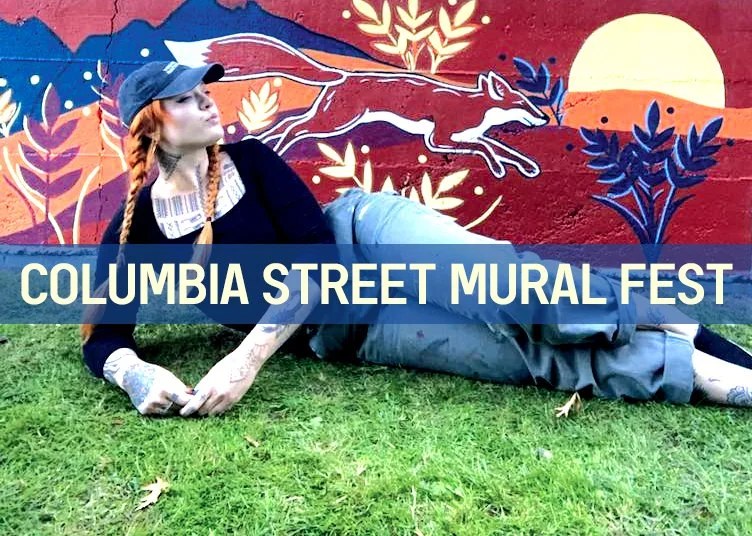
Comment

Artichoke & Truffle Butter EAT OUT WENATCHEE

June 6, 2025

What do you do with a lusty Latin nightclub when your peeps aren’t grinding? Open a Cajun eatery, of course. Welcome to Touch of Soul, Cajun soul food gem (within a gem?) located within Kaos Bar and Nightclub on South Wenatchee Ave.

Club Kaos has had many names during the time your heroes Artichoke and Truffle Butter have lived in the Wenatchee Valley. Though we have done many late night walk-bys past it on the way to or from Wally’s, neither of us had ever been in the current iteration. We were not only eager to experience a new-to-us ethnic restaurant in town, but also kinda weirdly curious to see the inside of this establishment. Would a Cajun eatery cohabitating with a Latin dance club be paradoxical, or a match made in heaven? While Touch of Soul operates Wednesday through Saturday for lunch and dinner until 8, Kaos Nightclub opens Friday and Saturday nights at 9. We dearly wanted to see the changeover of clientele from diners to clubbers, but with these hours of operation, there’s no chance the twain shall meet.
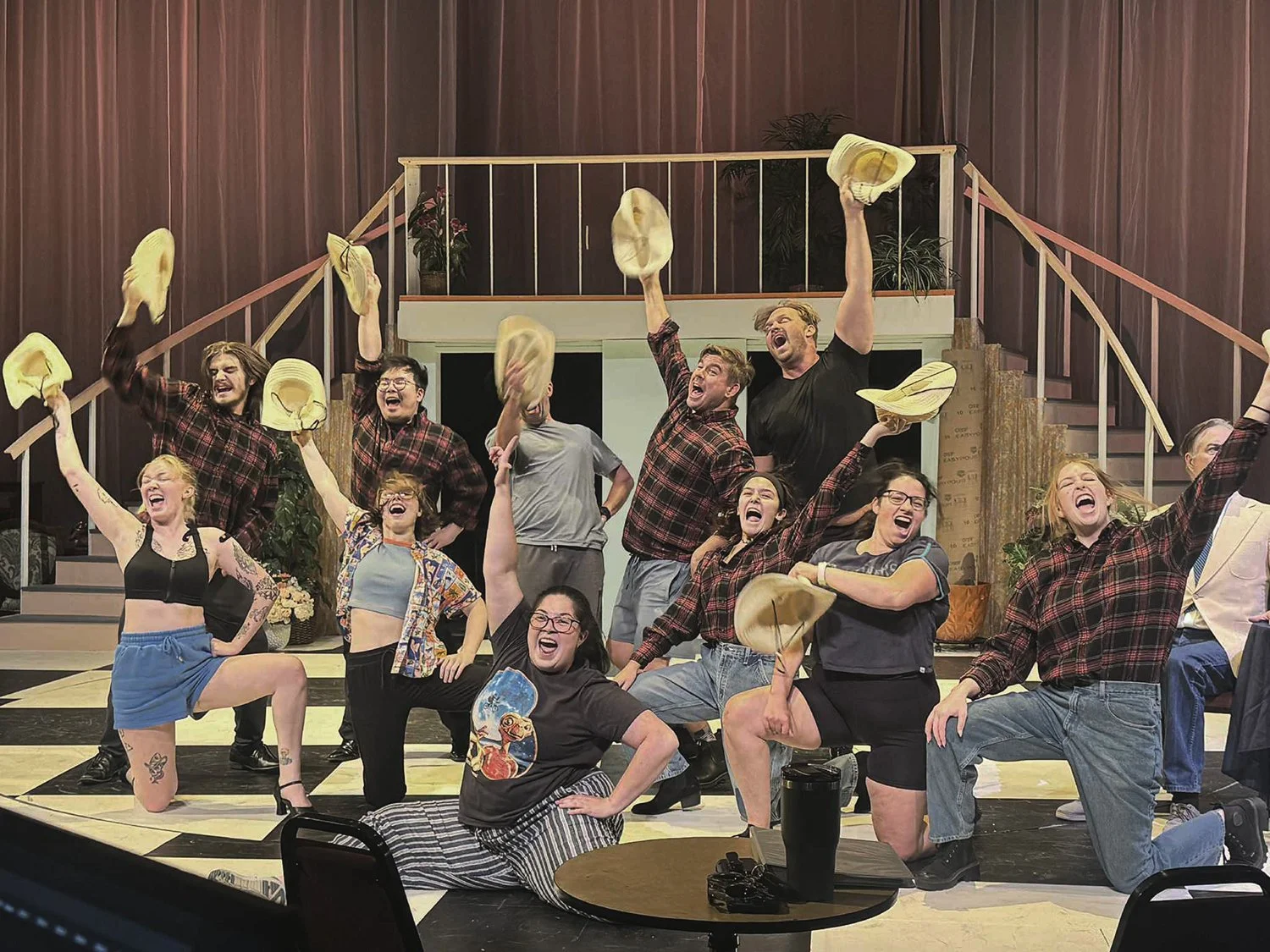
The ambience inside Touch of Soul/Kaos Nightclub screams “booty call” more than “sedate date nite”; featuring bright colored lighting, a truly impressive number of TVs, dripping chandeliers, and an abundance of texture and color. Lively zydeco tunes play in the background of a Latinx bump and grind - a quirky juxtaposition. During our late March visit, belated but jaunty St. Patrick’s decor was morphing into a festive Mardi Gras vibe. Carnival masks up front, leprechauns in the back? Sure, count Artichoke and Truffle Butter in! Adjacent to the restaurant seating area is a fun side room/faux porch with bongos, blue couches, and leopard prints. If people haven’t done coke off of other people’s body parts in there, we would be shocked and dismayed. The riotous look of the establishment is completed by a ship railing surrounding the booths, protecting patrons from going overboard onto the empty (during dinner) dance floor. Also, please touch the trippy silvery textured wall covering. Just do it.

The clientele during our visit was a mish-mash of confused-looking boomer couples and the adventurous after work crowd, though we did roll in on the early side. It seemed to be a theme for folks to ask the hostess “is this a soul food restaurant?” upon entering. Because apparently the location is odd enough to warrant the frequent query despite “Touch of Soul” being printed on the front door. Touch of Soul was doing brisk take-out business during our visit, perhaps because of the rather eccentric location. We can safely say this is the only place in Wenatchee where you can get frog legs and alligator bites to go.

After assurances that we were, indeed, at the Cajun restaurant, we were greeted in true southern fashion (we think, since it’s been a hot minute since we’ve been exposed to such a thing) by the very personable owner, KB. Incredibly hospitable, KB is from near Lafayette, Louisiana, and he clearly loves his work. Touch of Soul is a family business, as KB’s brother is the chef, and his wife is a server. KB, innately sensing how we roll, immediately recommended an “Incredible Hulk” cocktail. Truffle Butter declined, but Artichoke was up for anything… and fully admits she was actually kind of into this monstrosity of a beverage. Other booze options on offer include a Cajun-themed old fashioned which was on the sweet side. As a cock snob, Truffle Butter would have loved to see some truly classic 1800s era New Orleans cocks such as a Sazerac or Vieux Carre; though they do have a Hurricane, which was strong and sweet as hell. Drinks on offer are comparable in terms of quality and price to most (but not all) restaurants that serve cocktails in Wenatchee.

After settling into the frenetic ambiance and down-hominess of the proprietors, we were ready for the star of the show to arrive. Yes, we’re talking about food… We ate. A LOT. Hush puppies come as a free appetizer. Classy AF and Truffle Butter is a sucker for a cute boca. Next up, we tried the boudin balls: deep fried balls of rice and pork, served with spicy aioli sauce. This app was on point, but not really necessary if you’ve just smashed a hush puppy (you dirty bastard). The Cajun fries were hot, fresh out the fryer and right on the edge of too salty, but retained a good crunch. We wouldn’t call them remarkable, but they certainly disappeared from the table. BUT: We need to take a full stop to talk about these collard greens, friends. These slow-cooked collards taste like a MFing dream, meaty flavor, great texture, and a healthy grease sheen. Like, you could seriously just eat these and be satisfied. We’ve sampled collard greens served by famed soul food dives of the PNW (shout out to La Montage and Delta), in the south, midwest, and in big cities like Philly (although it’s been a minute). The collards at Touch of Soul were – we shit you not – better. Just... Wow.

Moving on to mains with enthusiasm, we meet the Louisiana Philly: cheesy fishy madness. Shrimp, American cheese, melty as hell with some nice peppers, not over-salted. Would we wish for a better bun? Yes, emphatically. Was it still fab? Hells yes, and we’d order it again. Next up, let’s discuss the crawfish étouffée: a thick sauce made with Cajun cuisine’s holy trinity (celery, onion, and bell pepper) over white rice, served here with crispy fried catfish. This dish was good, but not the highlight of the menu, in our opinion. The rice is nice and al dente, and Artichoke, having had a lot of catfish in her formative epicurean years, found the breading crispy and the fish mild, not muddy. Rounding out our exploration of the mains, was the crabby shrimp n’ grits: not a sexual position with a skeezy partner, but, in fact, an ass-kicking entree. Well-spiced and loaded with shrimp in a creamy sauce and served over flavorful grits… complete with a softshell crab (cornmeal battered and fried) on the side. No shit. This was Artichoke’s first soft shell crab. There was a bit of struggle as she came to terms with her own personal version of Alien vs. Predator: although she looked violated, she kept mowing down this unholy beast, and loved every fug-licious bite. Unfortunately, we were way too full and broke to hit the jambalaya or the gumbo. Or the OTHER gumbo. Or the fried chicken. That’ll be the next trip. Because there WILL be a next trip.

Artichoke and Truffle Butter’s bottom line on our Touch of Soul experience: the service was fantastic: they will check on you and the whole group was a delight. The location is a bizarre and hilarious mashup of two seemingly disparate businesses… or are they SOUL MATES? While the ambience might not suit everyone, if you can move past the cognitive dissonance of date nite food quality with date nite prices, while at a divey AF dance club, you’ll be well rewarded. The food at Touch of Soul tastes like it was made by someone who loves us - and it is so worth the trip. We bickered over the leftovers, and we will be back to sample the rest of the menu. If you’re on a budget, try coming at lunch, or maybe just hit the sides (like we did with your mom). If you’re skeeved out by the easy to wipe down plastic walls, order online for pickup – we won’t blame you – but don’t pass this gem by! Just the collard greens themselves are not to be missed.

Hot tip: we hear there’s a monthly shrimp boil and a Thursday late night zydeco dance party: check their insta (touchofsoul.wa) for deets.

Comment

In Memoriam: Milo Klanke

June 6, 2025

On May 26th, Wenatchee lost an icon in the local theatre world. Milo Klanke passed away during a medical procedure leaving a hole in the community that could never truly be filled. His one of a kind sense of humor (and style), his creative abilities (dude was a MacGyver with a power drill) and his tireless efforts to build a thriving theatre presence in this little town will be deeply missed. The Comet reached out to some of those that knew him - they have shared their thoughts with us here. Starting with Milo’s wife, Cynthia.

In 2002, Mission Creek Players decided to create a “Haunted Theater” for Halloween to make some money.

I was training volunteers and doing the makeup. Milo showed up to volunteer and stood out like a sore thumb—the only adult in a sea of teenagers, wearing a three-piece suit. We all referred to him as “that accountant guy.” With his curly afro, we placed him in our strobe light disco room as a zombie. I glued a wig to his chest, and makeup artist Rick Vara created a latex zombie face, which we applied each night. I thought he was delightful and immediately started trying to fix him up with all my single girlfriends.

On teardown day, Milo shocked us all by showing up with his own cordless drill to take down the sets. He wasn’t an accountant after all. He was a professional cabinetmaker.

A few weeks later, Milo showed up to help with a basement cleanout at the theater. It was a dirty, dark, jumbled nightmare down there. After about four hours of hard work, Milo caught up with me and point-blank asked what I thought of him. I stammered out something awkward about how great I thought he was, and he said, “If you like me, why do you keep trying to fix me up with other people?”

The truth was, I’d stopped dating. I was through trying to be appealing to men. Then he went on—“Why do you think I’m here, doing this?” he said, indicating the dirt covering both of us, the dark piles of theatrical detritus. “I’m here because I want to be around YOU. I want to get to know YOU.”

I was shocked. Not because I was a middle-aged, poorly dressed fat dork and a man was interested in me. I was shocked because he was interested, and he was so brave and honest to get my attention and admit it.

So we set up a coffee date, and he told me about himself. He told me that he had been married for 26 years to his first wife, who had died earlier that year after suffering from MS for a good part of their marriage. As we got to know each other in the months to come, he was still grieving his wife deeply, and I think he was glad to have my support.

This is what you should know about Milo, and why I was so very lucky he found me. He wasn’t rich, but he was frugal and a wise investor. He wasn’t suave or social, but he was extremely bright, and he trained himself to be a fine public speaker. He was extremely private. He was so private that as I looked through his things after his death, I was terrified I would discover some awful secret he’d been keeping.

I did find a secret. I found every note I’d ever written to him, every greeting card, ticket stubs from shows I’d been in or directed (only the ones he liked), every receipt from our wedding in Vegas that he paid for, and a piece of that fucking latex zombie skin I had glued to his face in October of 2002.

Milo’s big secret was how deeply he loved me, and how precious he knew our life was.

~ Cynthia Brown


From Adam Eagle

I could talk to you about his amazing construction skills; about his poetry; his endless and terrible puns; how supportive he was on stage; or about how well-read he was. I could tell you how 19 years ago he built an impossible rotating two-story set for a farce and the cast was so grateful that we scraped together the little money we had to buy him the most expensive bottle of Glenfiddich I have ever held and a person-to-remain-unnamed was so excited to give it to him they went sprinting to present it but tripped and the bottle shattered on the ground in front of his feet in one of the most beautiful moments of irony I have ever seen to this day.

I could tell you about his directorial debut. I could tell you about him giving me my first suit, and all that represented.

What I will tell you is the best place to be in a theater is wherever Milo is. On dress runs the night before an opening where everything goes wrong; when people are talking in circles and everything feels like a waste of time; when the ship is being stress-tested and the seams start to buckle and the emotion overtakes you and you feel your hands begin to shake because it is all falling apart: the best place to be in the theater is wherever Milo is.

Because Milo’s best talent was finding peace.

And if you could find him in those moments, he would share it with you. A calm in the eye of a hurricane, a finger joyfully biting at the wind. I am going to miss finding those spaces, but I won’t stop looking for them.

From Althea Castro

I met Milo in 2002 as just my mom’s (Cynthia Brown) next boyfriend, not knowing that he would soon become my step-dad. I remember reading this poem that I loved as a kid, but could never remember the title or author- only one line that went “the vorpal blade went snicker-snack.”

One day I told him about it and he immediately said, “Oh, that’s the Jabberwocky by Lewis Carroll!” and began reciting it word for word perfectly as if it was ingrained in his head. He wrote it down for me so I never forgot the poem. That’s just the kind of Renaissance man he was.

Thank you, Milo, for being a pillar of order and whimsy in my and my mom’s life.

From Meg Sanders

Milo was part of the fabric of our theatre community here in the Valley long before I arrived, and I feel so privileged to write a few words in tribute to him. Many knew him better than I did, but the generosity and kindness he showed me will never be forgotten.

My family and I moved to Wenatchee from Olympia in 2013 and immediately began exploring the local theatre scene. As we started to settle in and audition, it became clear that we had landed in an extraordinary little corner of the world—full of like-minded, passionate, and dedicated community theatre folk. Milo stood out from the very beginning as just such a person.

It wasn’t until November of 2023 that I had the opportunity to share the stage with Milo and play opposite him in MTW’s winter production of An Inspector Calls. Until then, I had only known him as a quiet, immensely talented set designer and builder—someone who seemed to be working on every show imaginable, sometimes several at once. I was immediately impressed by the quality of his work and admired his quick smile and generous spirit. “Affable, hard-working, and mild-mannered Milo” is how I came to think of him.

To my surprise and delight, during Inspector, I met a different side of Milo—the assertive and downright feisty performer—and I loved every bit of it. We got along famously, and sharing the stage with him as he explored one of the biggest roles he had taken on to date was an absolute joy.

Milo, you will be sorely missed for so many reasons. You leave behind an incredible legacy of talent, dedication, and hard work—one that will continue to ripple through our community in innumerable positive ways.

Rest in peace, friend.

From Matthew Pippin

I think when it comes to the passing of people involved in the arts, it’s like mourning the passing of two lives. The person themselves and their work.

Not only was Milo a lovely, funny, talented, patient man; he created some sets that became a character of their own. The details on sets like Wait Until Dark, Men Sex and War, One Flew Over the Cuckoo’s Nest, and so many others were just as important as any actor that you’d see on the boards.

Anyone who had the privilege to play on his creations was lucky, indeed.

To say that Milo Klanke will be missed is an understatement. The person and the designer were a huge part of Wenatchee’s theatre, and it’s a space that won’t be filled anytime soon.

From Lauren Loebsack

Fred Rogers said “look for the helpers.” That was Milo. So when I wanted to be of use but wasn’t sure what to do during set strike or any kind of workday, I’d look for Milo because he was the guy doing the hardest, most thankless stuff even after everyone else had called it quits. Without ever telling me a word about it, he mentored me in the importance of being willing to do the work, because it’s the crucial bridge between an idea and reality. Milo was rarely the star or the headline. He was more essential than that. He was the doer. He was the helper, and that’s where magic is made.

From Vicki Michael

I had the great fortune to meet Milo some 13 years ago through his wife Cynthia Brown and Music Theatre of Wenatchee. His talents were multifaceted - he built our sets during the day, then he would act on them in the evenings. I can’t believe that he won’t be in the shop listening to NPR while building something ever again.

During the heat of the battle usually while building a set I would ask Milo, “Can you build this or that?” I’d get a resounding and immediate “No!” The next day it would be there exactly like I wanted. He always had a clever story or a political rant ready for me when we worked together.

I respected his values and how he would fiercely protect his family. He was a craftsman, he was funny, he was an actor, he was intelligent and the shop at MTW will not be the same without him. I will miss him forever.

A celebration of life will be held 4 pm Sunday June 8th at the Riverside Playhouse. Attendees are invited to take home a book from his collection. All will be welcome to share their memories of Milo, or of mighty Ron. In lieu of flowers, please go see a good play, or donate to the Music Theatre of Wenatchee Building Fund via mtow.org or at PO Box 3042, Wenatchee WA 98807

Comment

Chelan Pride co-founders Gloria Groves and Jenna Navin

A Fire Was Lit...The Birth Of Chelan Pride

June 6, 2025

‘I don’t like the idea of my son going to school and being told by other kids that his mom’s going to hell.’

By Ron Evans

Chelan. The strange little burg nestled in one of the most absurdly beautiful landscapes you could find on planet Earth. A tourist town. A mecca for award winning wines. The flip-flop capital of Washington State (prove me wrong). And a place that over 4000 people call their year-round home. It’s here where, not long ago, an unexpected spark of activism ignited a movement.

It was 2022 when a local church’s sermon series targeting LGBTQ+ communities pushed one queer Chelan resident past her breaking point. What began as vocalized frustration in a small brewing company would soon transform into Chelan Pride - a true grassroots organization that would prove that even the smallest communities can create powerful forces for change.

The angry activist was Jenna Navin, a “country queer” mom who had moved to Chelan seeking a peaceful setting and a quality environment to raise her child. But Navin understood that peace sometimes requires standing up and making some noise.

With her friend Gloria Groves, a local librarian, she gathered a group of like-minded individuals who were tired of being marginalized, even demonized. Their first meeting at Stormy Mountain Brewing wasn’t just a gathering - it was the birth of a focused community that would challenge assumptions, push back against bigoted bullies and create a safe space for LGBTQ+ residents in a region not known for its progressive stance. It was the birth of Chelan Pride.

I chatted with Navin to learn more about this new, but potent organization.

Tell me about your history in Chelan and talk about the first sparks of inspiration for organizing Chelan Pride.

I had actually moved to Chelan in 2008 to be near my parents, and I had my son there. But I found the area to be not quite right for me at that time so I headed to the west side for a few years. My partner, Kelcie, and I moved to Chelan in 2015 and we weren’t really seeing much of a queer community at all. So for a while, we just kind of kept to ourselves.

In 2022, this local church was really going after the LGBTQ+ community and just blaming queer people for all the evils and problems of the world.

Those damn gay folk, always wreckin’ the world.

Right? We’re literally just over here trying to live our lives, but sure. We’re ruining the world.

Not all churches share this viewpoint, thankfully. But for some...it’s kind of like a creepy obsession.

It really is. So we really were like…we have the right to be here. We have decided that we are basically “country queers,” and we wanna raise our kid here. I don’t like the idea of my son going to school and being told by other kids that his mom’s going to hell. That really lit a fire under me. I’ve always been activist-minded. But I was ready to start some shit. So Gloria and I talked about getting some like-minded people together to go to the church where they were holding these sermons. And we got quite a few people involved. Co-workers, friends…I even brought my neighbor. It was a real grassroots movement. And we all met up at Stormy Mountain and basically had our first Pride meeting. Karen Jeanette Stanfield was also very influential in helping to form the group in its early stages.

It was so cool, people really got behind the cause. Individuals started donating funds, businesses started donating — and the really amazing thing was, all these queers just started coming out of the woodwork.

That happens a lot. And people sometimes say, “where did they all come from?” But it’s really just a matter of having a safe space with like-minded people. They were there all along, just waiting for someone like you to start the movement.

Yeah, and it’s grown so fast.

Did that initial protest that you organized at the church lead to any confrontation or conversations with them?

Nope. Nothing. No one wanted to say anything to our faces. Interestingly, that church is no longer there. The building’s still there, but it’s a whole different church now.

You eventually got your non-profit status. Talk about where you went from there.

Technically the first Chelan Pride event was that church protest. We all met in the park, protested and plotted the future. We decided to reach out to some people we knew that were doing art fairs and farmers markets and we put together our first public event in the park. We had eight booths that first year, which was great. But it’s really grown. The whole community really showed up. Then we knew we could do this every year. Last year we had grown to 65 vendors.

Wow. That’s a massive growth in three years.

Yeah, like I said the community has just been amazing. We also do smaller events — we have game nights where we can all have some fun and bullshit and blow off steam.

I love that. Because as important as activism, protests and awareness campaigns are — it’s really important to remember to have fun and not let the bastards get you down. That’s all part of staying strong and unified.

Absolutely. Especially right now. We have actually lost some of our support just because certain people or certain businesses are afraid of negative backlash for being involved. That’s new. And it sucks but, things are scary right now. We get it. And those people can still show up in some other ways. Maybe just not so publicly.

That really does suck. That people are feeling intimidated into not supporting something they clearly believe in goes against everything this country is supposed to be about. And this is a time when Pride needs allies more than ever.

Exactly. It’s disheartening but…like I said, we are getting lots of support. We could use more though. But we have lots of other things going on that have been a lot of fun. We have been doing these cultural nights where we feed people food that’s based on the culture we are featuring. We have done Palestine and Turkey so far. Free food, we have had movies — staying out of the political aspects with these. Just trying to understand and appreciate other cultures in a meaningful way. Not in any kind of watered-down appropriating way.

You do have a lot going on. Is your zine Strange Garden connected to Chelan Pride?

You know, I wanted it to be at first but honestly, I think some of the voices in the zine might be a bit too radical to be associated with an organization! So I decided to keep it separate.

That’s a good idea, that way you can stay freaks when you’re writing. How has it been having a non-profit board to navigate?

Well we just went through kind of an ugly situation with a particular board member and he was just…not someone we could work with. We tried. And he just made it too hard so he’s no longer on the board. And as shitty as all that was, there was a lot of learning. [LAUGHS]But now we have a super solid group, diverse, passionate and we are all working well. It’s a labor of love – and it’s hard work.

Are you looking for people to get involved? Event volunteers?

Always. We need more people helping year round really. We need help in finding more sponsorships - because I hate doing that!

It takes a certain constitution for sure.

It does. The direction we would like to go is to set up different committees for the different events. That way we can have people doing what they are good at, and not what they don’t get joy from. Again, being a labor of love — there has to be joy. So there will be all sorts of ways for people to get involved. Jenna@chelanpride.org is a good way to reach out.

Anything new for the event this year?

Aside from the vendors in the park event, we are trying to extend our Pride activities this year. So we will have Queertopia (drag queen performance) at the Ruby Theatre with Cafe Columbia doing some fun catering. We are also coming to Methow Pride and Wenatchee Pride. Just a big tour of Pride!


Comment

DATURA: Jake St. John, David Betancourt, Tiffany Shafer —- all photos and cover design by KC St. John

DATURA: Songs From A Dark House

April 7, 2025

By Ron Evans

Local goth ghouls of the night, Datura are gearing up to release their second LP, Songs From A Dark House on April 18. The trio has been working on the songs over the past couple of years as they have played shows in support of the first LP, Arcano Chemical (2022). Both records are on the Sell The Heart Records label and Bat Cave in Poland. The overall tone of the new album has a bit more of an upbeat danceability to it, says bassist Jake St. John. “Which is somewhat ironic when you consider that the three of us were in a pretty dark place while we were working on it.” He continues. More on that darkness in a bit.

The album starts with “Tired,” the first single released ahead of the official LP launch. One of my favorite things about this band is their ability to sound new and authentic while also delivering a sense of nostalgia and a deep respect for the pioneers of the goth/post-punk world. You can’t help but tap along to this Smiths-esque tune, in spite of the fact that it’s literally a song about being tired.

And while St. John’s assessment about the album being more danceable and upbeat is true, that’s not to say that Songs From A Dark House is a fun romp of lighthearted happenings. This is still Datura. There’s just a little extra snappiness to the darkness. Goth has long been an underappreciated style of dance music, but dancing is an integral part of the genre. The production of this album is also a bit brighter than the previous LP, both recorded and mixed by Chad Yenney and mastered by Tad Doyle.

At this point I think my favorite track on the album is “Nobody Cares” which features some catchy harmonies from Betancourt. I love that he seems to be experimenting more with that on this album, adding to the whole sing-along-ness.

Another thing I was happy to see was more songs in Spanish (“Sirena,” “Scarecrow”) which adds another layer of depth to the LP. The overall running time for Songs From A Dark House is a fast-moving 35 minutes, which is just enough to sink your vampire teeth into but leaves no time for fucking about.

Another favorite is “Shooting up In A Bouncy House,” and not just because of that amazing title. St. John’s infectious bass line is almost reminiscent of the funk/disco groove of ELO’s “Last Train To London” which demands at least a little head bobbin,’ a la Night At The Roxbury. But the heavy lyrics keep the party on terra firma.

The album ends with “War,” their second single. This track has what I would call a pleasantly nauseating aura to it. It’s droney, industrial and sparse. And the lyrics (while clearly based on historical atrocities) are tragically timely. When I heard the single, I liked it. But it didn’t resonate with me on the deeper level that it did after hearing it as the curtain call to the entire album. A thick, murky fog of bass (St. John crushes it on this album) pulses along to Tiffany’s drums, which are both a marching beat and a firing machine gun. Betancourt’s furious vocals fade further and further into the mix like a battlecry being drowned out by the chaos of war itself. It’s a brilliant closer. It offers no comfort. No resolve. It’s cold and literal and angry---and then...it fades into the ether. In the post-listen silence I sat there and thought two things…

  1. We are fucked as a society.

  2. I’m dying to see what the third album will sound like.

I sat down with the band to chat about the inspiration, the songwriting and the tragedies that led to Songs From A Dark House. Also joining us was KC St. John, band photographer and designer for the cover.


So I just heard the new single, “War.”

Jake: We almost didn’t release that as a single.

Why not? Seems like the perfect time for it.

Jake: Sadly, yes it is the perfect time. But we feel that there’s a lot of strong songs on the record. We talked about it though and we just didn’t want it to get lost, being the last song on the album.

Tiffany: If we hadn’t released it right now it wouldn’t likely have the same impact.

So you guys are signed with Sell The Heart Records, do they have any input on what you do? What singles to push, etc.? Recording or release schedule?

Jake: No, they’re happy to just let us do what we want, really.

Where did you record this new LP?

Jake: We recorded with Chad (Yenney) again.

He moved away, he’s now in the Olympia area yeah?

Jake: Yeah, not too far from there. We recorded it over one long weekend. Like around 33 hours.

So you must have had everything pretty much dialed in – or was there room for evolving certain songs in the studio?

David: We actually did change some things, there were some evolutions. Tiffany busted out the percussion parts for “War” in the studio, we wrote some synthesizer parts in there. We were even still writing lyrics.

Tiffany: Yeah we all wrote lyrics for “War.”

David: Usually when we practice, I’ll just be kind of vocalizing the idea. And sometimes it just comes naturally. Sometimes I’m just like, oh, well, this can change. But yeah, with “War” we wrote that together in the studio with Chad’s help too. We kind of already had the idea of what the song was about, leaving it to just basically be dialed down in the studio.

Is that fairly typical of the band to leave a little wiggle room in the studio?

Tiffany: Not really, on the last record we had rehearsed so much, for like three months. I was playing with a metronome in my ear getting everything as dialed in as I could.

Jake: “War” was kind of nebulous, there’s not a lot to that song. We knew we wanted it to have a long kind of noise section at the end, and we knew we wanted it to be about war. And so we had played around with some experiments in the rehearsal space, but we decided to not finish any of that stuff or make any final decisions before we went into the studio. So we did it in one take, and we just played out for as long as we felt we needed to. Then we stopped and we’re like…okay, now we’ve got all this sonic territory to tell a story with.

Who is the primary lyricist?

Jake: David, for sure.

So is it unusual to all contribute to the lyrics?

David: It pops up from time to time. On our first EP, Orphans, Jake and I combined forces while writing “Ghost or Reflection.” “Our Ship is Lost” and “Everything Turns Black” were all Jake.

Talk about overall recording process in Chad’s new studio. Was it a significant change from the old setup?

Jake: Yeah, it’s completely different. He has a nice large room for sound, and because it sounded different from the old space that sort of forced us to change how we recorded it. There’s a lot less going on with this album. We didn’t really do any guitar overdubs, not many doubled vocals.

David: It sounds bassier, ballsier and I think it sounds more confident. I know vocally I was more confident on this album.

How long after Arcano Chemical did you start working on these new songs?

Jake: Some of them we had kicking around even going back to when we recorded Arcano. David originally wrote “Scarecrow” as a SHANX FM (Betancourt’s other project) track.

Tiffany: But we told him it’s a better Datura song!

They all laugh.

Does that happen? Do they steal your songs, David?

David: It has happened, but it eventually made more sense to me too.

Jake: We had to really convince him to make that a Datura song. We broke him down, finally!

Do you record much of the record live, like all together? How do you typically lay down the tracks?

Tiffany: Well I showed up early so I could have time to set up my drum kit, get it dialed in and miked up. I’ll get playing to a click track — and they are often playing along, like just doing a scratch track. Just to keep me on pace and I have to fade in and out of focusing on them and then back to the click. Because I’ve found that sometimes I just get playing with them and then I get off on the click. And later they will do their final parts separately when the drums are down.

David: What’s kind of funny is that sometimes, we’ll write our own parts for the guitar and for the bass but then when we hear it back, we didn’t realize how difficult it is to get those chords really clear. So you have to modify or come up with a different thing because you’re just now seeing that it doesn’t all quite work together.

Jake: Yeah, sometimes you even have to change the tempo or the rhythm and that can be enough.

Was there any intent to make the record different from the last, stylistically? Or was that all organically happening?

Tiffany: I think it was pretty organic. We were all going through a lot of shit over the last year, personally.

Jake: Yeah. There was a lot. I think we had talked about doing something a bit darker. But, ironically—the thing ended up being a bit brighter and upbeat. Musically, anyway. I was listening to a lot of R&B, getting into a bit more funk and I wanted to incorporate that into my basslines. A bit dancier.

Can I ask about the shit you were going through to inspire the album?

Jake: My dad was battling cancer while we were writing the record and he actually passed away while we were still writing. That was an intense experience. And we had been looking for a title for the album and I was feeling all these things, dealing with my dad’s passing. It was like…the lights were just shut off. So, Songs From A Dark House is just exactly how it felt. The cover photos are really special. KC can talk about that.

KC: There’s three characters, and then there’s the kind of bunny rabbit with kids. See video above. Those are from two separate photos from 1957, I believe, and it was Christmas performances that Jake’s dad was in. So his family had these photos from those two events. And while we were at Jake’s dad’s house, and the family was all there, I came across those photos. They just kind of hit me, and I showed them to Jake. I don’t think we had the title of the album at that point, and we didn’t really necessarily think this is going to be part of the album art, but we had it as an idea. And I started playing around with them and when Jake came up with the title it felt like…this just had to be part of the album art.

Had you ever seen those photos before?

Jake: Never. And like KC said, they just kinda hit you. And it pulls out all this emotion for me, of course. But it also has this sort of pairing of the dark and the somewhat…playful, I would say. Just like the lyrics on the album can get fairly dark and heavy but the music is more fun and playful. At times.

So if this dark and heavy time brought out somewhat happier music, does that mean you were all happier when you made the darker Arcano Chemical?

They all laugh and say ‘no’ simultaneously.

David: I was in a pretty bad place when we made that. I was having a hard time working through my sadness and anger while working on that record. I feel like I’ve had a lot of growth since then and I didn’t wanna go down those roads again. Because it sucked. But the thing is, the lyrics aren’t always 100% about me personally. Sometimes you just write some lyrics that speak to you – lyrics that are fun to pair with this kind of music. So, just in case anyone was wondering—I’m not that fucked up.

Jake: There’s a song called “Shooting Up In A Bouncy House.” It’s about addiction but…it’s this hilarious fucking title. It’s about this sort of gleeful self-destruction. David wrote a set of lyrics and I wrote a set of lyrics. We ended up putting David’s version on the record. But yeah, that’s the kind of place we created with this album.

Will we see a b-side release of the alternate lyrics?

Jake: Maybe. It’s kinda funny. We don’t really have any b-sides. Only hits!

We all laugh.

So you have an all ages show coming up April 25 at the IOOF. Will you have records and CDs by then?

Jake: Yep, we plan on bringing a whole pile of good stuff to the IOOF. And soon we will be heading out on tour. We just got a new van we’re stoked about. We will be playing Portland, Sacramento, LA, San Diego, Vegas. We did a tour once before but we used my mom’s little car, which was hilarious. Just this fucking clown car with tons of gear and all of us crammed into it. It was a sight to see.

But now you have a real touring van. You have arrived.

Jake: We have finally arrived.

Songs From A Dark House drops April 18. You’ll be able to get it on their Bandcamp page and most streaming apps.
Better yet, grab it on vinyl at the release show April 25 at the IOOF in Wenatchee. Swear and Not All There will be kicking things off around 7pm. All ages show.

DATURA on Bandcamp.com

Comment

Limos, red carpet and independent films. Photo by Niki Panek

Leavenworth Mountain Film Festival Returns

March 17, 2025

By Ron Evans

The Leavenworth Mountain Film Festival (formerly known as the Leavenworth Film Festival) makes its triumphant return for the first time since the Covid shutdowns. The organizers of the popular event pull out all the stops to provide a one-of-a-kind film festival experience. Red carpets, limos and photo walls are just the beginning. I chatted with LMFF co-founder and curator Rex Flake about the return of the festival.

Talk a bit about the history of the LMFF.

The first annual film festival was held in the spring of 2013. Mastermind Shane Wilder of Icicle TV had a vision of creating a visually stunning event that melded mountain films and performance art. Shane assembled a group of creatives that expanded this idea to become a full celebration for our mountain community. It became a red carpet affair where our Wenatchee Valley locals are the stars! Our mountain culture and community are worthy of any press release. The attendees are the celebrities. And in that first festival, we even had a catwalk running the length of the center aisle to facilitate an intermission fashion show featuring our beautiful local people donning attire from local businesses. It was an instant hit!

Talk about coming back after the Covid-induced break.

LMFF was ready to roll March of 2020 when the world shut down. After that, celebrating just didn’t feel right for a number of years. Filmmakers stopped creating content and people were nervous to congregate. I think the time is ripe now though. Unity, love and acceptance are core aspects of our mountain culture. We have a special thing here in this valley and I believe this event is exactly what we all need right now.

What kinds of films are you showing this year?

All our films share similar themes that highlight human connection with nature. We now call it a “Mountain” Film Festival in the sense that, in this valley, our community is strongly defined by our natural resources, so film selections focus on an aesthetic of human connection with the land. Obvious mountain pursuits like skiing, biking, boating, climbing, hunting and fishing play a big role. But also skateboarding, freediving, sky diving, farming, or even speed-walking films are highlighted. I guess I’d say any artistic expression that involves nature and movement; the way we express our joy by dancing around on this bright blue globe we share. This year will include a little of “all of the above.”

Photo by Reiley Flake

Talk a bit about the selection process - how and where to find the films, who chooses them – and what you’re looking for.

One to 15 minute duration films are solicited worldwide. We definitely give extra points to locally sourced material though. Our official mission is: “Showcasing the best recent short films with a focus on outdoor pursuits and the natural world.” Our most awesome all volunteer committee selects films by virtue of quality and originality that fit this broad agenda. I personally have the most fun programming the selections in an attempt to create a story arc, or maybe better said, a cohesive mood from this motley collection of short films.

Talk about the event itself. Limos, red carpet, screenings – will there be any panels or QnAs connected to the films?

Upon arrival at the venue you can expect a limousine ride around Leavenworth. Step out in pure fashion and strut down the red carpet. Formal wear is encouraged, but anything is acceptable. You do you! Professional photographers capture you and your group at the step-and-repeat backdrop, but be warned, we can’t keep the flies away and paparazzi will be abuzz!

This is an interactive event -not just a passive sit-n-flick experience. Everyone participates in their own way. The intermission show is not to be missed either. In addition to the fashion show I already mentioned, past events have showcased aerialists, professional mountain bike performances, award winning dancers and ensemble bands, operatic vocalists and more! You’ll have to show up on March 22nd to witness what we’ve got in store this year.

Talk about the challenges/rewards of putting together something like this.

Challenges are boring to list. But the reward is having our community come together in a positive environment where we can share happy vibes about the world we live in and the culture we share here in the Wenatchee Valley. Just experiencing this togetherness is highly satisfying to me personally.

How is this festival funded/supported?

Many local businesses have supported LMFF in our past events. This year we are proud to partner with the Leavenworth Chamber of Commerce. South and Rhein restaurants are also top sponsors this year. Many others as well.

Is the plan to keep the festival annual? Can we expect a 2026 LFF?

Yes! We’ll be back, baby.

Are you looking for people to get involved – volunteers, etc.? If so, how can folks go about that?

Volunteers are much welcome. If interested please contact:

info@leavenworthfilmfestival.org


Links/social media:

leavenworthfilmfestival.org/

FB - LeavenworthFilmFestival

IG - leavenworthmountainfilmfest/

Comment

Life of Ease Woodcut print on paper 26 x 40, 2024

Galimatias: Reinaldo Gil Zambrano

March 7, 2025

By Ron Evans

Reinaldo Gil Zambrano, known as RGZ, is a Venezuelan-born printmaking artist, muralist, and community organizer based in Spokane, Washington. His practice encompasses a range of media, from intricate printmaking techniques and documentaries to large-scale murals, all deeply rooted in his cultural heritage and commitment to community engagement. RGZ’s work has earned national and international recognition, with exhibitions spanning the United States, Asia, Europe, and Latin America.

Currently serving as an Associate Professor of Printmaking and Drawing at Gonzaga University, RGZ brings a passion for education and mentorship to the next generation of artists. His teaching is complemented by his active role in the Spokane arts scene, where he is a co-founder of the Spokane Print and Publishing Center and the founder of Spokane Print Fest—two initiatives fostering collaboration and dialogue among artists and the wider public.

Dystopian Romance, Reduction woodcut print, 40” x 26”, 2024

RGZ brings a new collection of works called Galimatias to the MAC Gallery on Friday, March 7. I reached out to him to chat about his craft and workflow and to learn more about this exciting exhibit.

Talk about printmaking’s place in the current fine art domain. Do you think it’s getting more respect (in a world where painting seems to get all the attention)?

Printmaking is a medium for the masses. As with any medium that includes people from different strata, it offers a voice to the invisible and challenges the status quo, which often leads to it being pushed into a secondary state. Also, the fact that much of the printed matter is on paper leads to it being degraded to a lower status because of its “fragility.” Its nature of originating multiples is also regarded as something unoriginal by elitist collectors who seek the limited-edition object (unless there is profit in its reproductions). However, printmaking has always been there and will continue to be there, supporting community, versatility, and provocation—and it’s just badass, with a delicious graphic contrast.

There is a growing appreciation for the medium, and its value will continue to reside in the hearts of those who understand it and live it. But the art world often finds ways to bring it down. In the end, it will continue to find its place and be present in history as the medium that everybody uses (even your favorite historical painters made prints) while seeking emancipation from the curse offered by the ambiguous nature of the word “print.”

Has the process of teaching art had any major impacts on your own artistic journey?

Being in the classroom challenges you constantly. Students are always brewing ideas and contributing to discussions about concepts that keep you sharp. Also, they are all working on similar techniques with their ideas, so you gain more problem-solving experience. I can also use my experience in my practice to bring in the information I wish I had learned as an undergrad. Students often challenge you to stay up to date with art world trends and keep them fresh. Teaching is also tricky because it pushes you to carve out time to pursue your passion, despite the position’s responsibilities—reminding me that I am an artist who happens to teach.

Kismet, Reduction woodcut print, 18” x 24”, 2024

Have your students been stoked to work in analog—perhaps appreciating how “un-AI” the process is?

We are constantly using new technologies and tools to incorporate into the analog process. Students often use Adobe tools for design, photography for references, mixed media for surfaces, and even AI to generate ideas. Printmaking is a transformative process of its own, so any input you bring to it will be adapted to its unique characteristics.

Talk a bit about your work process. These are very intricate designs—are you plotting, refining, and using those drawings as a template for the print cutting? Do you draw right onto the block? How does this all work?

I often daydream when I go on walks, while doing dishes, or during conversations. I am constantly wondering and asking, “What if?” Sometimes, I put some of those ideas on paper and let them marinate until I am finally ready to resolve them. It takes time, but I have learned to accept my process as a ritual—the less I rush it, the better it is. Then, I draw straight onto the block, often allowing the piece to continue evolving and tweaking into its final form. Once it’s ready, I carve it and later print it. Each stage is both fun and challenging. It’s a rollercoaster of emotions, swinging from excitement to doubt so often. In the end, you push through, trust your instincts, and the final results appear—and it’s so rewarding. You enjoy the final print for a few minutes, and then you can’t wait to start over again.

Do you print out various colors and see what jumps out at you? Or do you tend to create with color (or lack thereof) in mind?

When I imagine the piece, I have a color palette in mind. There is a particular color that guides the composition. Then, I get to play around with different hues and saturations, modifying the ink and being surprised by the results. Also, working with my assistant, MEG (Madeline Goolie), has been a great experience—bouncing ideas off each other and pushing ourselves to find new color combinations for this Galimatias body of work.

Mors Toa, Vita Mea Litho and screen print monotype 24 x 28, 2024

Aside from printmaking, are you ever working in other mediums on a regular basis?

I have been working with Indian ink and acrylics for mural painting and digital tools to design renderings that will later be built into molds to cast concrete forms, embellishing the supporting structure of the North/South Corridor in Spokane, Washington. I have also been directing documentaries on printmaking and exploring storytelling in film form.

As an artist, are you always trying to convey a specific message or feeling? Or are you mostly expressing yourself and letting the viewer decide for themselves?

I do it unconsciously because my work is often a way for me to reflect on a current personal matter or understand the emotions related to external stimuli. I create something that satisfies my aesthetic taste and humor, then put it out in the world for people to bring their experiences and complete the narrative.

Talk about this upcoming exhibit at the MAC, and tell us about the title.

“Galimatias” means confusion or random thoughts. It describes the creative process behind this exhibit. It was a reflective process using sketching and allowing the drawings to evolve naturally, nurtured by sarcasm and irony.

Anything coming up you’d like to promote—beyond the MAC show?

We are working on developing our second international documentary with the Hello Print Friend podcast. This time, the film will be titled Impresiones de Resistencia and will focus on Puerto Rico’s graphic history of using printmaking as a tool for resilience and survival.

Links/Socials: Instagram: @Rgzprints

Website: rgzprints.com

Podcast: helloprintfriend.com

Reinaldo Gil Zambrano: GALIMATIAS

WVC MAC Gallery March 7 - April 25

First Friday Receptions March 7 and April 4, 5:00 - 7:00

Relief T-shirt Printmaking Workshop: March 8


Comment
Older Posts →


Featured
IMG_7440.JPG
Apr 1, 2026
Is This Real? Matt Cameron Comes to Numerica PAC
Apr 1, 2026
Apr 1, 2026
Skyler.JPG
Mar 19, 2026
Humans: A Brief Primer
Mar 19, 2026
Mar 19, 2026
Baba Yaga Girl at the LoomWEB.jpg
Mar 4, 2026
Making a Living Painting Bunnies & Mermaids
Mar 4, 2026
Mar 4, 2026
AmandaBio.jpg
Jan 11, 2026
An Interview With Wenatchee Poet Amanda Keewatinawin
Jan 11, 2026
Jan 11, 2026
Surry's Orchestra posed on stage at the Auditorium. Well Smith, Surry's replacement sitting up frontWEB.jpg
Jan 11, 2026
Surry's Band
Jan 11, 2026
Jan 11, 2026
DB capism pic 8x10 300.jpg
Dec 18, 2025
SOUNDTRACK TO A REVOLUTION: DANBERT NOBACON
Dec 18, 2025
Dec 18, 2025
EatOutShrimp.jpg
Oct 19, 2025
Eat Out Wenatchee: Nacho Average Seafood Boil
Oct 19, 2025
Oct 19, 2025
SmallCover.jpg
Oct 19, 2025
LISTEN UP: Small
Oct 19, 2025
Oct 19, 2025
Wotr_WEB.jpg
Oct 9, 2025
October BookFest: BOOKS, AUTHORS, PRIZES, AND COMMUNITY
Oct 9, 2025
Oct 9, 2025
NM_Header.jpg
Sep 17, 2025
Night Market on the Ave. RETURNS
Sep 17, 2025
Sep 17, 2025

Copyright © Ron Evans and RadarStation